
Archetypal Paths, Not Zodiacal Sections
The Major Arcana & Astrology
The Golden Dawn Framework
Why do some Major Arcana cards correspond to zodiac signs, others to planets, and still others to elements? And how do these associations differ from those of the Minor Arcana?
In the Hermetic Order of the Golden Dawn's tarot system, astrology operates through two distinct yet complementary structures. The Minor Arcana map the zodiac in precise detail, with each numbered card representing a ten-degree decan and a specific planetary influence within a sign. The Major Arcana follow a different principle: rather than representing divisions of the zodiac, they embody archetypal paths on the Qabalistic Tree of Life.
Each of the 22 Major Arcana cards carries a single astrological correspondence: twelve are associated with zodiac signs, seven with planets and three with elements. These represent enduring archetypal principles rather than particular degrees or periods within the zodiac.
The distinction is essential. The Two of Cups, for example, corresponds to Venus in the first ten degrees of Cancer, expressing a specific planetary influence within a zodiacal division. The Emperor, by contrast, represents Aries as an archetype. A path of consciousness on the Tree of Life, rather than a particular section of the sign.
The Foundation of the Correspondences
The Golden Dawn drew upon the Sepher Yetzirah, or Book of Formation, an ancient Qabalistic text that divides the 22 Hebrew letters into three groups:
Three Mother Letters — Aleph, Mem and Shin: Corresponding to the elements of Air, Water and Fire.
Seven Double Letters — Bet, Gimel, Dalet, Kaph, Pe, Resh and Taw: Associated with the seven classical planets.
Twelve Simple Letters — He, Vau, Zayin, Heth, Teth, Yod, Lamed, Nun, Samekh, Ayin, Tsade and Qoph: Corresponding to the twelve zodiac signs.
The Golden Dawn mapped the 22 Major Arcana cards onto these Hebrew letters, assigning each to one of the 22 Paths of the Qabalistic Tree of Life. Through this arrangement, each letter provides the card's astrological correspondence, while its position on the Tree reveals its symbolic significance.
Why Do These Correspondences Matter in Tarot?
This threefold structure reflects the symbolic architecture of the Qabalistic Tree of Life. The three Mother Letters represent the primordial elements, the seven Double Letters correspond to the classical planetary powers, and the twelve Simple Letters express the zodiacal principles associated with the manifest world.
Unlike the numbered Minor Arcana, which describe specific planetary influences within ten-degree sections of the zodiac, each Major Arcana card represents an archetypal path connecting two Sephiroth.
The Emperor, for example, does not signify the first ten degrees of Aries. It corresponds to the Hebrew letter He, associated with sight and the window, and expresses Aries as an archetype of initiating fire. Its meaning arises from the relationship between the letter, its astrological attribution and its place upon the Tree of Life.
The Golden Dawn's tarot system therefore reveals two complementary maps of symbolic meaning. The Minor Arcana trace the zodiac through its decans, exploring the changing interplay of planets and signs. The Major Arcana illuminate the paths connecting the Sephiroth, expressing the enduring archetypes of the zodiac, planets and elements.
Together, they form a coherent astrological and Qabalistic framework for understanding tarot, one concerned with the particular expressions of celestial influence, the other with the timeless principles that give those influences meaning.
The Major Arcana
0. The Fool — Air

The Fool is associated with the element of Air, symbolising freedom, movement, spontaneity and the limitless potential of new beginnings. Like the wind, which moves freely without following a fixed path, The Fool embodies the spirit of exploration and the courage to step into the unknown.
Yet Air represents more than freedom or movement. It is also breath, the invisible force that sustains life and sets everything in motion. In this sense, The Fool reflects the first stirring of possibility, the moment before an idea takes shape or a journey begins.
Unlike the intellectual and analytical qualities of Air expressed through the suit of Swords, The Fool represents Air in its purest, most unformed state. It is the breath before the word, the impulse before the decision and the freedom of potential before it becomes defined by experience.
This connection reveals why The Fool is not simply a symbol of recklessness or innocence. Its Air represents openness, possibility and the willingness to embrace what has yet to unfold. The Fool embodies the first breath of life, free, unbound and full of possibility, reminding us that every journey begins with a movement into the unknown.
When reading The Fool, its connection to Air therefore reveals more than freedom or new beginnings. It expresses the breath before the word, the movement before the journey and the first stirring of life before form.
In the Golden Dawn tradition, The Fool is Air because Aleph is the Mother Letter of Air. Through this correspondence, the card embodies the primordial breath of Spirit. The unseen force that awakens potential and carries consciousness into the unknown.
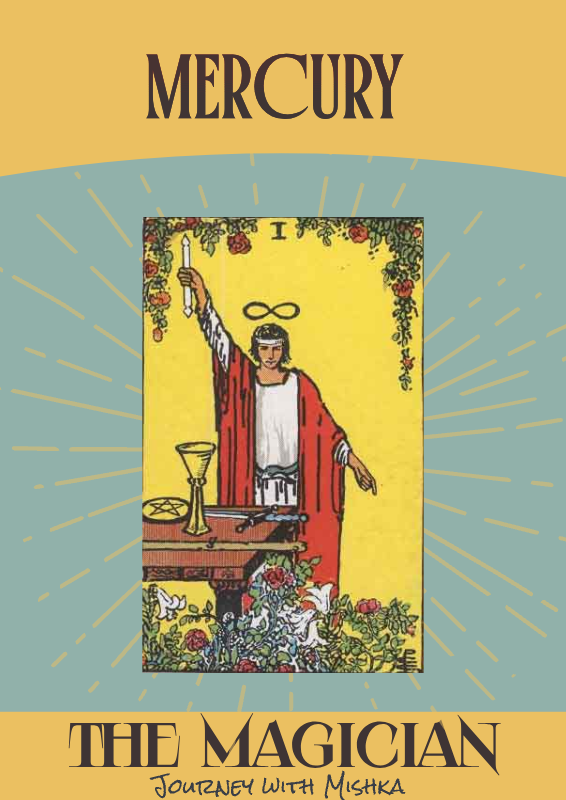
1.The Magician — Mercury
The Magician is associated with Mercury, the planet of intellect, communication, skill and the power to turn vision into reality. Like the messenger travelling between worlds, The Magician moves between imagination and action, transforming ideas into results through expression.
Yet Mercury signifies more than cleverness or speed. It governs language, through which thoughts become words and ideas connect. The Magician captures the moment possibility finds a voice, when a vision begins to take shape. Unlike the analytical qualities of Air expressed through the suit of Swords, The Magician reveals Mercury as an active, creative and unifying force. It is insight becoming intention, the word preceding the deed and focused will gathering scattered possibilities into action.
This is why The Magician represents more than trickery or manipulation. Mercury brings attention, intention and the ability to translate unseen potential into practical expression. The four tools upon the table represent will, feeling, thought and the physical world, ready for direction.
The Magician embodies the first act of conscious creation. Its power lies not simply in possessing knowledge or ability, but in bringing both together with clarity and purpose.
When reading The Magician, its connection to Mercury reveals more than intelligence or skill. It expresses the word before the deed, the insight before the decision and Spirit taking shape as an idea enters the world of form.
In the Golden Dawn tradition, The Magician corresponds to Mercury through the Hebrew letter Bet, one of the seven Double Letters associated with the classical planets. The card embodies the active intelligence of Spirit, directing potential and carrying will from the unseen into the visible world.

2.The High Priestess — Moon
The High Priestess is associated with the Moon, symbolising intuition, receptivity, mystery and hidden currents of inner life. Like the Moon governing tides and reflecting sunlight, she embodies quiet perception and understanding without speaking.
Yet the Moon signifies more than emotion or imagination. It represents memory and reflection, drawing meaning from darkness and revealing what lies beneath appearances. The High Priestess captures inner knowing, when something is sensed before it can be explained. Unlike the emotional responses of the Moon expressed through the suit of Cups, The High Priestess reveals its still, veiled and impersonal nature. She is silence before speech, reflection before action and receptive darkness in which understanding emerges.
This is why The High Priestess represents more than secrecy or passivity. Her lunar nature invites patience and attention to what remains unspoken. The concealed scroll in her hands suggests that certain truths cannot simply be given. They require contemplation and stillness to approach the unconscious. The High Priestess embodies the first act of inner reception, watchful and mysterious. She reminds us that wisdom begins not with answers, but with the willingness to listen. When reading The High Priestess, her connection to the Moon reveals more than intuition or hidden knowledge. It expresses silence before the word, reflection before the deed and the veiled light of Spirit gathering within.
In the Golden Dawn tradition, The High Priestess corresponds to the Moon through the Hebrew letter Gimel, meaning camel. Her path crosses the symbolic Abyss, carrying the reflective intelligence of Spirit between the highest light and the depths of experience. She embodies the receptive power that brings concealed knowledge towards conscious awareness.
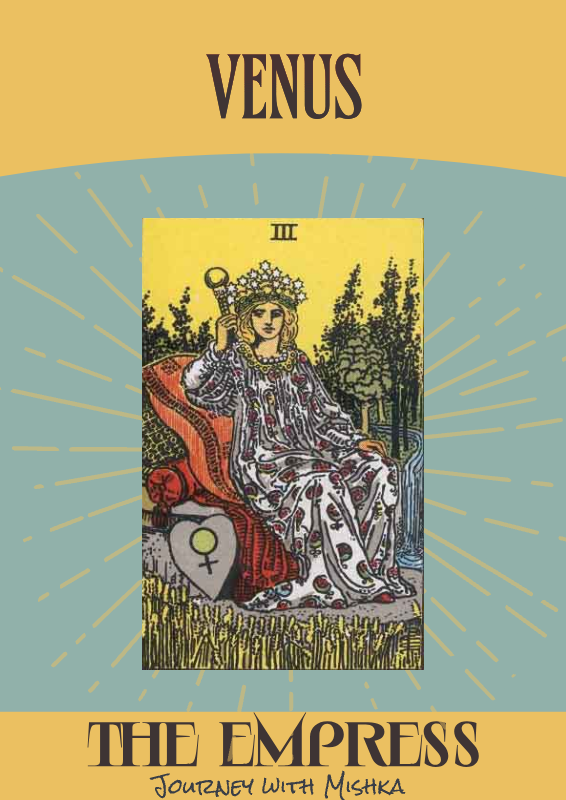
3. The Empress — Venus
The Empress is associated with Venus, the planet of love, beauty, harmony, fertility and attraction. Like the planet and goddess of desire, she embodies abundance and the power to bring things together in beauty.
Yet Venus signifies more than pleasure or charm. It represents attraction itself, the invisible force drawing things together and making creation possible. The Empress captures the flowering of potential, when possibility becomes fertile and begins to produce life. Unlike the emotional and relational qualities of Venus expressed through the suit of Cups, The Empress reveals its creative and generative nature. Love becomes a force that shapes matter, nurtures growth and gives beauty form. The wheat, waterfall and shield bearing Venus's symbol reflect this abundance.
This is why The Empress represents more than luxury or indulgence. Her Venus expresses generosity, patience and the ability to receive life's gifts and transform them into nourishment. Seated within her garden, she is not separate from nature but embodies its fertility.
The Empress embodies creative abundance, receptive, generous and full of life. She reminds us that every birth begins with the willingness to receive, nurture and sustain what is growing. When reading The Empress, her connection to Venus reveals more than beauty or pleasure. It expresses attraction before union, fertility before harvest and the flowering of Spirit as potential enters the world.
In the Golden Dawn tradition, The Empress corresponds to Venus through the Hebrew letter Dalet, meaning door. This doorway symbolises the descent of light into manifestation. Through this correspondence, she embodies the fertile intelligence of Spirit, receiving potential and bringing it into the world as beauty, abundance and form.
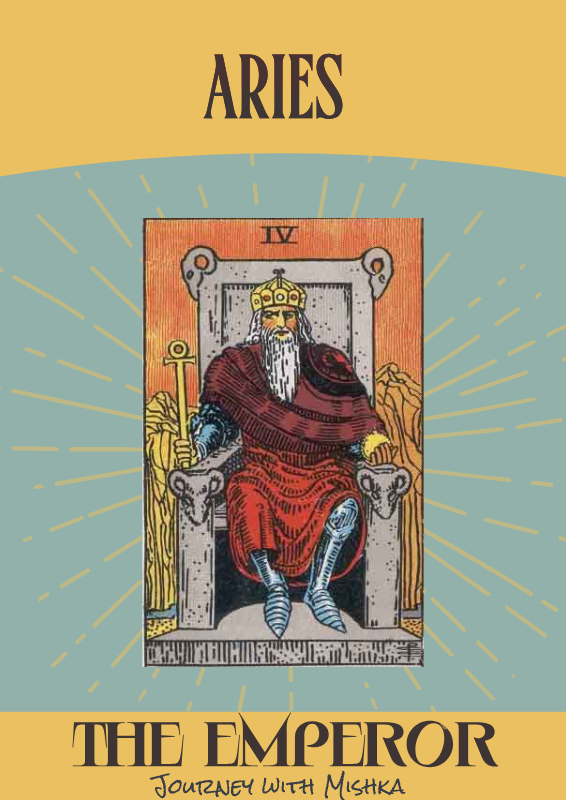
4.The Emperor — Aries
The Emperor is associated with Aries, the sign of initiative, authority, structure and action. As the first sign of the zodiac, Aries embodies the fiery impulse that begins a cycle. Through The Emperor, that energy becomes the courage to establish order.
Yet Aries signifies more than aggression or haste. It represents the power of beginning, the fire that overcomes inertia and sets events in motion. The Emperor captures the moment intention becomes command and potential acquires direction.Unlike the combative qualities of Aries expressed through the suit of Wands, The Emperor reveals its organising nature. Fire becomes the will to establish boundaries, build foundations and protect what has been created. His ram adorned throne, sceptre, orb and stone seat express authority.
This is why The Emperor represents more than tyranny or rigidity. His connection to Aries speaks of leadership, responsibility and the readiness to act when circumstances demand it. The stone throne suggests that authority rests upon foundations strong enough to endure. The Emperor embodies the first assertion of sovereign will, decisive and purposeful. He reminds us that lasting order begins with the courage to take responsibility and give intention form.When reading The Emperor, Aries reveals more than control or command. It expresses the spark before structure, initiative before law and the moment Spirit asserts its place within the world.
In the Golden Dawn tradition, The Emperor corresponds to Aries through the Hebrew letter He, meaning window, the first of the twelve Simple Letters associated with zodiac signs. Through this correspondence, the card expresses the initiating intelligence of Spirit, bringing order to chaos and carrying will from the unseen into manifestation.
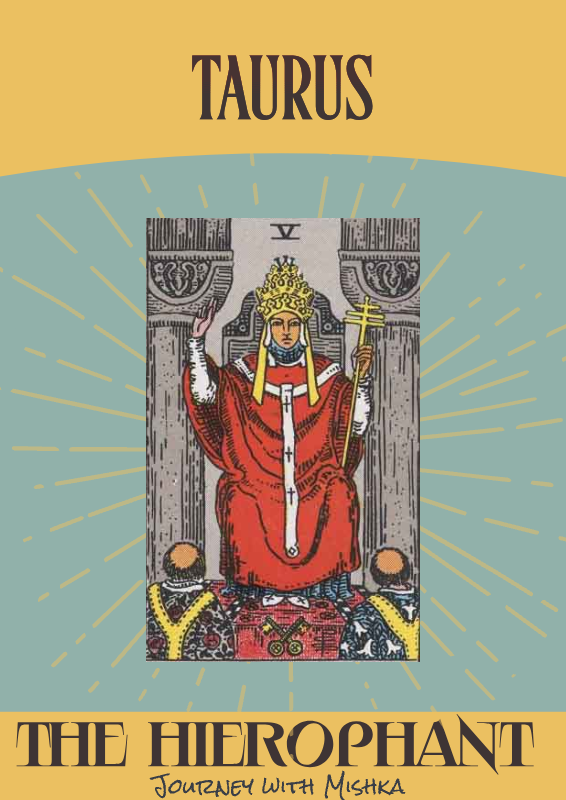
5. The Hierophant — Taurus
The Hierophant is associated with Taurus, the sign of stability, tradition, doctrine and sacred teaching. Like the patient bull of fixed earth, he embodies continuity, endurance and the authority of wisdom passed between successive generations. Yet Taurus signifies more than stubbornness or comfort. It represents preservation, the steady power that sustains something until it acquires lasting meaning. The Hierophant captures the moment private revelation becomes shared teaching through ritual, language and structure. Unlike the material and possessive qualities of Taurus expressed through the suit of Pentacles, The Hierophant reveals its enduring spiritual nature. Earth becomes the ground where belief takes root and tradition grows. His triple crown, crossed keys and throne pillars symbolise the commitment to preserve.
This is why The Hierophant represents more than dogma or conformity. His Taurus expresses devotion, patience and responsibility towards knowledge inherited from others. Seated between two pillars, he becomes a bridge between higher principles and earthly understanding, rather than a prisoner of tradition.
The Hierophant embodies sacred transmission, steadfast and reverent. He reminds us that wisdom survives through those willing to receive it, practise it and pass it onwards. When reading The Hierophant, Taurus reveals more than orthodoxy or established rules. It expresses the ground before growth, the bond before community and the moment Spirit takes lasting shape as shared belief.
In the Golden Dawn tradition, The Hierophant corresponds to Taurus through the Hebrew letter Vau, meaning nail or hook, one of the twelve Simple Letters associated with zodiac signs. This connection embodies the preserving intelligence of Spirit, joining heaven and earth and carrying sacred teaching into the world of form.
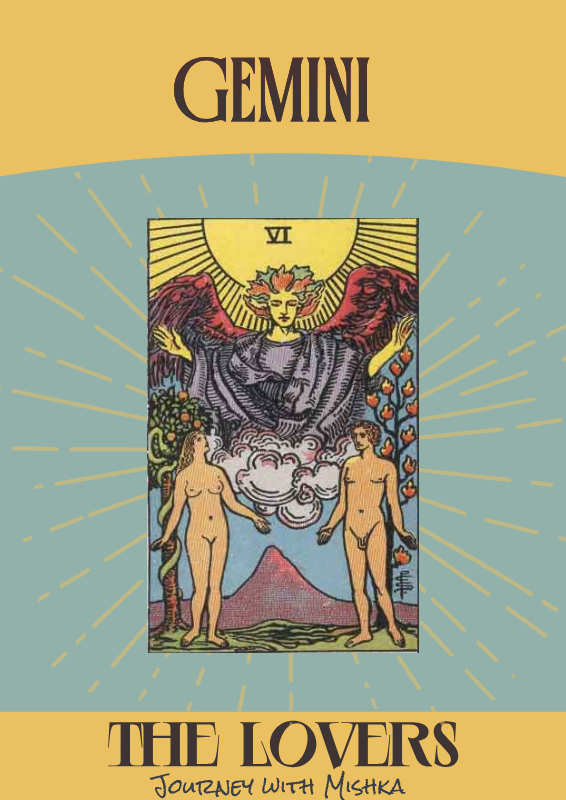
6. The Lovers — Gemini
The Lovers is associated with Gemini, the sign of duality, choice, communication and the sacred union of opposites. Like the zodiacal twins, Gemini seeks connection through curiosity and language. The Lovers expresses relationship and conscious choice.
Yet Gemini signifies more than intellect or adaptability. It represents polarity, the tension between opposing forces seeking reconciliation. The Lovers captures the moment the soul recognises two paths and must decide which to follow.Unlike the analytical qualities of Gemini expressed through the suit of Swords, The Lovers reveals its sacred, relational nature. Air becomes the breath connecting hearts and transforming difference into harmony. The angel, naked figures and opposing trees of Knowledge and Life symbolise this union.
This is why The Lovers represents more than romance or indecision. Gemini brings connection, responsibility and the willingness to commit to another. The figures stand unveiled before the angel because genuine union requires honesty, vulnerability and the removal of masks.
The Lovers embodies sacred choice, conscious and transformative. It reminds us that union demands both the courage to choose and the willingness to be changed by that choice. When reading The Lovers, Gemini reveals more than partnership or affection. It expresses polarity before decision, dialogue before union and Spirit recognising itself through an encounter with another.
In the Golden Dawn tradition, The Lovers corresponds to Gemini through the Hebrew letter Zayin, meaning sword or weapon, the third Simple Letter in zodiacal order. Its blade symbolises distinction and division, while communication makes reconciliation possible. Through this correspondence, the card embodies the unifying intelligence of Spirit, bringing separated forces into relationship and carrying sacred choice into the world of form.
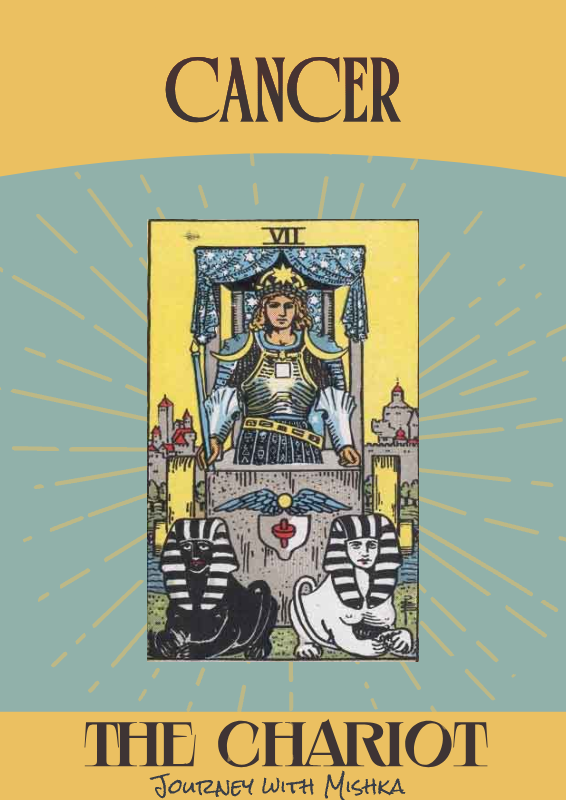
7. The Chariot — Cancer
The Chariot is associated with Cancer, the cardinal water sign ruled by the Moon, symbolising protection, emotional depth and purposeful movement. Like the crab carrying its protective shell, The Chariot embodies the determination to advance while safeguarding what matters most.
Yet Cancer signifies more than emotion or attachment to home. As a cardinal sign, it possesses the initiative to act, while its protective nature gives that action purpose. The Chariot reflects the moment inner feeling becomes determination, allowing vulnerability to develop into strength. Unlike the receptive qualities of Cancer expressed through the suit of Cups, The Chariot reveals its protective and commanding nature. Emotional sensitivity becomes a source of resilience rather than hesitation. The armoured charioteer, opposing sphinxes and starry canopy symbolise the discipline required to maintain direction through conflicting forces.
This is why The Chariot represents more than conquest or ambition. Its connection to Cancer reveals the responsibility behind determination: the need to protect, persevere and remain emotionally centred. The charioteer succeeds not by suppressing opposing forces, but by bringing them under conscious direction.
The Chariot embodies disciplined movement guided by protective will. It reminds us that progress requires both the courage to advance and the strength to preserve what gives the journey meaning. When reading The Chariot, Cancer reveals more than victory or control. It expresses the relationship between emotional security and decisive action, showing how inner strength supports outward achievement.
In the Golden Dawn tradition, The Chariot corresponds to Cancer through the Hebrew letter Heth, meaning fence or enclosure. This symbolism reinforces the card's central theme: the protective intelligence of Spirit, containing and directing its power as it moves into the world of form.
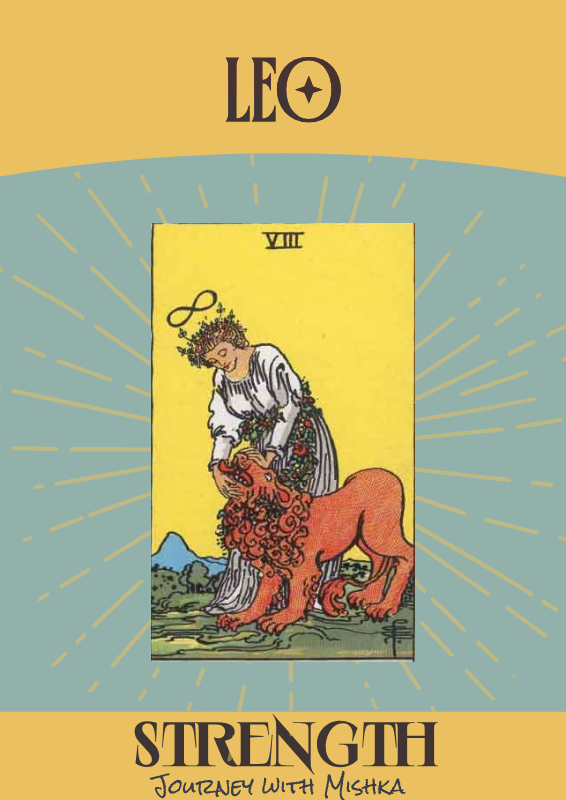
8. Strength — Leo
Strength is associated with Leo, the fixed fire sign ruled by the Sun, symbolising courage, sovereignty and vitality. Like the lion whose authority comes through presence rather than aggression, Strength embodies confidence rooted in self knowledge and gentle mastery.
Yet Leo signifies more than pride or performance. Its solar fire represents the heart, warming and animating the self. Strength captures the moment instinct meets understanding, allowing the animal nature to serve the soul rather than be suppressed. Unlike the assertive qualities of Leo expressed through the suit of Wands, Strength reveals its compassionate, inward power. Fire becomes warmth rather than conquest, and authority requires no intimidation. The woman, lion, lemniscate and mountains suggest the enduring work of mastering oneself.
This is why Strength represents more than physical courage. Leo brings patience, generosity and the willingness to face wild impulses without fear. The woman gently controls the lion's jaws instead of harming him, revealing that strength can contain power without being consumed by it.
Strength embodies inner mastery, patient and sovereign. It reminds us that courage begins with recognising our instincts and meeting them with love rather than force.
When reading Strength, Leo reveals more than endurance or confidence. It expresses the warmth that makes reconciliation possible, the heart behind authority and Spirit learning to embrace its animal nature.
In the Golden Dawn tradition, Strength corresponds to Leo through the Hebrew letter Teth, meaning serpent, the fifth Simple Letter in zodiacal order. Its coiled symbolism evokes hidden, rising fire. This correspondence expresses the integrating intelligence of Spirit, reconciling higher awareness with instinct and bringing strength into the world of form.
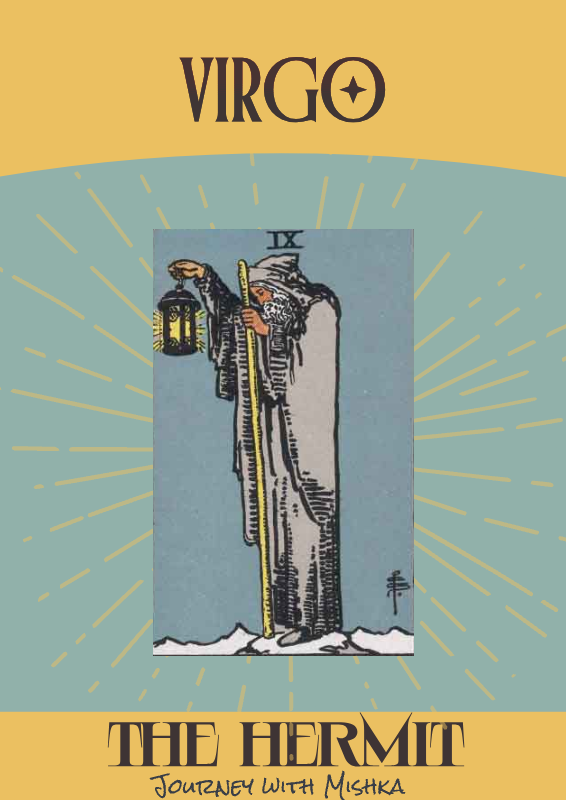
9. The Hermit — Virgo
The Hermit is associated with Virgo, the mutable earth sign symbolising purity, discernment, service and inner wisdom. Like the harvest maiden separating wheat from chaff, The Hermit embodies solitary seeking and the patient work of refinement.
Yet Virgo signifies more than analysis or criticism. It represents discernment, the ability to recognise what matters and release what obscures understanding. The Hermit captures the moment the soul withdraws from worldly noise to discover what is true. Unlike the practical and devoted qualities of Virgo expressed through the suit of Pentacles, The Hermit reveals its contemplative, purifying nature. Earth becomes the ground where wisdom grows silently. His raised lantern, guiding staff and mountain summit symbolise the discipline of spiritual refinement.
This is why The Hermit represents more than isolation or retreat. Virgo brings patience, careful observation and the willingness to examine oneself. The six pointed star within his lantern suggests illumination gained through attentive searching, not knowledge withheld from others.
The Hermit embodies inner discernment, quiet and purposeful. He reminds us that wisdom begins with the courage to withdraw, distinguish truth from illusion and see clearly. When reading The Hermit, Virgo reveals more than solitude or introspection. It expresses refinement before return, purity before teaching and Spirit separating what is essential from what must be released.
In the Golden Dawn tradition, The Hermit corresponds to Virgo through the Hebrew letter Yod, meaning hand, the sixth zodiacal correspondence in the Golden Dawn sequence. Its tiny form also evokes a seed from which further expression unfolds. This correspondence embodies the discerning intelligence of Spirit, refining understanding through solitude and carrying hidden wisdom into conscious life.
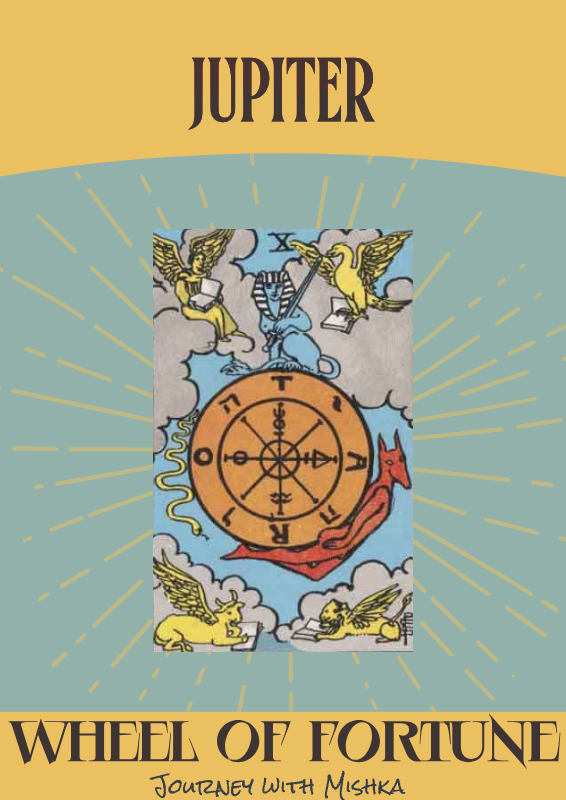
10. Wheel of Fortune — Jupiter
The Wheel of Fortune is associated with Jupiter, the planet of expansion, providence, wisdom and abundance. Like the king of the gods, Jupiter represents a greater order, while the turning Wheel reveals life's changing fortunes and recurring cycles.
Yet Jupiter signifies more than luck or prosperity. It represents the wisdom to recognise patterns within uncertainty and understand that events belong to larger cycles. The Wheel captures the movement of cause and consequence, where change follows laws beyond immediate understanding. Unlike Jupiter's material expressions in the suit of Pentacles, The Wheel reveals its cosmic, providential nature. Abundance becomes the generosity of existence itself, giving and withdrawing according to changing circumstances. The wheel, crowned sphinx, descending serpent and rising Anubis portray the forces governing transformation.
This is why The Wheel represents more than random chance. Jupiter encourages faith, perspective and the willingness to recognise limits of personal control. Its figures rise and fall with the turning wheel, suggesting that wisdom lies in responding to change rather than resisting it.
The Wheel of Fortune embodies the cycles of existence, expansive and governed by hidden order. Every ascent carries the possibility of decline, while every ending opens towards another beginning. When reading The Wheel, Jupiter reveals more than good fortune or fate. It expresses the pattern beneath change, the wider meaning of circumstance and Spirit encountering the rhythms of the world.
In the Golden Dawn tradition, The Wheel corresponds to Jupiter through the Hebrew letter Kaph, meaning palm of the hand, one of the seven Double Letters associated with planets. The open hand evokes receiving and giving, while the correspondence expresses the expansive intelligence of Spirit, shaping cycles through an order greater than individual will.
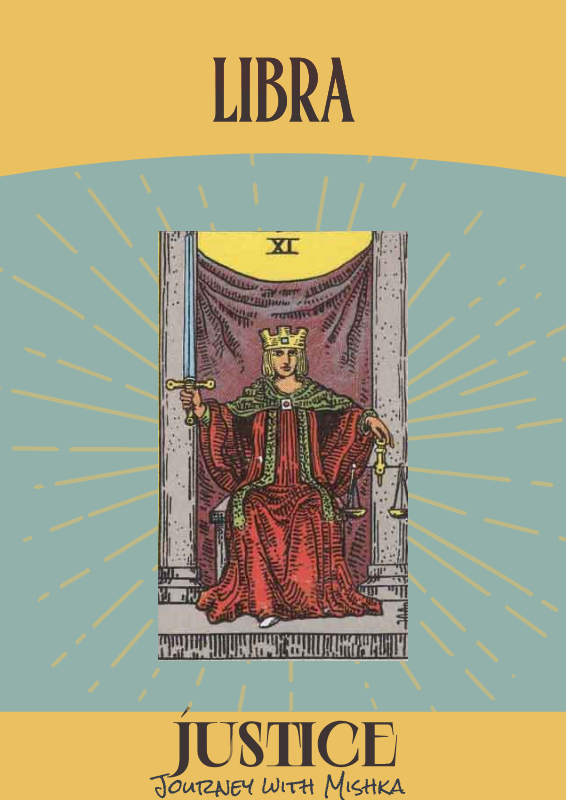
11. Justice — Libra
Justice is associated with Libra, the cardinal air sign symbolising balance, harmony, equity and impartial judgement. Represented by scales rather than a creature, Libra expresses the search for equilibrium and the responsibility to weigh competing claims fairly.
Yet Libra signifies more than diplomacy or compromise. It represents adjustment, the ability to hold opposing forces in tension until balance emerges. Justice captures the moment personal preference gives way to conscious assessment of what is right. Unlike the analytical and communicative qualities of Libra expressed through the suit of Swords, Justice reveals its ethical and judicial nature. Air becomes the clarity needed to recognise truth without distortion. Her scales, upright sword and crown symbolise measured judgement supported by authority and reason.
This is why Justice represents more than punishment or legal decisions. Libra brings integrity, discernment and the willingness to choose principle over convenience. Her sword distinguishes truth from falsehood, while her scales remind us that every judgement requires consideration.
Justice embodies impartial judgement, balanced yet resolute. It reminds us that fairness demands both the patience to examine circumstances and the courage to act upon what is revealed. When reading Justice, Libra reveals more than harmony or legality. It expresses balance before judgement, measurement before action and Spirit learning to reconcile opposing claims through responsibility and truth.
In the Golden Dawn tradition, Justice corresponds to Libra through the Hebrew letter Lamed, meaning ox goad, the seventh zodiacal correspondence in the sequence beginning with Aries. Its guiding symbolism evokes correction, learning and direction. This connection expresses the balancing intelligence of Spirit, weighing actions and consequences as divine justice enters the world of form.
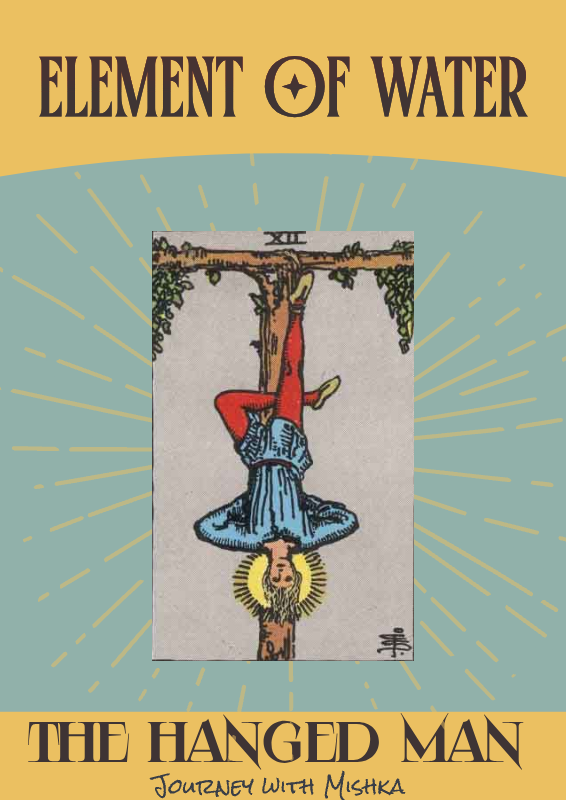
12. The Hanged Man — Water (Mem)
The Hanged Man is associated with Water the element of surrender, receptivity, sacrifice and transformation. Like water flowing around obstacles and taking the shape of its surroundings, he embodies strength found in yielding rather than resisting.
Yet Water signifies more than passivity or weakness. It dissolves rigid forms, allowing what has become fixed to change. The Hanged Man captures the moment the soul releases struggle and becomes receptive to wisdom beyond conscious control. Unlike the emotional qualities of Water expressed through the suit of Cups, The Hanged Man reveals its dissolving, transformative nature. Water becomes the medium of spiritual renewal. His inverted body, living tree and radiant halo suggest surrender opening the way to illumination.
This is why The Hanged Man represents more than suffering or sacrifice. Water brings patience, acceptance and the courage to remain still amid uncertainty. His reversal suggests a chosen change of perspective, revealing truths that ordinary effort and familiar assumptions may conceal.
The Hanged Man embodies spiritual surrender, receptive and purposeful. He reminds us that transformation sometimes begins not through action, but through releasing control and allowing understanding to emerge. When reading The Hanged Man, Water reveals more than letting go. It expresses dissolution before renewal, stillness before insight and Spirit entering the depths of experience to discover another way of seeing.
In the Golden Dawn tradition, The Hanged Man corresponds to Water through the Hebrew letter Mem, meaning water, one of the three Mother Letters. Its association with the deep evokes immersion, silence and dissolution. This correspondence expresses the receptive intelligence of Spirit, transforming consciousness through surrender and carrying hidden wisdom into the world of form.

13. Death — Scorpio
Death is associated with Scorpio, the fixed water sign of transformation, intensity and regeneration. Traditionally ruled by Mars and modernly associated with Pluto, Scorpio evokes the scorpion's sting and the eagle's ascent. Death reveals endings as thresholds to renewal.
Yet Scorpio signifies more than destruction or emotional intensity. Its power lies in releasing what has become obsolete so that life can emerge. Death captures the moment an old identity falls away, making transformation possible. Unlike the emotional and relational qualities of Scorpio expressed through the suit of Cups, Death reveals its profound regenerative nature. Water becomes the depths of the unconscious, where forms dissolve. The skeletal rider, black banner and sun between two towers suggest mortality alongside renewal.
This is why Death represents more than physical death or finality. Scorpio brings the courage to confront loss, relinquish attachments and accept change. The rider embodies an inevitable cycle rather than punishment, reminding us that renewal cannot begin while we cling to what has ended.
Death embodies spiritual regeneration, unsettling yet full of possibility. Every ending creates space for a beginning, even when its promise remains unseen. When reading Death, Scorpio reveals more than endings or upheaval. It expresses dissolution before renewal, descent before emergence and Spirit shedding what can no longer sustain its growth.
In the Golden Dawn tradition, Death corresponds to Scorpio through the Hebrew letter Nun, meaning fish, the eighth zodiacal correspondence in the sequence beginning with Aries. Its watery symbolism evokes life moving beneath the surface. This connection expresses the transformative intelligence of Spirit, dissolving exhausted forms and carrying the possibility of rebirth into the world of form.
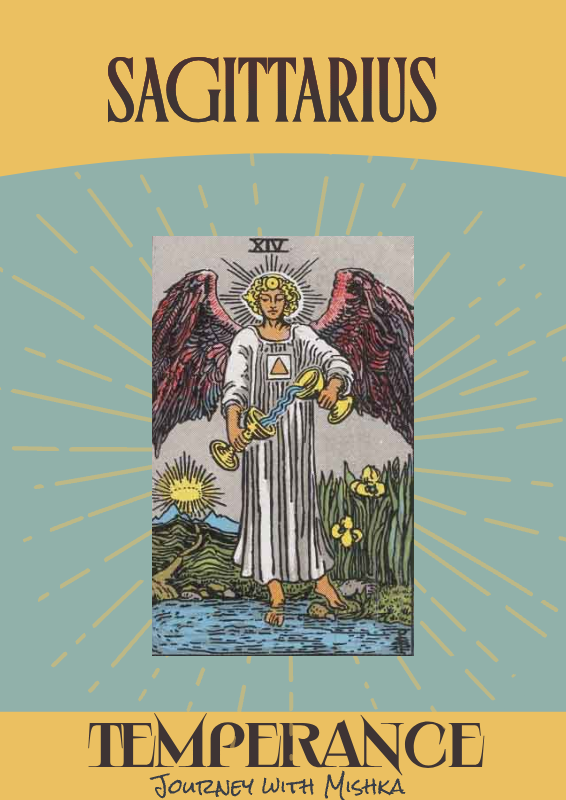
14. Temperance — Sagittarius
Temperance is associated with Sagittarius, the mutable fire sign symbolising aspiration, patience, balance and spiritual transformation. Like the centaur archer, grounded while aiming towards heaven, Temperance directs fiery ambition towards harmony and higher wisdom.
Yet Sagittarius signifies more than adventure or enthusiasm. It seeks meaning by bringing experiences and ideas together. Temperance captures the moment opposing forces are consciously blended, when emotional depths and spiritual fire create something neither could produce alone. Unlike the adventurous qualities of Sagittarius expressed through the suit of Wands, Temperance reveals its patient, alchemical nature. Fire becomes the measured heat that transforms rather than consumes. The angel pouring between cups, one foot on land and another in water, with irises and mountains, symbolises integration and purposeful progress.
This is why Temperance represents more than restraint. Sagittarius brings faith in purpose and the willingness to let change unfold gradually. The angel pours steadily, suggesting that lasting transformation comes through attention and care rather than forcing an outcome.
Temperance embodies spiritual alchemy, joining what seems incompatible into a balanced whole. It reminds us that growth requires both the vision to imagine change and the patience to cultivate it. When reading Temperance, Sagittarius reveals more than moderation. It expresses synthesis before renewal, harmony before advancement and Spirit learning to reconcile opposing qualities within itself.
In the Golden Dawn tradition, Temperance corresponds to Sagittarius through the Hebrew letter Samekh, meaning prop or support, the ninth zodiacal correspondence beginning with Aries. This supporting symbolism evokes guidance along a spiritual path. The card expresses the synthesising intelligence of Spirit, blending opposing forces and bringing harmony into the world of form.
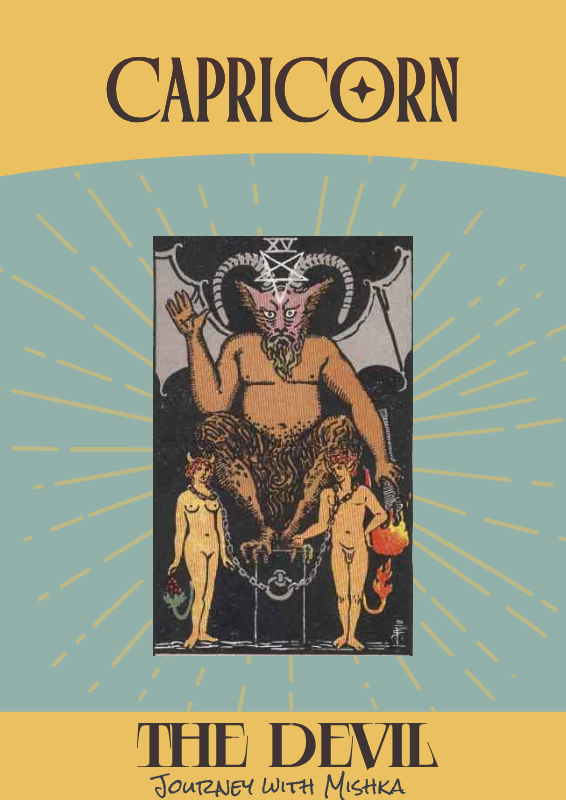
15. The Devil — Capricorn
The Devil is associated with Capricorn, the cardinal earth sign symbolising ambition, discipline, structure and material attachment. Like the mountain goat climbing steadily towards its goal, Capricorn embodies worldly achievement, while The Devil reveals the chains that ambition can create.
Yet Capricorn signifies more than determination or responsibility. It represents manifestation, the power to give spiritual intention lasting physical form. The Devil captures the moment the soul becomes absorbed in material existence and forgets its freedom. Unlike the productive qualities of Capricorn expressed through the suit of Pentacles, The Devil reveals its binding, materialistic nature. Earth becomes the weight of attachment rather than fertile ground. The inverted pentagram, goat headed figure, chained couple and downward torch symbolise consciousness trapped by desire.
This is why The Devil represents more than evil or temptation. Capricorn brings the need for security, achievement and control, which can become limiting when mistaken for freedom. The figures wear loose chains, suggesting that recognising our attachments is the first step towards releasing them.
The Devil embodies entanglement with matter, revealing how desire can become dependence. It reminds us that limitations may become opportunities for growth when we recognise the power to change them. When reading The Devil, Capricorn reveals more than bondage or materialism. It expresses attachment before awareness, limitation before liberation and Spirit discovering itself through the demands of physical existence.
In the Golden Dawn tradition, The Devil corresponds to Capricorn through the Hebrew letter Ayin, meaning eye, the tenth zodiacal correspondence beginning with Aries. Its symbolism evokes perception and the danger of mistaking appearances for reality. The card expresses Spirit confronting material limitation and recovering awareness beyond attachment.
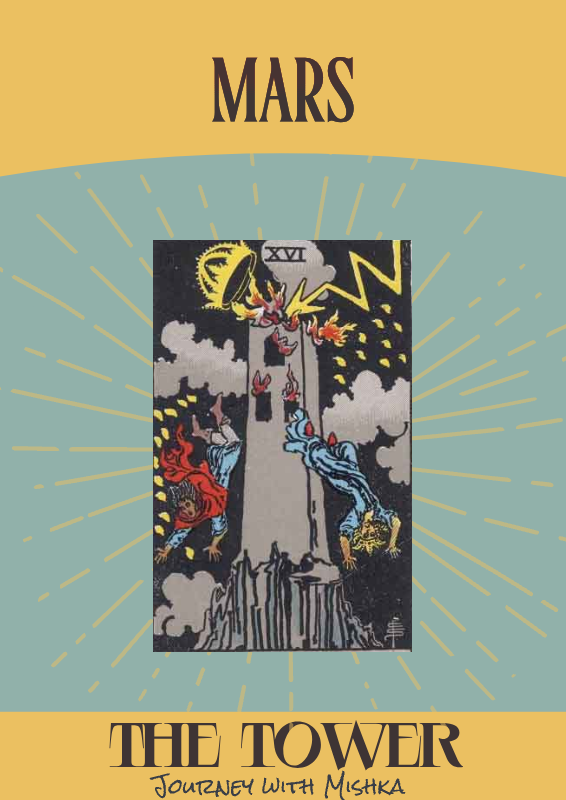
16. The Tower — Mars
The Tower is associated with Mars, the planet of conflict, upheaval and decisive action. Like the ancient god of war, Mars challenges complacency, while The Tower reveals the collapse of structures built upon illusion or pride.
Yet Mars signifies more than aggression or destruction. It represents the force that breaks through stagnation and makes change unavoidable. The Tower captures the moment false foundations give way, creating space for something authentic to emerge. Unlike the assertive qualities of Mars expressed through the suit of Wands, The Tower reveals its disruptive, revelatory power. Fire becomes lightning that exposes what cannot endure. The struck tower, falling crown, tumbling figures and flames portray the overthrow of assumed security and authority.
This is why The Tower represents more than disaster or punishment. Mars brings confrontation with truths we resist, forcing us to recognise what has become unsustainable. The lightning strikes the tower, suggesting that revelation can dismantle arrogance and release us from confinement.
The Tower embodies liberating destruction, sudden and unsettling. It reminds us that collapse can expose false beliefs and open the possibility of rebuilding upon firmer ground. When reading The Tower, Mars reveals more than catastrophe or conflict. It expresses shattering before renewal, revelation before understanding and Spirit breaking free from structures that no longer serve its growth.
In the Golden Dawn tradition, The Tower corresponds to Mars through the Hebrew letter Pe, meaning mouth, one of the seven Double Letters associated with the planets. The mouth evokes speech and the power of an irreversible declaration. This correspondence expresses the shattering intelligence of Spirit, breaking through illusion and bringing concealed truth into the world of form.
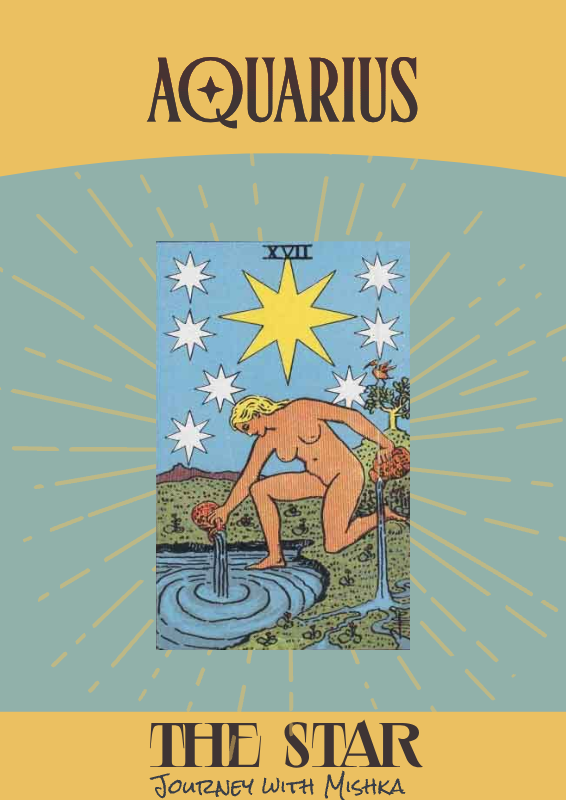
17. The Star — Aquarius
The Star is associated with Aquarius, the fixed air sign symbolising hope, healing, inspiration and renewal. Like the water bearer sharing its gifts freely, The Star embodies generous idealism and faith in a future beyond present suffering.
Yet Aquarius signifies more than dreams or utopian visions. It represents the perspective that restores hope after upheaval. The Star captures the quiet moment following destruction, when the sky clears and life begins to recover.Unlike the analytical, detached qualities of Aquarius expressed through the suit of Swords, The Star reveals its compassionate, restorative nature. Air becomes the clear night sky offering perspective and possibility. The central star, seven surrounding stars, kneeling figure and two pouring vessels evoke guidance and renewal.
This is why The Star represents more than wishful thinking. Aquarius brings generosity, trust and concern for a world beyond oneself. Water flowing onto land and into the pool suggests healing reaching conscious experience and unconscious depths alike.
The Star embodies spiritual renewal, gentle and full of promise. It reminds us that healing begins when we can look beyond immediate pain and recognise possibilities still waiting to unfold. When reading The Star, Aquarius reveals more than inspiration or optimism. It expresses clarity after crisis, vision before manifestation and Spirit offering its gifts freely to the wider world.
In the Golden Dawn tradition, The Star corresponds to Aquarius through the Hebrew letter Tzaddi, meaning fishhook, the eleventh zodiacal correspondence beginning with Aries. Its image of drawing something from the depths evokes hidden possibilities brought into awareness. This correspondence expresses the restorative intelligence of Spirit, carrying hope from the unseen into living experience.
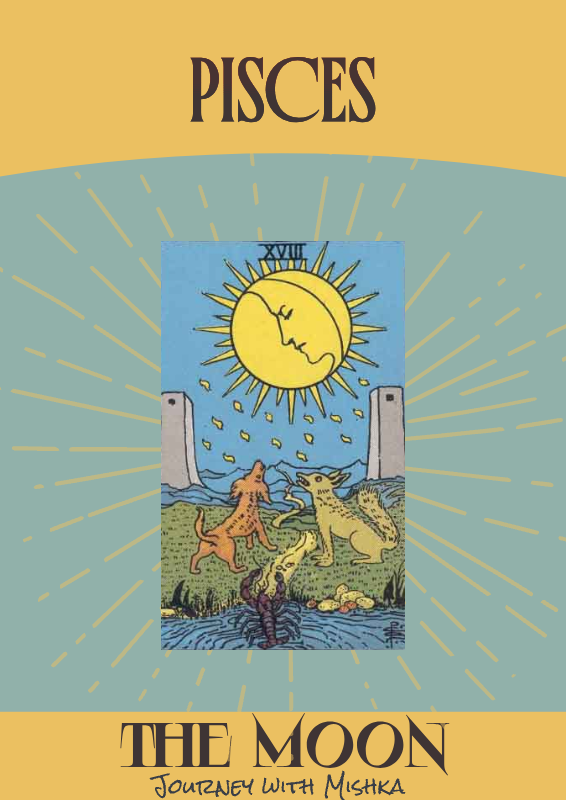
18. The Moon — Pisces
The Moon is associated with Pisces, the mutable water sign of intuition, dreams, illusion and unconscious depths. Like two fishes swimming in opposite directions yet bound together, The Moon embodies mystery and tension between realities.
Yet Pisces signifies more than sensitivity or imagination. It represents dissolution, the ocean where familiar boundaries disappear. The Moon captures the soul leaving safe shores, entering a realm where waking and dreaming, truth and illusion become difficult to distinguish. Unlike the emotional and relational qualities of Pisces expressed through the suit of Cups, The Moon reveals its primal, testing nature. Water becomes the vast unconscious rather than personal feeling. The moon, howling dog and wolf, emerging crayfish and distant towers evoke instinct, uncertainty and the threshold of discovery.
This is why The Moon represents more than deception or fear. Pisces brings intuition, surrender and courage to continue without certainty. The winding path between the towers leads into darkness, while the crayfish rising from water suggests awareness emerging from hidden depths.
The Moon embodies spiritual descent, unsettling yet meaningful. It reminds us that understanding sometimes requires facing shadows within ourselves rather than fleeing them. When reading The Moon, Pisces reveals more than confusion or dreams. It expresses dissolution before clarity, darkness before dawn and Spirit learning to navigate uncertainty without losing its direction.
In the Golden Dawn tradition, The Moon corresponds to Pisces through the Hebrew letter Qoph, meaning back of the head, the twelfth zodiacal correspondence beginning with Aries. This symbolism evokes what lies beyond ordinary awareness. The card expresses the mysterious intelligence of Spirit, guiding consciousness through the unconscious towards insight and renewal.
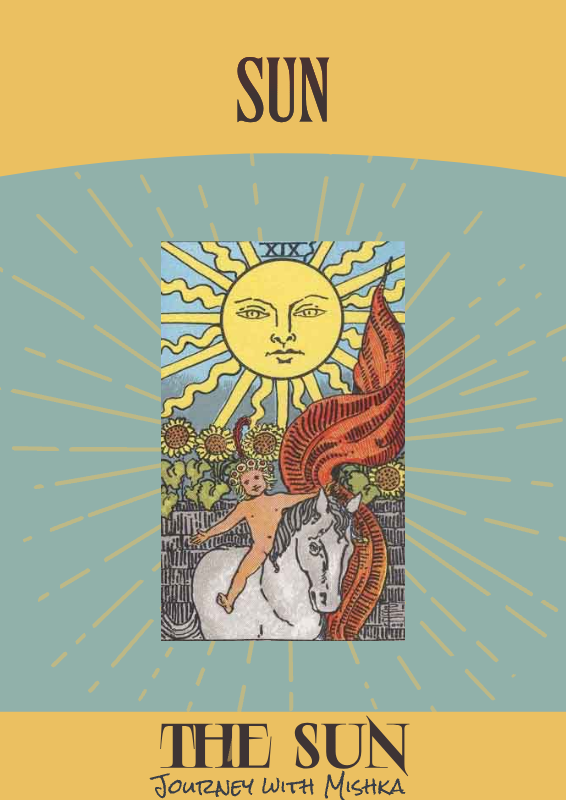
19. The Sun — Sun
The Sun is associated with the Sun itself, symbolising illumination, vitality, joy and consciousness made visible. Like the source of light and life, it shines without discrimination, embodying clarity and the triumph of light over darkness.
Yet solar symbolism signifies more than happiness or success. It represents revelation, the power to expose what was hidden and illuminate what remained uncertain. The Sun captures the moment consciousness emerges from shadow and recognises its own nature. Unlike the ambitious, vital qualities of solar fire expressed through the suit of Wands, The Sun reveals its pure, illuminating nature. Fire becomes truth rather than personal desire. The radiant sun, naked child riding a white horse, sunflowers and triumphant red banner celebrate life revealed.
This is why The Sun represents more than good fortune. Its light expresses authenticity, confidence and the freedom to appear without pretence. The child rides unashamed, suggesting innocence grounded in openness rather than ignorance. Joy arises from having nothing to conceal.
The Sun embodies full illumination, radiant and life affirming. It reminds us that understanding grows when we face the light and allow ourselves to be seen. When reading The Sun, its solar correspondence reveals more than achievement or pleasure. It expresses clarity before joy, light before warmth and Spirit shining freely through the world of form.
In the Golden Dawn tradition, The Sun corresponds to the Hebrew letter Resh, meaning head, one of the seven Double Letters assigned to planets. Its symbolism evokes the face turned towards illumination. This correspondence expresses the illuminating intelligence of Spirit, bringing understanding into awareness and revealing life in the clear light of consciousness.
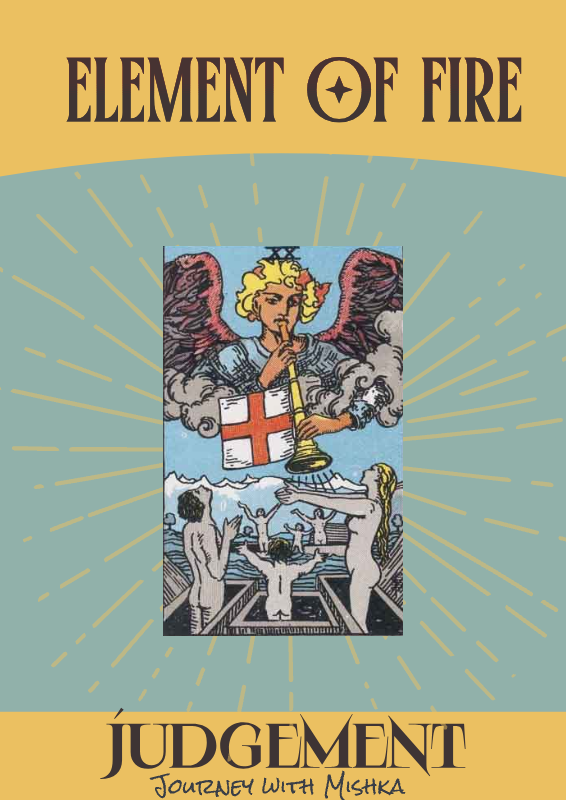
20. Judgement — Fire
Judgement is associated with Fire, the element of awakening, resurrection, purification and spiritual transformation. Like flames consuming what has outlived its purpose, Judgement embodies the call to rise beyond the past and recognise a greater truth.
Yet Fire signifies more than destruction or punishment. It represents purification, the power to burn away illusion and reveal what remains authentic. Judgement captures the moment consciousness awakens, when the soul hears a summons that can no longer be ignored. Unlike the assertive qualities of Fire expressed through the suit of Wands, Judgement reveals its divine, awakening nature. Fire becomes illumination rather than personal ambition. The descending angel, sounding trumpet, rising figures and banner bearing a cross symbolise resurrection and the call to spiritual renewal.
This is why Judgement represents more than punishment or final reckoning. Fire brings revelation, responsibility and the courage to respond when transformation becomes necessary. The figures rise from their coffins in answer to the trumpet, suggesting that awakening begins with recognising and accepting the call.
Judgement embodies sacred resurrection, purifying and transformative. It reminds us that rebirth requires releasing what we have outgrown and finding the courage to embrace a renewed existence. When reading Judgement, Fire reveals more than reckoning or change. It expresses purification before resurrection, the summons before the rising and Spirit awakening to its deeper purpose.
In the Golden Dawn tradition, Judgement corresponds to Fire through the Hebrew letter Shin, meaning tooth, one of the three Mother Letters. Its symbolism suggests division and the transforming flame. This correspondence expresses the awakening intelligence of Spirit, consuming falsehood and bringing hidden truth into conscious life through the call to renewal.
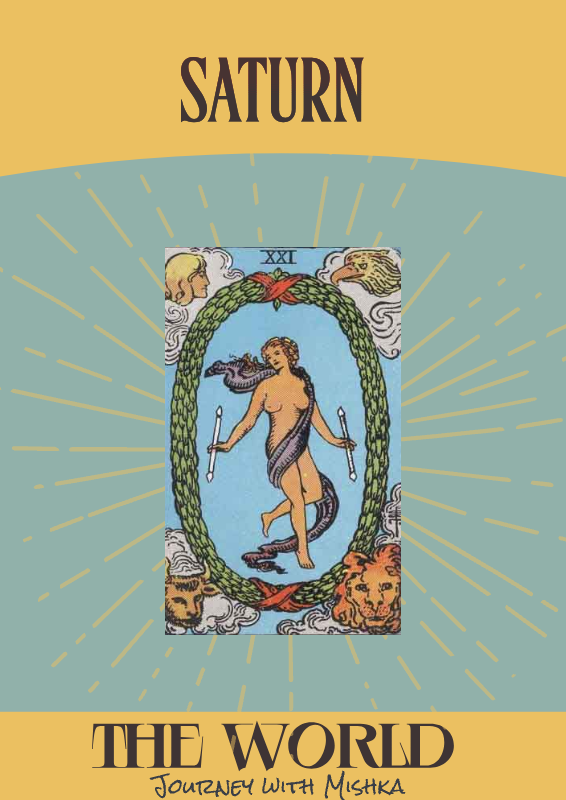
21. The World — Saturn
The World is associated with Saturn, the planet of completion, structure, limitation and manifestation. As the ancient boundary of the visible planetary realm, Saturn marks time and form. The World embodies the fulfilment of a cycle brought to its conclusion.
Yet Saturn signifies more than restriction or delay. It represents the patient discipline that gives lasting shape to possibility. The World captures the completion of the Great Work, when scattered elements become an ordered, harmonious whole. Unlike the practical qualities of Saturn expressed through the suit of Pentacles, The World reveals its cosmic, completing nature. Limitation becomes the boundary that holds creation together. The laurel wreath, central dancer, four corner figures and two wands symbolise wholeness and accomplishment.
This is why The World represents more than achievement or an ending. Saturn teaches patience, responsibility and acceptance of limits as necessary conditions of form. The dancer moves freely within the wreath, suggesting that fulfilment arises through completion rather than endless expansion.
The World embodies sacred completion, measured and triumphant. It reminds us that a cycle must conclude before another can begin, and that boundaries preserve what has been created. When reading The World, Saturn reveals more than success or fulfilment. It expresses structure before freedom, discipline before mastery and Spirit finding its place within the world of form.
In the Golden Dawn tradition, The World corresponds to Saturn through the Hebrew letter Taw, meaning mark or sign, the final letter of the Hebrew alphabet and one of the seven planetary Double Letters. This correspondence expresses the completing intelligence of Spirit, gathering experience into a whole and bringing the Great Work to fulfilment.