
How to Interpret Knights in Tarot
Symbolism, Psychological Meaning, and Different Interpretive Approaches
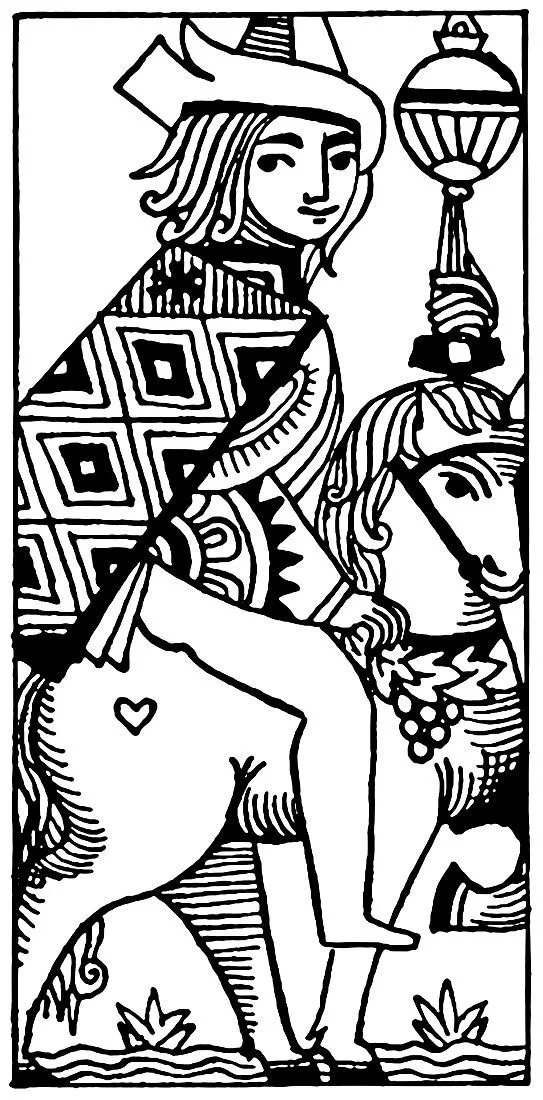
In Tarot, the Knights are part of the court cards, which traditionally represent human qualities, psychological patterns, or ways of expressing energy in the world. Each suit contains a Knight: Knight of Wands, Knight of Cups, Knight of Swords, and Knight of Pentacles.
Across many Tarot traditions, Knights represent movement and active expression of energy. If Pages symbolise the beginning of something, Knights represent the stage where that energy moves forward, explores, and tests itself in the world.
Knights are often the most dynamic of the court cards. They are associated with action, pursuit, and the willingness to engage with challenges.
Different traditions interpret Knights slightly differently. Some see them as people with strong personalities, others as forces of movement, and others as psychological drives within the individual.
Because Tarot developed through many schools of thought, Knights can be understood through several complementary perspectives.
The Core Symbolism of Knights
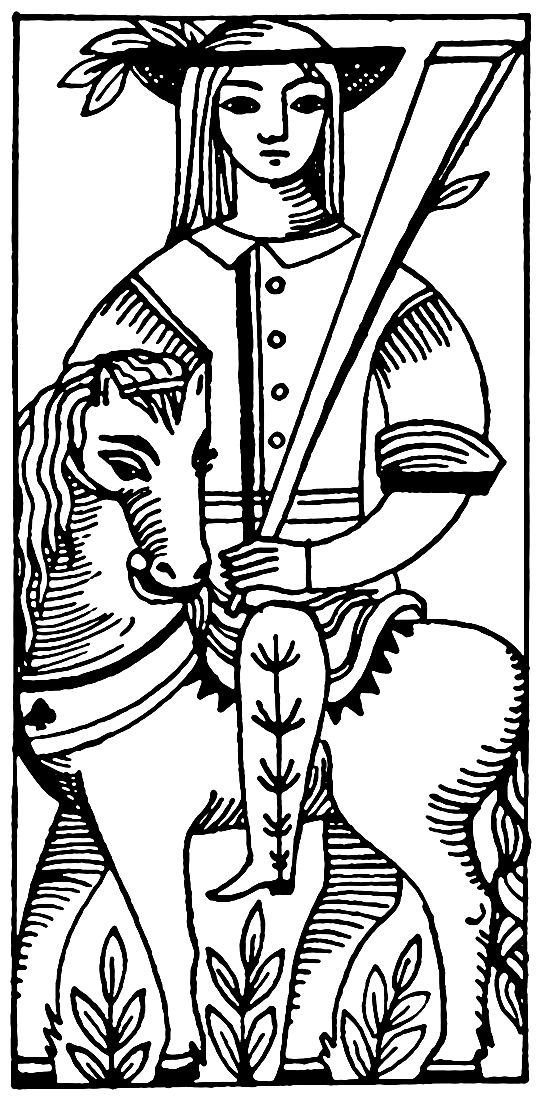
At the most basic level, Knights represent:
movement and action
pursuit of goals
motivation and drive
exploration and challenge
the expression of energy in motion
If the court cards are understood as stages of development, Knights represent the phase where energy leaves the learning stage and begins to act in the world.
Compared to the other court cards:
Pages – curiosity and learning
Knights – action and pursuit
Queens – inner mastery and reflection
Kings – authority and control
Knights therefore describe how energy moves and expresses itself through behaviour and initiative.
The Golden Dawn Perspective
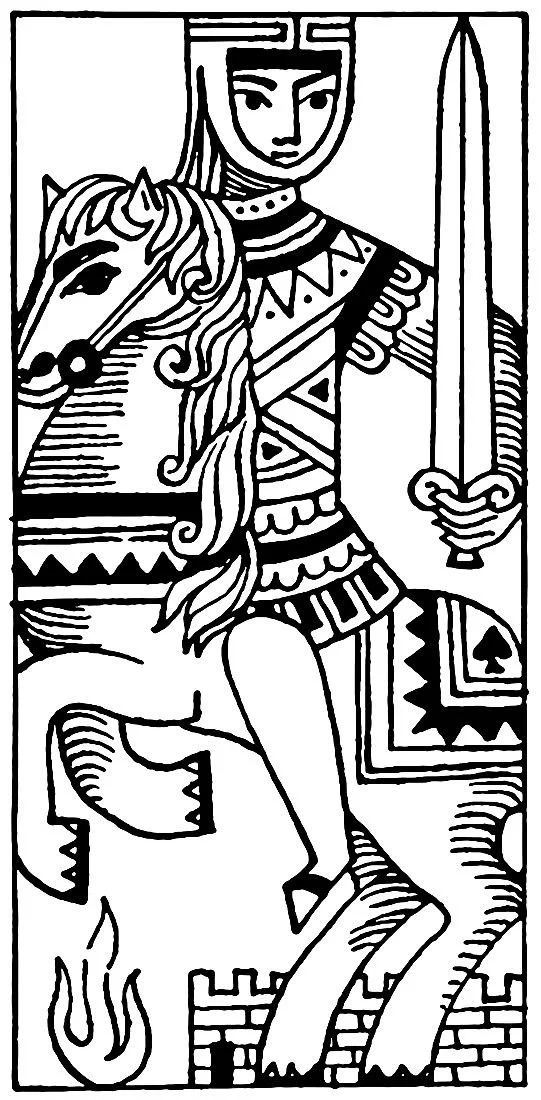
The Hermetic Order of the Golden Dawn strongly influenced how modern Tarot readers understand court cards.
In the Golden Dawn framework, Knights represent the air aspect of each element.
This means they symbolise the dynamic, moving expression of an element.
For example:
Knight of Wands – air of fire – fiery energy expressed through bold action and enthusiasm
Knight of Cups – air of water – emotional energy expressed through pursuit of meaning or romance
Knight of Swords – air of air – intellectual energy expressed through debate, ideas, and rapid movement
Knight of Pentacles – air of earth – practical energy expressed through persistence and steady effort
The idea behind this structure is that air creates movement and direction. Therefore, Knights represent how an element travels, spreads, or pushes forward.
From this perspective, Knights represent the active force that carries energy into the world..
Aleister Crowley and the Thoth Tarot
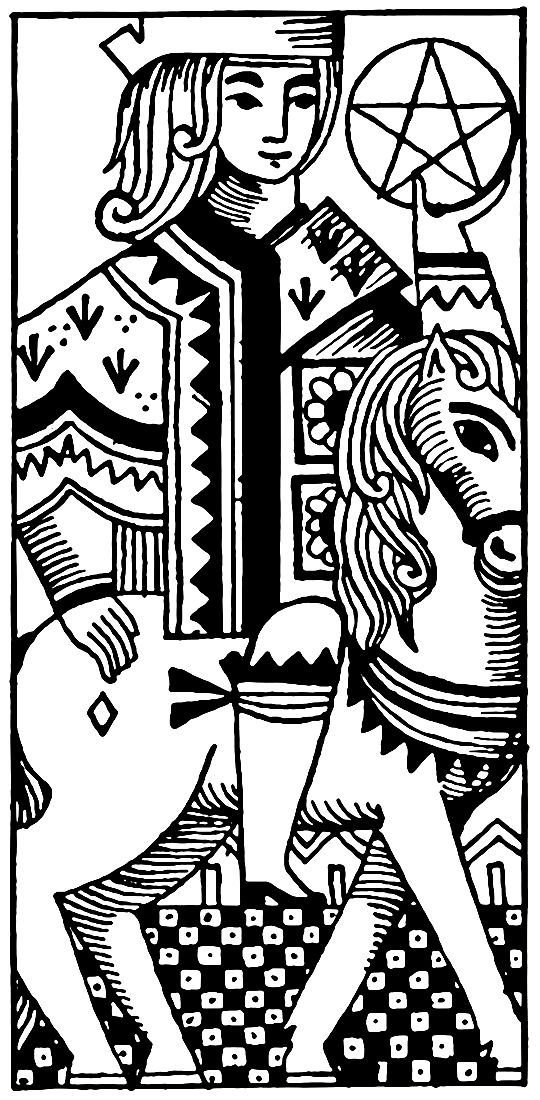
In the Thoth Tarot, Aleister Crowley reorganised the court cards slightly. What many Tarot decks call Kings are called Knights in the Thoth system.Despite this difference in naming, the essential meaning remains similar: Knights represent the most active and powerful expression of an element.
Crowley viewed the Knights as dynamic forces rather than static personalities. They symbolise:
motion
expansion of energy
ambition and pursuit
the drive to express power or purpose
In this system, each Knight embodies the pure energetic movement of an element. For example:
Knight of Wands represents explosive creative force.
Knight of Cups represents the passionate pursuit of emotional or artistic ideals.
Knight of Swords represents the unstoppable force of thought and communication.
Knight of Disks (Pentacles) represents slow but unstoppable material progress.
Crowley described these figures almost like forces of nature, expressing energy in motion rather than simply representing people.
A Jungian Perspective
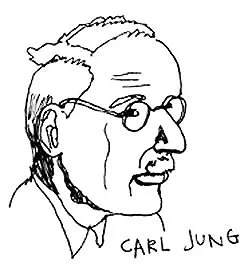
From a Jungian psychological perspective, Tarot figures can be interpreted as archetypal patterns within the psyche.
In this framework, Knights represent the archetype of the seeker or warrior. Psychologically, they symbolise the stage when a person moves toward something with intensity and purpose.
This might involve:
pursuing a goal
defending a belief
exploring new experiences
asserting personal identity
Each Knight reflects a different psychological style of pursuit. Examples:
Knight of Wands – the explorer or adventurer, driven by excitement and possibility.
Knight of Cups – the romantic or dreamer, driven by ideals and emotional vision.
Knight of Swords – the intellectual warrior, driven by ideas, truth, or debate.
Knight of Pentacles – the builder, driven by discipline and long-term goals.
From a Jungian perspective, Knights often represent the energy that pushes the individual forward on the path of development.
Knights as People

In Cartomancy and Tarot de Marseilles
In traditional Tarot reading, court cards sometimes represent actual individuals.
When interpreted this way, Knights often describe people who are:
active and motivated
pursuing something intensely
passionate or determined
sometimes impulsive or single-minded
Knights tend to represent strong personalities who are focused on a particular goal or direction.
However, modern readers often interpret them more symbolically. The card may describe a style of behaviour or attitude, rather than a literal person.
For example:
Knight of Swords may describe someone direct, argumentative, or intellectually driven.
Knight of Pentacles may describe someone reliable, patient, and methodical.
Knights as Energies
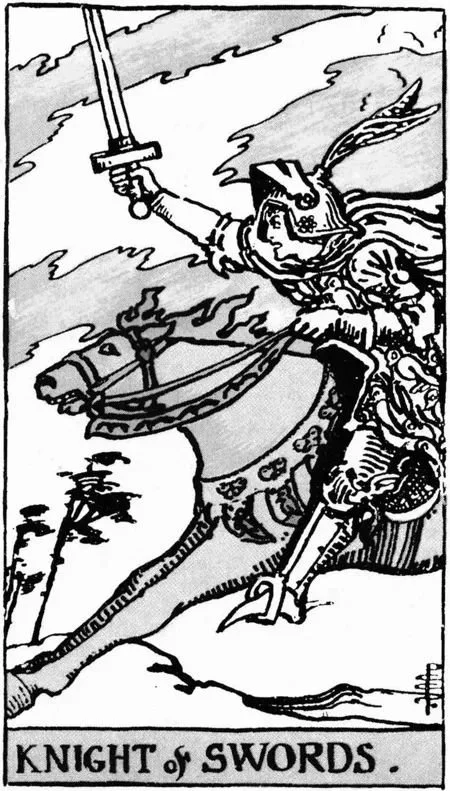
Another useful way to interpret Knights is to see them as energies moving through a situation. Knights symbolise action, they often appear in readings when:
something is accelerating
someone is pursuing a goal
momentum is building
a challenge or confrontation is approaching
Each Knight describes how the situation is moving forward. For example:
Knight of Wands suggests bold action or rapid progress.
Knight of Cups suggests emotional or creative pursuit.
Knight of Swords suggests fast decisions or intellectual conflict.
Knight of Pentacles suggests steady, patient progress.
Knights as Stages of Development
Page – learning and curiosity
Knight – action and experimentation
Queen – inner mastery and emotional intelligence
King – authority and leadership
Knights therefore represent the phase of testing, exploration, and effort.This stage often involves risk, mistakes, and learning through experience.It is the moment when potential begins to actively shape reality.
A Practical Way to Interpret Knights
A simple approach when interpreting Knights is to ask:
What energy is moving here?
What is being pursued?
Where is momentum building?
Knights often indicate that something is actively unfolding, and that movement or action is required.
They may also warn against excessive intensity or impulsiveness, depending on the surrounding cards.
In Simple Terms:
Pages represent the early stage of energy in a particular area of life.
Each Knight expresses the qualities of its suit:
Knight of Wands – bold action, adventure, and enthusiasm
Knight of Cups – emotional pursuit, creativity, and idealism
Knight of Swords – intellectual drive, debate, and rapid action
Knight of Pentacles – persistence, discipline, and steady progress
.
The Key Point
Across occult traditions, psychological interpretations, and modern Tarot practice, Knights consistently symbolise energy in motion — the stage where potential turns into action.