
Psychology, Tarot & Story Telling
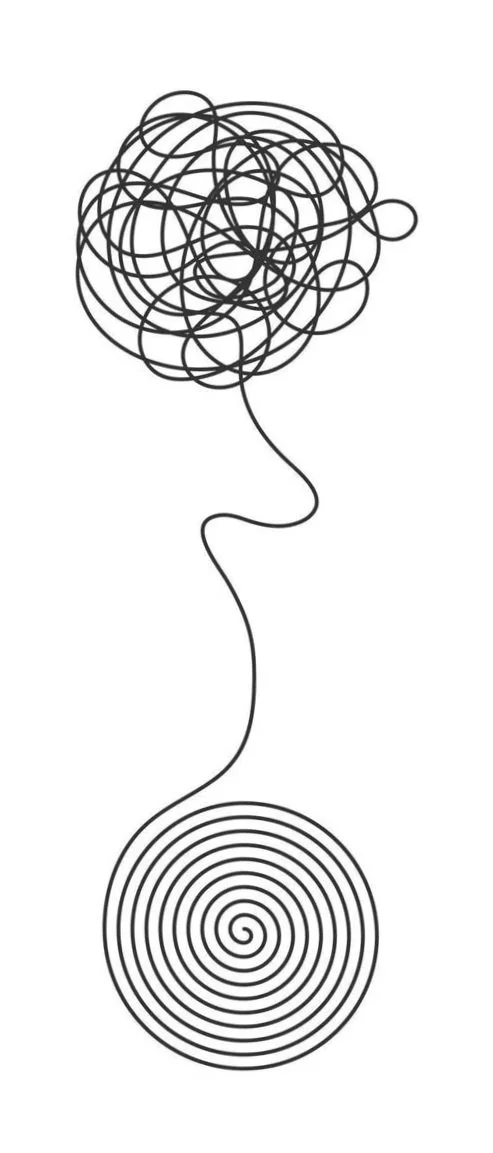
Human Storytelling Organises Our Experience
For most people, psychology and Tarot appear to belong to two very different worlds.
Psychology seeks to understand the human mind through observation, theory, and scientific research. Tarot, by contrast, is often placed in the category of fortune telling. Yet this popular perception overlooks its origins. At its core, Tarot belongs to the Western esoteric tradition. It is a symbolic system expressed through images, archetypes, allegory, and metaphor. The cards are not simply illustrations. They are symbolic representations of human experience, each containing layers of psychological, philosophical, and esoteric meaning.
The Irish poet and mystic A. E. Waite described the Tarot as Pictorial Keys. It is a fitting description. Rather than communicating through concepts alone, Tarot presents ideas visually, inviting reflection rather than instruction.
Psychology has often approached Tarot from the outside, seeking to explain why it appears meaningful. Explanations such as the Forer Effect, apophenia, pattern recognition, and confirmation bias are frequently used to account for the experience of a reading. These perspectives have their place. In my view they often begin with the wrong question.
Rather than asking how Tarot appears to work, we might first ask why human beings respond so naturally to the Tarot imagery in the first place.
We experience life though a stories
Human Storytelling Repeatedly Organises Experience in One Pattern.
As someone with postgraduate in psychology who has also spent many years studying Tarot and Western esotericism, I have come to see these two disciplines as approaching the same landscape from different directions.
Human beings are meaning-making creatures. We naturally organise experience into patterns, stories, and symbols that help us understand ourselves and the world around us. Cognitive psychology suggests that the brain is constantly building models of reality, anticipating what comes next and updating those models as new information appears. Narrative is one of the primary ways we make sense of experience. It helps us organise the past, understand the present, and imagine possible futures. We experience life though a stories.
From this perspective, Tarot is not simply a collection of images. It is a symbolic language that taps into the way the human mind naturally organises meaning. It provides a framework through which our experience, thoughts, emotions, conflicts, and possibilities unfold and can be explored.
Seen this way, psychology and Tarot are complementary perspectives.
Psychology provides models for understanding behaviour, cognition, emotion, and personality, to just mention few. Tarot provides a symbolic language through which those our experience and inner processes can be observed and reflected upon. One explains the mechanisms of the mind, the other gives those mechanisms symbolic form.
We experience life though a stories
Human Storytelling Repeatedly Organises Experience in One Pattern.
Stories have long played a role in healing. Long before psychology emerged as a formal discipline, cultures around the world used myths, legends, and sacred narratives to help people make sense of suffering, restore balance, and navigate the challenges of life. Stories did more than preserve knowledge; they provided meaning.
This is where the worlds of shamanism and psychotherapy begin to overlap. Although separated by culture and history, both recognise the transformative power of symbols, imagination, and narrative. Whether through ritual, dreams, or guided reflection, each invites us to step beyond our ordinary perspective, encounter ourselves differently, and return with new understanding.
The early pioneers of depth psychology were not untouched by these traditions. Freud and, particularly, Carl Jung drew upon philosophy, religion, mythology, and Western esotericism as they sought to understand the inner life. While psychology developed as a scientific discipline, many of its central ideas were shaped by much older questions about the soul, meaning, and human transformation.
Stories matter because they shape how we understand ourselves. They influence the meaning we give to our experiences, the beliefs we carry, and the possibilities we imagine for the future. When the story changes, our relationship to those experiences can change as well.
Perhaps this is why stories have remained central to every civilisation. We are, by nature, storytelling creatures. We understand our lives through narrative. Healing is not simply the removal of symptoms; it is often the gradual reconstruction of meaning. As our story changes, so too can the way we see ourselves, others, and the path ahead.
The Healing Power of Stories
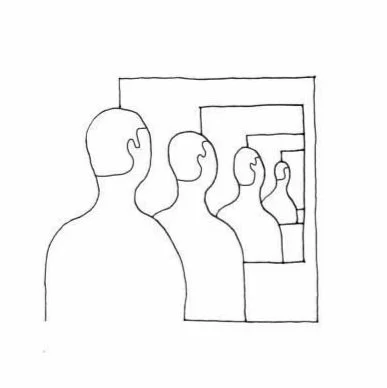
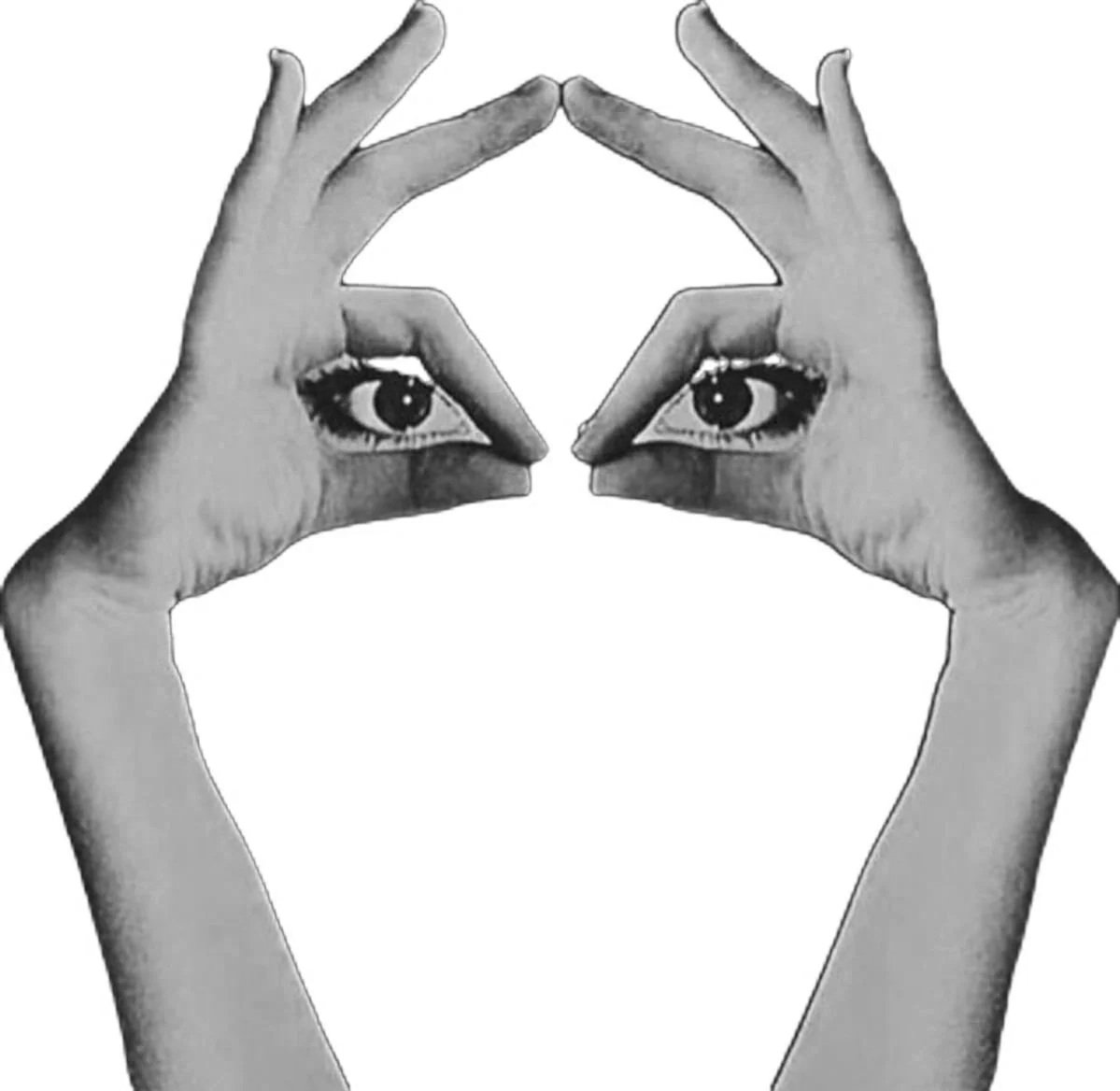
Why Humans Communicate in Stories?
Stories were shared around fires, passed from one generation to the next, and woven into the traditions of families and communities. They explained the world, preserved knowledge, and helped people make sense of suffering, loss, and change. Across many cultures, stories were never regarded as mere entertainment. They were understood as tools for teaching, healing, and transformation.
Many indigenous traditions continue to hold this view today. The Laguna writer Leslie Marmon Silko expressed it beautifully when she wrote:
"Stories are all we have... all we have to fight off illness and death."
Within these traditions, stories are not simply accounts of events. They are living structures that help people organise experience, restore meaning, and reconnect with themselves, their community, and the world around them.
Stories Before Psychology
This understanding of stories did not disappear with the emergence of modern psychology. In many respects, it evolved into it.
The early pioneers of depth psychology recognised that human beings do not experience life through facts alone. We understand ourselves through images, symbols, memories, and narratives. Whether expressed through dreams, myths, religious symbolism, or personal stories, these symbolic structures reveal how we interpret our experience.
Carl Jung devoted much of his work to understanding this symbolic dimension of the psyche. He argued that myths, religious traditions, alchemy, and folklore contain recurring archetypal patterns that reflect fundamental aspects of human psychology. Rather than dismissing these traditions as superstition, Jung approached them as symbolic maps of the inner world.
His technique of Active Imagination illustrates this well. Rather than analysing experience purely through rational thought, it encourages dialogue with symbolic figures that emerge from the unconscious. Although developed within psychology, it bears striking similarities to older contemplative and shamanic practices in which symbolic journeys become a means of gaining insight and restoring psychological balance.
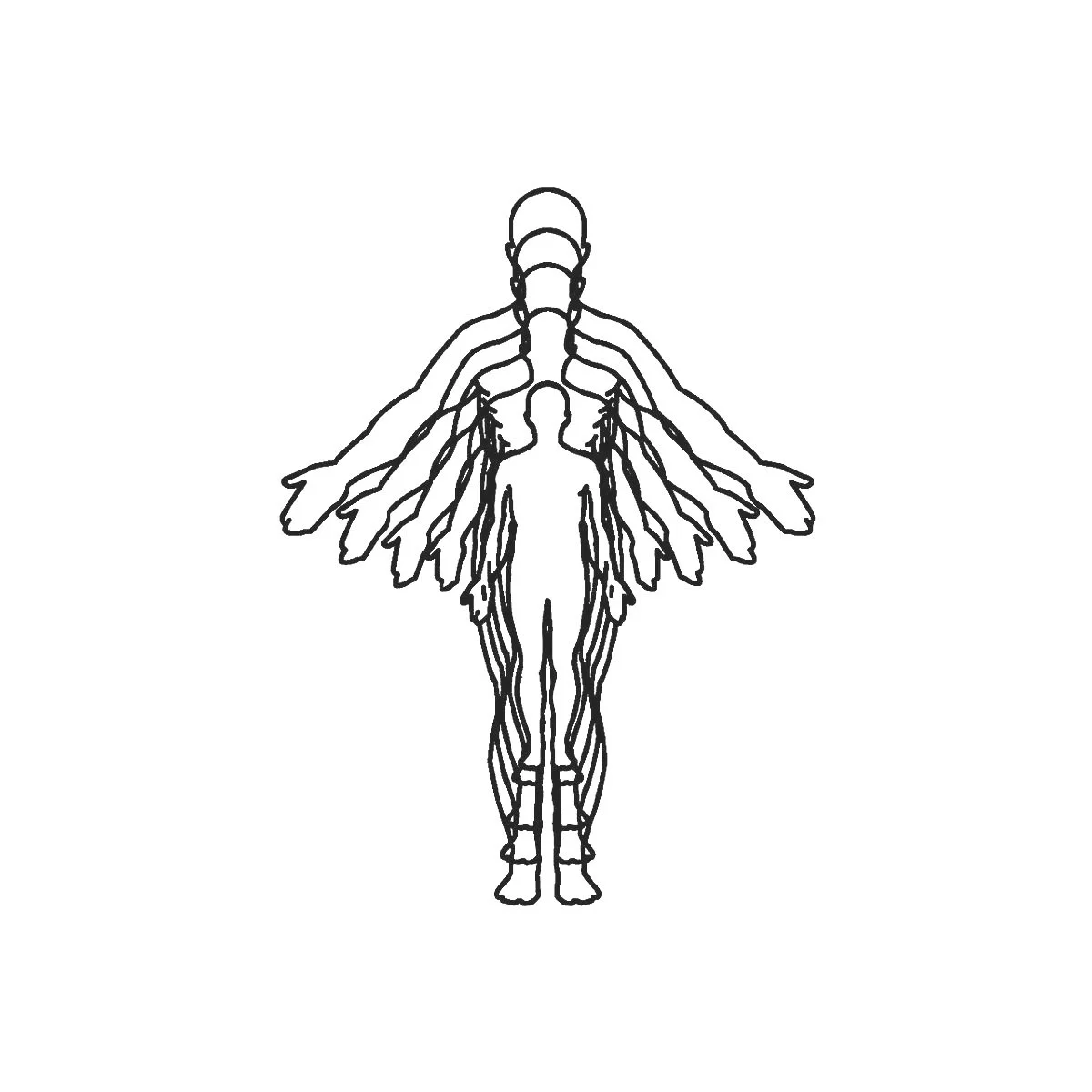
Why Stories Matter?
Human beings naturally organise experience through narrative.
When something significant happens, we rarely remember isolated facts. Instead, we build stories that explain what happened, why it mattered, and what it says about ourselves.
Psychology increasingly recognises that these personal narratives influence identity, behaviour, and emotional wellbeing. The stories we tell ourselves about our past often shape how we understand the present and imagine the future.
This is why changing a story can sometimes change the way we experience our lives.
The events themselves may remain the same, but the meaning we attach to them can change. New perspectives become possible, different choices emerge, and experiences that once felt overwhelming can begin to fit within a broader understanding of ourselves.
Story, Symbol and the Unconscious
From a Jungian perspective, stories do more than entertain. They provide a language through which the unconscious communicates.
Dreams, myths, fairy tales, and symbolic systems such as Tarot all draw upon recurring images and archetypal patterns. These symbols often express aspects of ourselves that are difficult to articulate through ordinary language.
This is one reason stories remain so powerful. They allow us to encounter ideas emotionally as well as intellectually. Rather than simply explaining an experience, they enable us to recognise it.
A myth, a novel, or a Tarot reading can suddenly illuminate something we have felt for years but never been able to express. The story becomes a mirror in which we recognise ourselves.
Stories as Living Experience
Stories are not experienced only through thought. They engage imagination, emotion, memory, and the body.
Across many traditional cultures, stories were accompanied by ritual, ceremony, movement, music, and shared participation. The story was not simply told; it was experienced.
Modern psychology approaches this differently, yet increasingly acknowledges that meaningful change often involves more than intellectual understanding alone. Insight becomes most powerful when it is emotionally felt and personally integrated.
Whether through mythology, psychotherapy, literature, or symbolic practices such as Tarot, stories continue to offer something profoundly human. They help us organise experience, explore identity, and discover meaning within the complexities of life.
Perhaps this explains why stories have remained with us for thousands of years. They do more than describe our lives.
They help us understand them.
Why Stories Repeat the Same Structure
Why Humans Produce These Patterns?
Researchers suggest that these patterns emerge from how people understand and communicate experience. Stories are not only forms of entertainment; they are also ways of making sense of change, conflict, and transformation.
One explanation lies in cognitive structure. Human beings naturally organise events into sequences with a beginning, disruption, and resolution. This structure helps the mind understand cause and consequence. When something changes or goes wrong, we look for the turning point and the outcome. Because of this, experiences are often interpreted as unfolding narratives, and storytelling reflects the same pattern.
Another explanation comes from psychological symbolism. Carl Jung argued that myths express recurring psychological processes through symbolic figures and situations. He proposed that certain archetypal themes appear across cultures because they represent fundamental aspects of human experience. The journey of the hero, for example, can symbolise personal development, in which the individual confronts difficulty, encounters the unknown, and emerges transformed.
A further reason these patterns persist is cultural transmission. For most of human history, stories were passed down through oral traditions rather than written texts. Narratives built around journeys, trials, and renewal were easier to remember and retell. Because of this, stories that followed clear transformation structures were more likely to survive and spread across generations.
Together, these factors help explain why similar narrative patterns appear across myths, religious traditions, folklore, and modern storytelling. The structure endures because it reflects both how human beings interpret experience and how stories are preserved and shared over time.
Religion and Myth Use the Same Structure
Many sacred traditions describe a journey that involves departure, trial, transformation, and return.
In Christianity, this structure can be seen in the life of Christ. The story begins with the birth of the hero, followed by periods of trial and temptation. It reaches a turning point through sacrifice and death, before concluding with resurrection and return.
A similar pattern appears in the story of the Buddha. Prince Siddhartha leaves the security of the palace in search of truth. He undergoes years of struggle and ascetic practice before reaching enlightenment beneath the Bodhi tree. He then returns to teach what he has discovered.
Comparable structures appear across many ancient mythologies. Greek, Egyptian, Mesopotamian, and Norse traditions frequently include stories in which a hero or divine figure descends into darkness, confronts forces of chaos, and ultimately restores balance or order.
Anthropologists often describe these narratives as sacred stories of transformation. They explore fundamental questions about suffering, renewal, and the restoration of meaning within the human and cosmic order.
The Solar Cycle and the Hero
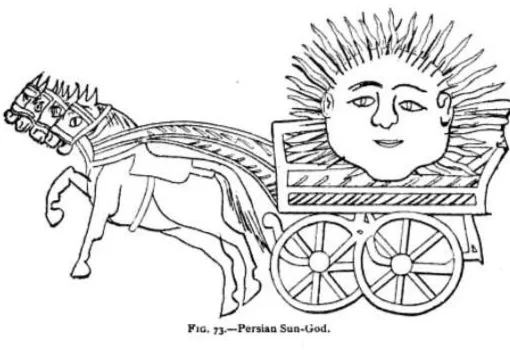
Solar myths frequently follow a recognisable pattern that reflects the yearly cycle of the Sun. This pattern begins with the birth of the Sun, often associated with dawn or spring. It continues with a period of growth and strength, linked to the height of summer. This is followed by decline, symbolised by autumn, before reaching a symbolic death in winter. The cycle then begins again with rebirth.
Birth of the Sun (dawn / spring)
Rise and power (summer)
Decline (autumn)
Death and rebirth (winter)
Because the zodiac divides the Sun’s yearly path into twelve phases, many symbolic systems organise stories or figures around the number twelve. Examples include the twelve Olympian gods in Greek mythology, the twelve labours of Hercules, the twelve disciples in Christian tradition, and the twelve signs of the zodiac.
Twelve Olympian gods
Twelve labours of Hercules
Twelve disciples
Twelve zodiac signs.
Tarot and Symbolic Journeys
The Major Arcana of the tarot is often interpreted as a symbolic journey. In this reading, the sequence of cards represents a path of experience, challenge, and transformation.
This interpretation became widely developed within modern esoteric traditions, particularly Hermeticism, the Hermetic Order of the Golden Dawn, and later Jungian symbolic analysis. These traditions approached the tarot not simply as a set of images, but as a system of symbolic stages reflecting psychological and spiritual development.
The journey begins with The Fool, a figure that represents the start of a path into the unknown. As the sequence unfolds, the traveller encounters different forces, lessons, and trials. The journey eventually concludes with The World, which symbolises completion, integration, and wholeness.
departure
trials
transformation
integration
Seen in this way, the Major Arcana can be read as a cycle that moves through departure, challenge, transformation, and integration. This structure closely resembles the pattern described in the Hero’s Journey.
Modern Storytelling Still Uses the Same Structure
The same narrative pattern found in myths and religious stories also appears in modern cinema. Many filmmakers deliberately use this structure because it provides a clear and compelling framework for storytelling.
A well known example is George Lucas, who studied the work of Joseph Campbell while developing Star Wars. Lucas drew directly on Campbell’s description of the Hero’s Journey to shape the story of Luke Skywalker, including the call to adventure, trials, guidance from mentors, confrontation with darkness, and eventual transformation.
Similar narrative structures appear in many popular films and stories, including:
Star Wars
Harry Potter
The Lion King
The Matrix
The Lord of the Rings
In each case, the central character leaves the familiar world, faces challenges and tests, undergoes a period of transformation, and returns changed in some way.
This approach has also influenced modern screenwriting theory. Many storytelling frameworks used in film and television today are based on Campbell’s ideas. One of the most widely known is Christopher Vogler’s story model, which adapts the stages of the Hero’s Journey for contemporary screenwriting.
Because of this influence, the narrative structure first identified in myth and folklore continues to shape the stories told in modern culture.
Hermetic Philosophy
Hermetic philosophy proposes that reality operates through universal principles that structure the whole of existence. These principles are not limited to one domain of life. They are understood as patterns that repeat across different levels of reality, from the physical world to human thought and experience.
In Hermetic thought, these principles permeate every layer of existence. They can be observed in natural processes, in biological systems, in mathematical relationships, and in the way human beings organise meaning and experience. Because of this, Hermetic philosophy suggests that similar patterns will appear wherever life and consciousness express themselves.
Hermetic philosophy expresses the idea that patterns repeat across different levels of reality through the phrase “as above, so below”.
Science does not frame these patterns in metaphysical terms, but it does show that:
simple mathematical relationships appear in nature
complex structures can emerge from simple rules
similar organisational patterns occur at multiple scales
Because of this, it is possible to see why symbolic traditions interpreted reality as patterned and interconnected.
When applied to storytelling, the same idea suggests that narrative structures may reflect fundamental patterns of conflict, transformation, and renewal that appear throughout both nature and human experience.
The Principle of Mentalism
The Universe is Fundamentally Mental in Nature.
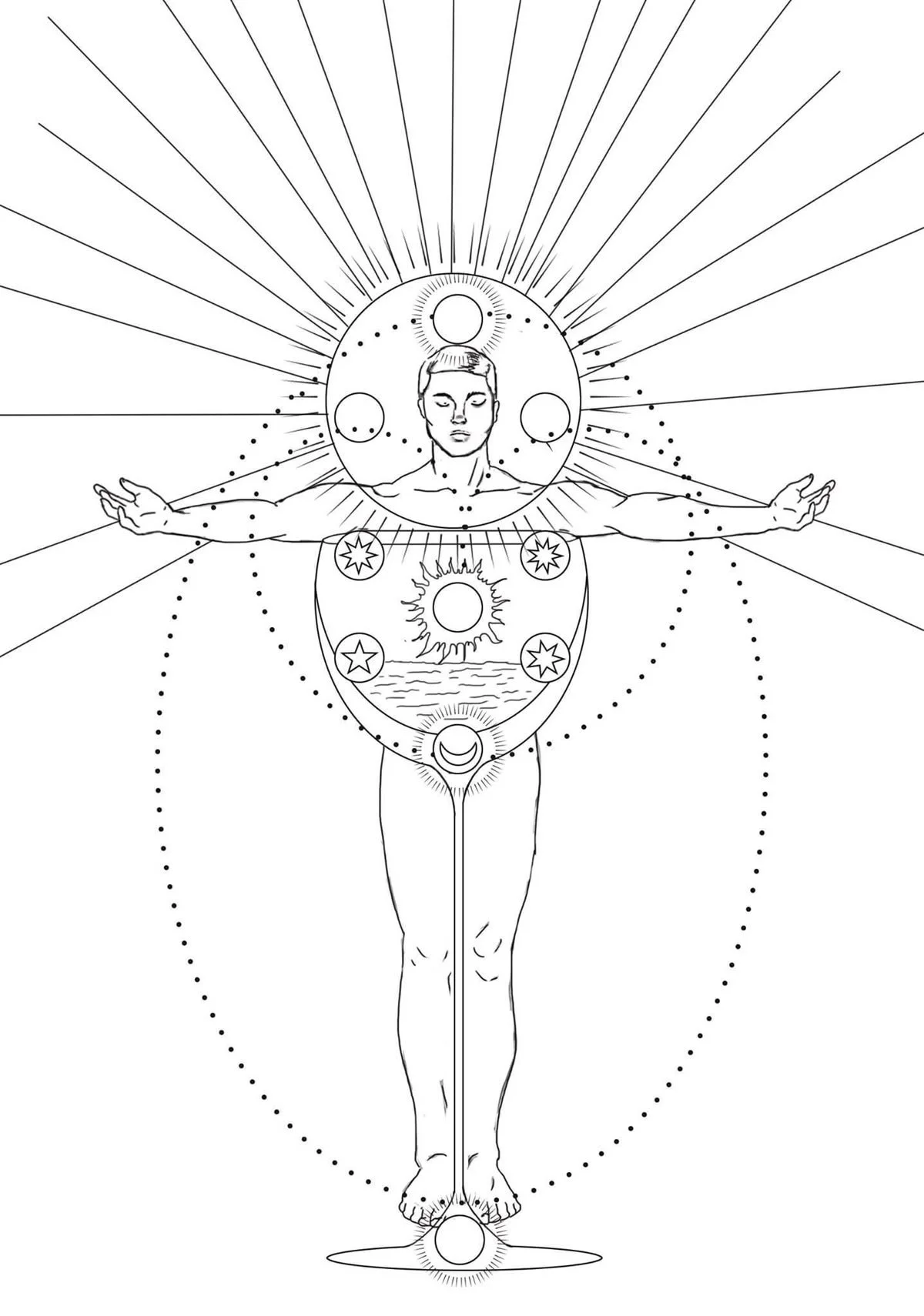
According to this principle, the universe is not only a physical system but also something experienced and structured through mind and consciousness.Human beings do not encounter the world as a neutral stream of events.
Instead, the mind constantly organises experience into patterns that help it make sense of what is happening. One of the most important of these patterns is narrative. Cognitive science shows that the brain naturally arranges experience into sequences of cause, conflict, and resolution. In other words, we interpret life through structures that closely resemble stories.
This is why stories feel real to us. When we read a book or watch a film, our brains respond as if we are participating in the events. We feel tension, fear, relief, and hope. We root for the hero and react emotionally to the unfolding conflict. The mind temporarily treats the narrative as a lived experience. The brain often responds to imagined events much like real ones. Vivid imagination activates similar neural pathways, influencing emotions, physical reactions, and memory.
At the same time, the brain is constantly forming mental models, or schemas, that help us interpret reality. These internal maps guide how we understand situations, anticipate outcomes, and respond to events. In this sense, storytelling and perception are closely related. Stories shape how we imagine the world, and our mental models shape how we interpret the stories we encounter.
From this perspective, narrative becomes one of the ways consciousness organises reality itself. The patterns we see in myths and stories may therefore reflect the deeper structures through which the human mind creates meaning. In this way, stories can influence how we perceive reality, while our experience of reality continues to generate new stories in return.
The Principle of Correspondence
As Above, so Below. As Within, so Without.
From this perspective, reality is not made of isolated systems. Instead, it proposes that similar patterns can be observed across different levels of reality. Structures in the cosmos, nature, and human psychology mirror each other. Cycles, tensions between opposites, and processes of transformation appear both in the natural world and in human experience, including story arcs.
Archetypal and symbolic allegories often reflect natural cycles: the solar cycle, seasonal cycles, life and death cycles, and psychological transformation. The movement of the sun across the sky and through the seasons, the yearly cycle of growth and decline, the rhythms of life and death, and the inner processes of psychological change all follow patterns of emergence, challenge, decline, and renewal.
When viewed through this lens, the structure of the Hero's Journey reflects several layers of experience at the same time. Psychologically, it mirrors the process of personal transformation, where the individual leaves the familiar, confronts difficulty, and returns with greater understanding. At the level of nature, it resembles the daily and yearly movement of the sun, rising, reaching its peak, descending, and returning again. In religious traditions, similar structures appear in stories of spiritual initiation, sacrifice, and renewal. Because these patterns appear across different domains, the same structure emerges in symbolic systems as well—mythology, astrology, tarot, and modern storytelling all draw on cycles of departure, trial, transformation, and return.
From that perspective, Luke Skywalker's journey exemplifies several layers of the same pattern. Psychologically, it mirrors personal transformation: he leaves his familiar life on Tatooine, faces trials and loss, and returns with greater understanding. At the level of myth, his story follows the classic hero's descent into darkness and eventual renewal. In symbolic terms, it follows the same arc of departure, trial, transformation, and return that appears throughout myth, religion, and storytelling.
Thus the Hero's Journey can be interpreted through this principle because it mirrors multiple levels simultaneously: the psychological process of transformation, the daily and yearly movement of the sun, and the structure of spiritual initiation narratives in religion.
The Principle of Polarity
Everything Contains Two Poles or Opposites.
The Hermetic principle of polarity states that everything has two poles. Every phenomenon contains opposing expressions that belong to the same underlying reality. What we often call opposites are not entirely separate things, but two extremes of the same continuum.
For example, heat and cold are both expressions of temperature. They are not fundamentally different substances, but different degrees of the same condition. The same applies to light and darkness, love and hate, or courage and fear. Between these poles exist many possible degrees.
Because of this, opposites are understood as identical in nature but different in degree. What appears as a contradiction may simply be two ends of the same spectrum. This idea helps explain many apparent paradoxes, suggesting that what we often treat as absolute opposites may instead be variations of the same underlying reality.
In storytelling, this principle appears through the tension between opposing forces. Many narratives are built around these polar relationships: good and evil, order and chaos, freedom and control.
For example, in Star Wars, Luke Skywalker represents the light side of the Force while Darth Vader embodies the dark side. Both are connected to the same power, but express it in different ways. In Harry Potter, Harry and Voldemort stand at opposite poles of the same magical world, using similar abilities but guided by very different intentions. In The Matrix, Neo and Agent Smith represent opposing expressions of control and freedom within the same system.
These polar tensions create the conflict that drives the story. The hero’s journey often unfolds through confronting, navigating, or transforming these opposing forces.
The Principle of Rhythm
Everything Moves in Cycles and Oscillations.
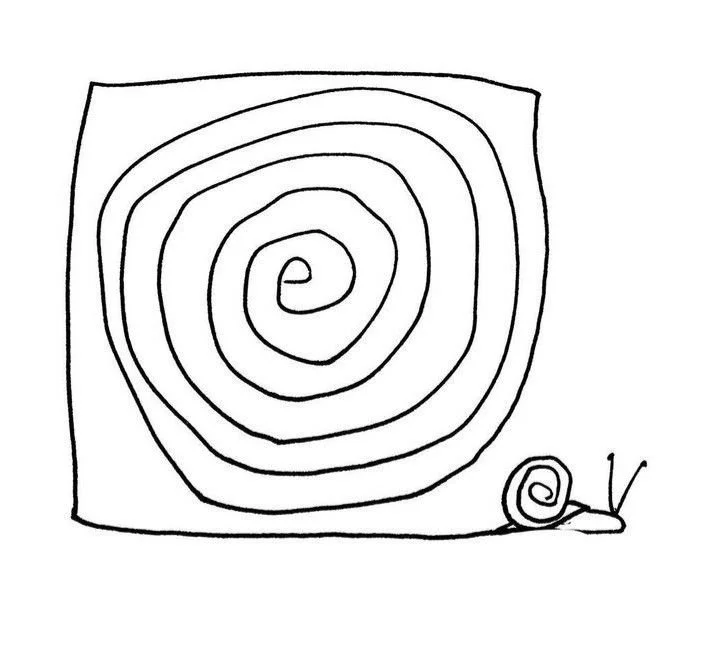
Everything moves in cycles and oscillations.The Hermetic principle of rhythm states that everything moves in cycles. Just as tides rise and fall, all processes move through phases of growth, peak, decline, and renewal. According to this principle, every movement in one direction eventually creates a movement in the other, like a pendulum swinging back.
This dynamic often appears in storytelling through the rise of one force and the response of another. When darkness, power, or chaos grows, an opposing force eventually emerges to restore balance.
In Star Wars, the Empire rises and spreads across the galaxy, creating oppression and imbalance. This rise of darkness calls forth resistance, and Luke Skywalker’s journey unfolds as part of the opposing movement that eventually brings balance back.
In Harry Potter, Voldemort’s power grows and spreads fear throughout the wizarding world. The stronger this force becomes, the more it shapes Harry’s own journey, pushing him through loss, struggle, and ultimately transformation.
The same pattern appears in The Lord of the Rings, where Sauron’s growing power sets the stage for the opposing effort to destroy the ring and restore balance.
For the hero, these opposing forces create both the outer conflict and the inner struggle. The hero experiences doubt, fear, loss, and hope as the story moves through its cycles of tension and release.
In this sense, the hero’s emotional highs and lows mirror the same rhythm. Understanding this pattern allows the hero, and the audience, to recognise that struggle and renewal are part of the same cycle. Rather than resisting these movements, the journey becomes about learning to move with them and emerge transformed.
The Principle of Cause and Effect
Nothing Happens Randomly.

Events follow chains of cause and consequence.
The Hermetic principle of cause and effect states that nothing happens randomly. Every event arises from a chain of causes and consequences. What may first appear as chance or coincidence often reveals a deeper sequence when seen in context.
Stories follow this same logic. Narratives unfold through connected events where each stage leads to the next. The Hero’s Journey moves through a sequence such as call to adventure, refusal, trials, transformation, and return. Each step emerges from the one before it.
In Star Wars, Luke Skywalker’s journey begins with what seems like a small accident: a message hidden in the droid R2-D2. This leads him to Obi-Wan Kenobi and pulls him into a much larger conflict. In Harry Potter, the arrival of a letter from Hogwarts changes the course of Harry’s life and sets his path toward confronting Voldemort. In The Lord of the Rings, the ring passing from Bilbo to Frodo begins a chain of events that draws many characters into a shared struggle.
In each case, what appears as luck, coincidence, or even mistakes often turns out to be part of a larger unfolding path. Setbacks, wrong turns, and failures become part of the learning process that shapes the hero’s transformation.
Thus events unfold through connected sequences rather than pure chaos. Each moment becomes part of a larger pattern, where causes give rise to consequences and the path of the hero gradually reveals itself.
Through this lens, storytelling reflects the Hermetic idea that events unfold through meaningful sequences rather than pure chaos. Each cause leads to another effect, gradually revealing a larger pattern behind the journey.
Principle of Vibration
Nothing Rests. Everything Moves. Everything Vibrates
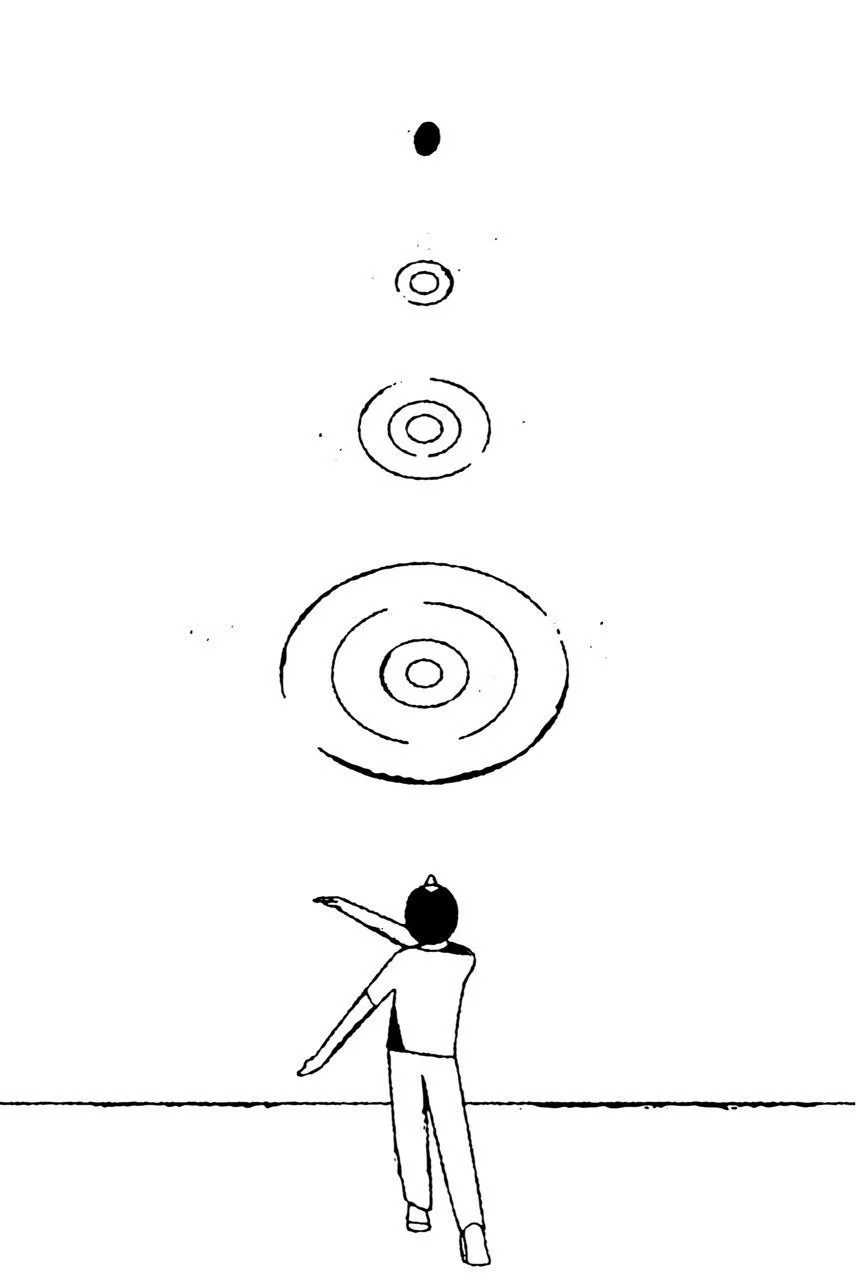
The Hermetic principle of vibration states that nothing in the universe is truly still. Everything moves, changes, and vibrates. From the smallest particles to the largest cosmic systems, all things exist in states of motion and energy.
In Hermetic thought, different states of being can be understood as different levels of vibration. Emotions, thoughts, and states of consciousness can shift along this spectrum. Fear, despair, and hatred occupy the lower end of this spectrum, while courage, clarity, and compassion reflect higher ones.
This movement between states often appears in the structure of the Hero's Journey. The hero begins in one state of awareness and gradually transforms through trials, struggle, and growth. The journey is not only external but also internal, reflecting a shift in the hero's inner state.
In Star Wars, Luke Skywalker begins as an uncertain and inexperienced young man. Through training, loss, and confrontation with darkness, he learns to trust the Force and rises to a higher level of awareness and responsibility. His journey reflects a shift in both understanding and inner strength.
In Harry Potter, Harry faces fear, grief, and the growing power of Voldemort. Each challenge forces him to grow emotionally and morally. His courage, loyalty, and willingness to sacrifice reflect a gradual elevation of character in contrast to Voldemort's descent into domination and fear.
In The Lord of the Rings, characters such as Frodo and Aragorn undergo similar transformations. Frodo carries the burden of the ring, confronting despair and temptation, while Aragorn moves from exile to leadership. Their journeys show a movement from uncertainty toward responsibility, resilience, and purpose.
Through this lens, the Hero's Journey can be understood as a process of inner movement. The hero does not remain the same person who began the journey. Through challenge and transformation, the hero's character, awareness, and energy shift, reflecting the Hermetic idea that everything in life is constantly in motion and evolving.
The Principle of Gender
Masculine and Feminine Principles Manifesting on All Planes
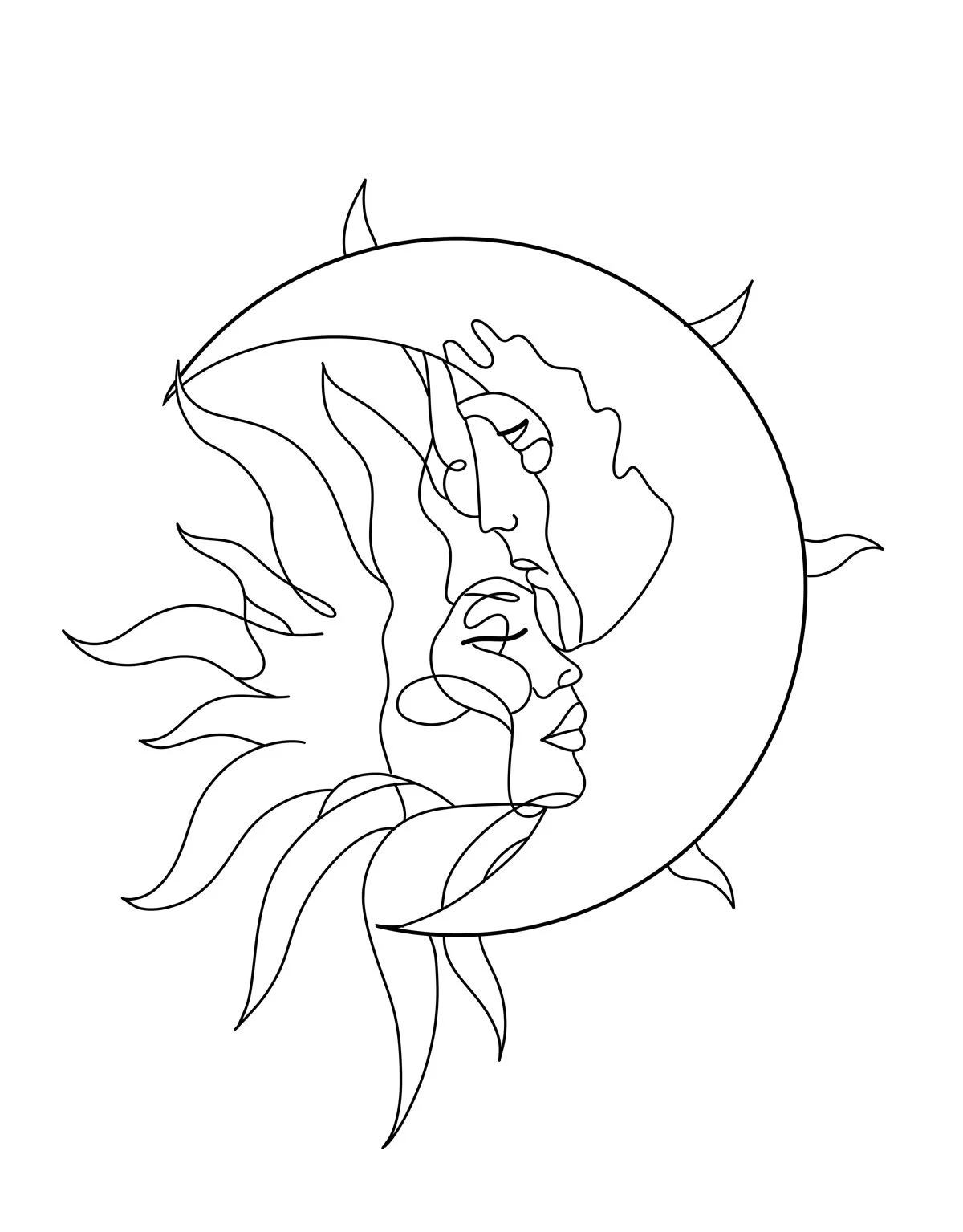
The Hermetic principle of gender proposes that masculine and feminine qualities exist within all things. These are not limited to biological sex, but describe deeper creative forces that operate throughout nature, consciousness, and creation.
In this sense, gender is understood as a universal principle. It reflects two complementary energies present across different levels of reality. The masculine principle represents the active, directing, and initiating force. It is associated with will, structure, and outward movement. The feminine principle represents the receptive and creative force that receives, nurtures, and brings potential into manifestation.
Creation emerges through the interaction of these two principles. Neither functions effectively without the other. Like the concept of Yin and Yang, they are interdependent and together produce movement, balance, and harmony.
A similar idea appears in psychology through Carl Jung’s concepts of the anima and animus. Jung proposed that each man carries an inner feminine aspect, the anima, and each woman carries an inner masculine aspect, the animus. Psychological development often involves recognising and integrating these inner counterparts, bringing greater balance within the individual.
This dynamic also appears in storytelling. Many narratives unfold through the interaction or balancing of complementary forces that lead to transformation.
For example, in Star Wars the Force is described through the need for balance. Luke Skywalker’s journey requires action and discipline, but also trust, intuition, and surrender to the Force. In Harry Potter, the story contrasts Voldemort’s pursuit of domination and control with the protective power of love and sacrifice. In The Lord of the Rings, strength and courage are balanced with loyalty, compassion, and humility.
From this perspective, the principle of gender reflects how transformation often arises through the integration of complementary forces. In myth and storytelling, the hero’s journey frequently involves learning to balance these qualities rather than relying on only one pole.