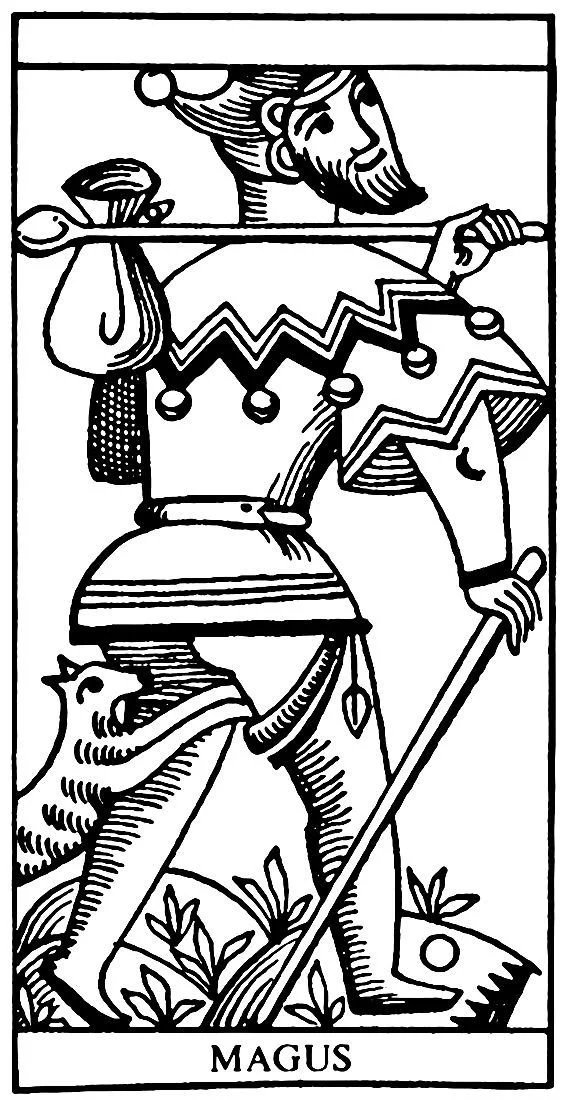
The Fool’s Journey
Forces of Transformation in the Major Arcana
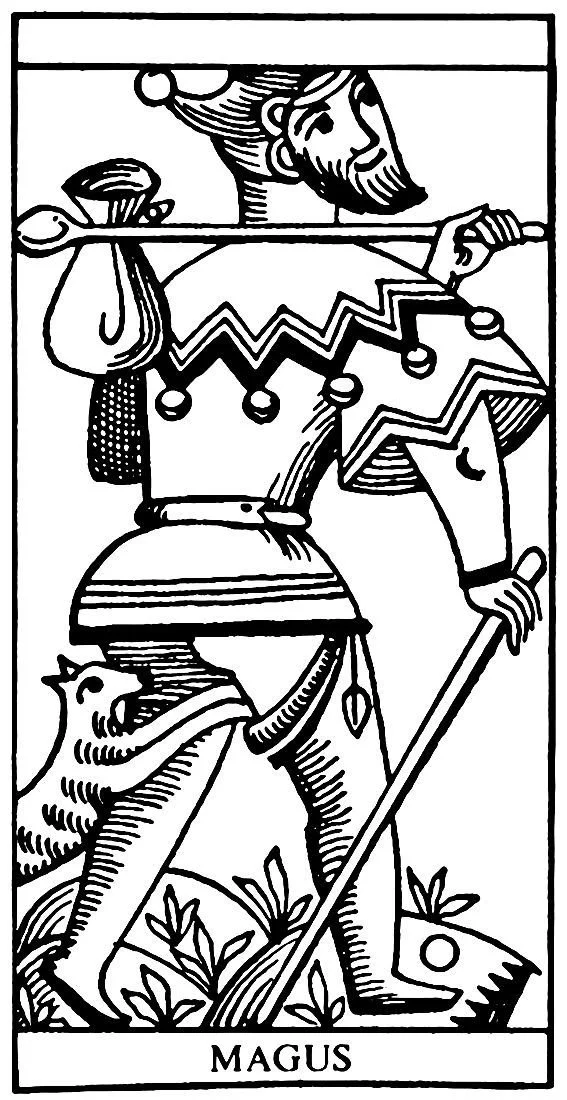
When the Major Arcana are read in sequence, they form more than a collection of symbolic images. Together they describe a progression of experience that mirrors the unfolding of human consciousness. Within the esoteric traditions of the Tarot, this progression is often called the Fool’s Journey.
The Fool represents the beginning of awareness entering the world. As the Fool encounters each card, he meets forces that shape identity, perception, responsibility, and transformation.
Each card introduces a particular force. Sometimes it appears as opportunity, sometimes as conflict, and sometimes as revelation. Psychologically, these forces correspond to stages in the development of the psyche. Esoterically, they reflect the gradual awakening of consciousness through encounter with the structures of reality.
The journey begins with innocence and potential, moves through the formation of identity and social responsibility, descends into crisis and transformation, and ultimately leads toward awakening and integration.
Seen in this way, the Major Arcana form a symbolic map of the human journey.
I.Stage
Awakening: The Formation of Consciousness
From Potential to Identity

This first phase represents the emergence of consciousness into the world. The individual begins to discover identity, creativity, authority, and social structure.
The Fool – The Force of Beginning
The Fool represents pure potential and openness to experience. Consciousness enters the world without fixed identity, guided only by curiosity and the impulse to explore. The Fool teaches trust in the unfolding of life and the courage to step into the unknown.
The Magician – The Force of Conscious Will
The Magician introduces the power of intention and action. The individual discovers the ability to shape reality through thought, communication, and deliberate effort. Potential becomes organised into purposeful expression.
The High Priestess – The Force of Inner Knowledge
The High Priestess reveals the hidden dimension of intuition and unconscious awareness. She teaches that wisdom arises not only through action but also through receptivity and inner reflection.
The Empress – The Force of Creation
The Empress represents fertility, growth, and the nurturing power of life. Through her the individual experiences connection, creativity, and the abundance of the natural world.
The Emperor – The Force of Structure
The Emperor introduces authority, discipline, and order. The energies of life begin to take form through structure and responsibility.
The Hierophant – The Force of Tradition
The Hierophant represents inherited systems of belief and spiritual teachings. Through tradition, the individual becomes connected to collective wisdom and cultural values.

II.Stage
Identity and Power: The Development of the Self
Choice, Mastery, and Inner Authority

In this phase the individual begins to make independent decisions and develop personal power.
The Lovers – The Force of Choice
The Lovers represent the moment when identity begins to form through conscious decision. The individual must choose values and direction rather than simply inherit them.
The Chariot – The Force of Directed Will
The Chariot symbolises determination and the disciplined movement toward a chosen goal. Opposing forces must be balanced and guided through focused intention.
Strength – The Force of Inner Mastery
Strength teaches that true power comes through integration rather than domination. Instinct and emotion are transformed into sources of courage and stability.
The Hermit – The Force of Inner Guidance
The Hermit withdraws from external influence in order to discover deeper wisdom. Inner reflection becomes a source of guidance and clarity.
III.Stage
Transformation: Confronting the Forces of Change
Fate, Crisis, and Psychological Transformation
This stage represents the deeper trials of the human journey. The individual confronts change, limitation, and transformation.
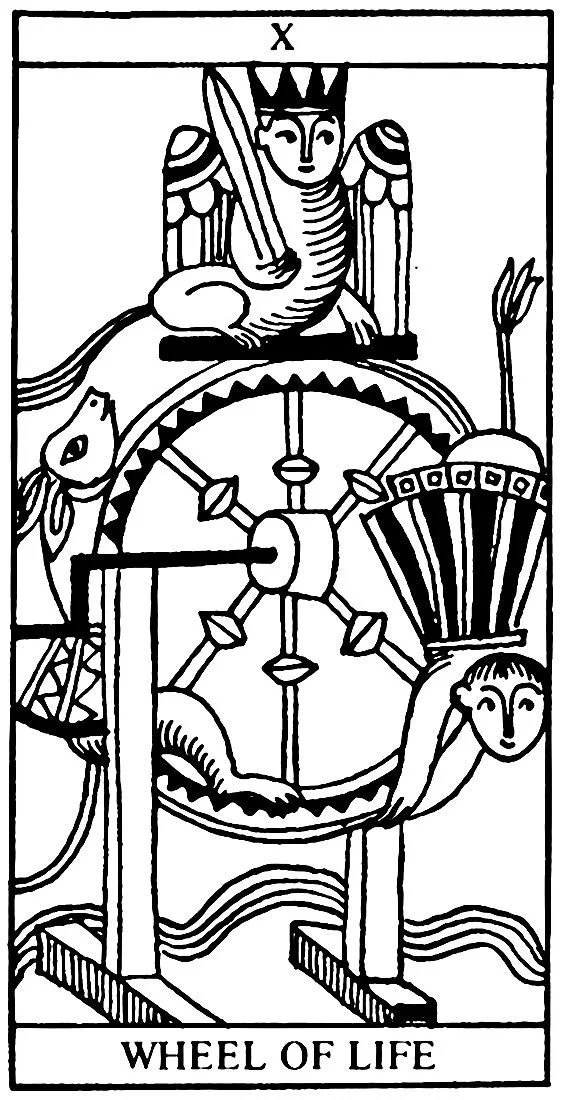
The Wheel of Fortune – The Force of Cycles
Life reveals itself as a pattern of cycles beyond personal control. The individual learns humility and awareness of larger forces.
Justice – The Force of Balance
Justice introduces the law of cause and consequence. Actions must align with truth and responsibility.
The Hanged Man – The Force of Surrender
Progress requires letting go of previous perspectives. Insight emerges through suspension and reflection.
Death – The Force of Transformation
Old identities dissolve so that new life can emerge. Transformation becomes inevitable and necessary.
Death – The Force of Transformation
Old identities dissolve so that new life can emerge. Transformation becomes inevitable and necessary.
Temperance – The Force of Integration
Opposing forces must be blended into harmony. Transformation is stabilised through balance and patience.
The Devil – The Force of Attachment
The seeker confronts illusion, desire, and the shadow aspects of the psyche. Freedom begins with recognising the limits created by attachment.
The Tower – The Force of Revelation
False structures collapse through sudden insight or crisis. Illusion is destroyed so that truth can emerge.

IV.Stage
Illumination: Awakening and Integration
Healing, Clarity, and Completion
After the upheaval of transformation, the final phase brings renewal, understanding, and integration.
The Star – The Force of Renewal
Hope and inspiration return after destruction. The seeker reconnects with a deeper source of guidance.
The Moon – The Force of the Unconscious
The journey passes through uncertainty and the hidden landscapes of the psyche. Fear and illusion must be navigated with awareness.
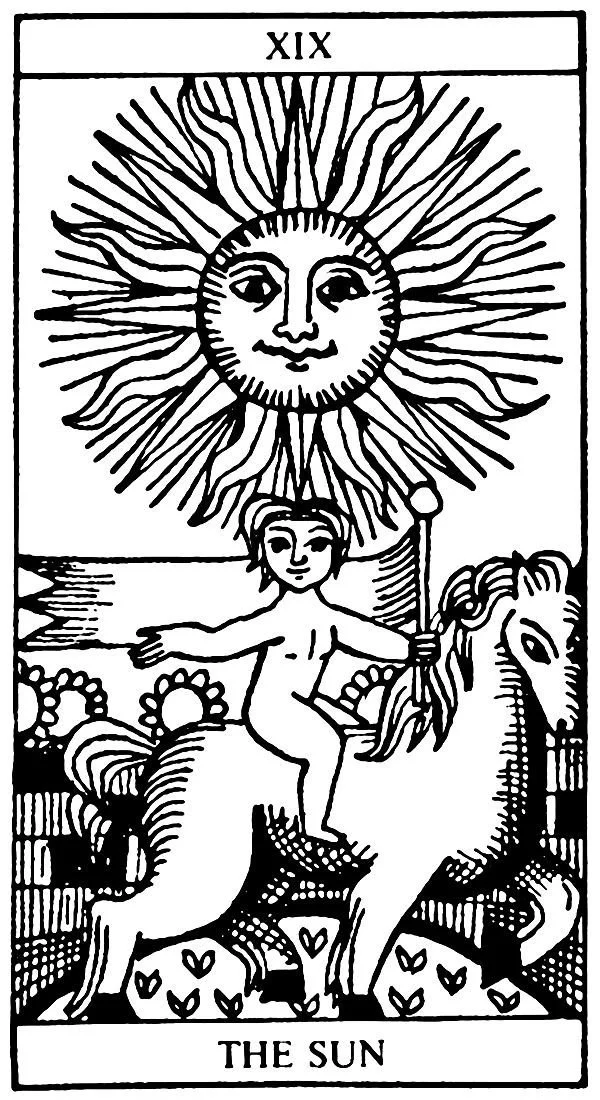
The Sun – The Force of Illumination
Clarity and vitality emerge as consciousness stands fully in the light. Life is experienced with openness and joy.
Judgement – The Force of Awakening
A deeper recognition transforms the meaning of the entire journey. The seeker responds to a call toward higher purpose.
The World – The Force of Completion
All experiences are integrated into a unified understanding. The journey reaches fulfilment, yet this completion also becomes the beginning of a new cycle.
The Fool’s Journey is Not a Path Travelled Only Once.
These stages repeat throughout life in different forms and circumstances. What appears to be a single journey is in fact a pattern that unfolds again and again. Each encounter with challenge, each moment of insight, and each phase of renewal marks another turn of the same underlying cycle. The circumstances change, but the structure remains recognisable. Growth rarely moves in a straight line; it develops through disruption, confrontation, understanding, and integration.
In this sense, the Tarot does not describe one fixed story but a recurring pattern within human experience. Its images represent stages of psychological and existential development — beginnings, choices, loss, confrontation with shadow, transformation, and renewal. None of these states are permanent. Each arises, unfolds, and gives way to the next.
The Tarot therefore offers more than divination. It provides a symbolic map through which the unfolding of the psyche and the deeper structure of the human journey can be understood. Rather than predicting events, it illuminates the patterns through which life repeatedly reorganises itself.
And at the beginning of every new cycle stands the Fool — the moment when certainty falls away and the path ahead has not yet taken form. Every transformation begins at this threshold, where one must step forward without knowing exactly where the road will lead.