
How I Became My Own Hero ?

The Personal Origins of This Work
The Hero Journey is a programme designed to empower you to write your own story, become your own best friend, and ultimately, your own hero. It was born from my own struggles. This is the story of how I found a way to help myself.
My childhood was defined by instability. Raised by a narcissistic parent who kept me close when it suited yet conditional, and an absent one, I was constantly shuffled between grandmothers, aunts, and even lengthy training camps. Weekends 'home' often meant being asked to leave again. From a very young age, I navigated ever-changing, often chaotic or unsafe environments.
This forged two paradoxical traits: profound self-reliance and resilience, but also a deep-seated belief that I could not count on anyone but myself. I never felt I truly belonged or was rooted anywhere.
Winning the Room, Losing Myself
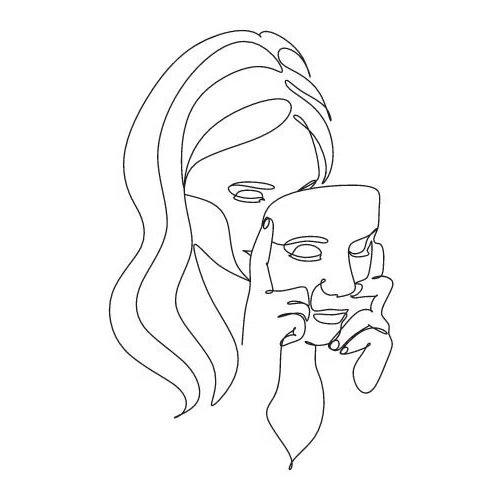
The Mask That Said “I am Fine”…
My coping mechanism? To adapt instantly. I became a social butterfly, mastering the art of reading a room, blending in, charming – always wearing a mask that said, "I am fine." Everyone seemed to want to be me, whilst I desperately wanted to be anyone else.
Underneath, I felt empty and unseen. My core belief was simple: Everything is earned, even love. Perform well. Achieve. Be perfect. Only then might you be worthy. This belief fuelled my primary coping mechanism, which I call the Wildling. The Wildling escapes through relentless action, thrives in chaos, and constantly fights to prove worth through overcompensation. It is perpetual fight mode: just keep going, just keep doing.
For me, this manifested as crippling workaholism. I pushed myself to extremes – skipping meals, losing sleep – consumed by the need to achieve until I hit burnout. Then, I would start the destructive cycle all over again. Vulnerability felt like weakness; asking for help was impossible. I became the 'saint of lost causes' for others, yet could not rely on anyone myself.
The Turning Point
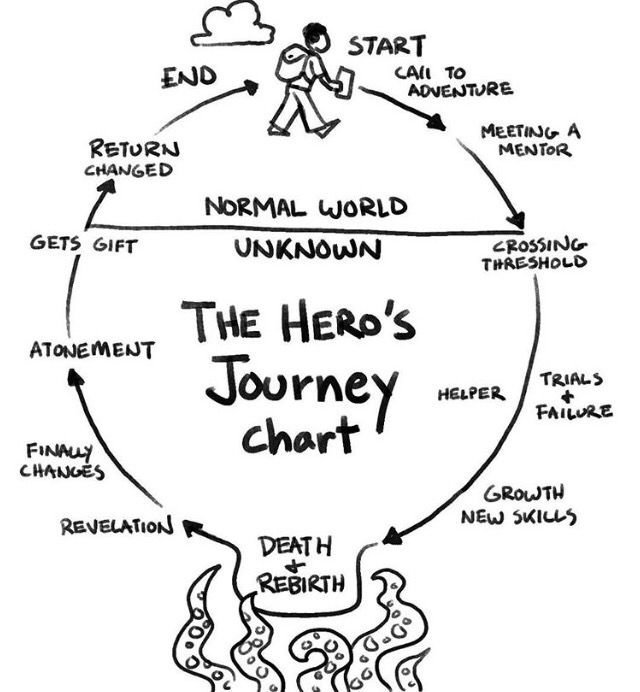
Finding My Path
For me, this manifested as crippling workaholism. I pushed myself to extremes – skipping meals, losing sleep – consumed by the need to achieve until I hit burnout. Then, I would start the destructive cycle all over again. Vulnerability felt like weakness; asking for help was impossible. I became the 'saint of lost causes' for others, yet could not rely on anyone myself.
The cost was high. This led to clinical depression, battles with limiting beliefs, crushing imposter syndrome (no achievement ever felt enough), and severe relationship difficulties. Setting boundaries, being assertive, relinquishing control, emotional disconnection, perfectionism, and harsh self-criticism plagued me into adulthood, eventually contributing to a chronic health condition.
Traditional therapy and medication offered little relief. So, I embarked on a different path. I decided to find a way to heal myself. Through years of relentless trial and error, developing and testing what became The Hero Journey programme on myself, I discovered what truly works.
This journey has been my lifeline and catalyst for profound transformation – not just for me, but for my clients. Everything I teach in this programme comes from me walking the walk. I have lived this Hero's Journey, and now I guide others on theirs.
How This Framework Came Together
What has helped me and aided me in my journey was the fact that I have a postgraduate degree in psychology as well as cultural and religious studies. I have a strong research background, and I worked in a behavioural change team and mental health. That gave me a foundation for developing this framework.
But there is something else that shaped how I approach things. Most likely, because my personality type is INFJ, I perceive and filter information through my intuition—introverted intuition, to be precise. As a result, I tend to look at the bigger picture: what something is in principle, what the mechanism is underneath the noise. Moreover, I see and test how things actually work in practice, not only in theory. One of the central features of intuition is its capacity to synthesise information, quickly seeing connections among disparate pieces of data through pattern recognition. I am able to see seemingly separate elements and visualise how those pieces connect, converge, intersect and interrelate.
This ability allowed me to connect the dots. I could see how our inherited biological reality and the wiring of our nervous system are connected—the way the brain, body, and chemistry constantly interact, shaping how we think, feel and behave. But I could also see that spirituality is rooted in our biology too. By extension, so is our need for connection to something greater than ourselves and our search for deeper meaning. Furthermore, we are wired to see and understand the world through the lens of stories, themes, and pattern recognition, including archetypes. All of this is biologically rooted in us. We are literally wired for it.
When I looked at the history of analytical psychology, it became clear to me that these early therapeutic practices have roots in much older traditions, such as shamanic and occult practices. They incorporated esoteric and occult psychologies as well.
Both Sigmund Freud and Carl Jung recognised this. Freud used a scientific framing, but his work structurally mirrored esoteric ideas. Jung, more openly, studied and integrated alchemy, mysticism, and symbolic traditions into his thinking.
A number of elements found in therapy today echo earlier shamanic practices, where stories, symbols, and myth functioned as forms of medicine for the psyche. Dream interpretation and active imagination are just two examples.
Tarot, I came to see, operates in the same way. It can be understood as a symbolic map of psychological processes. The imagery presents archetypal figures and sequences that mirror the structure of the hero's journey: movement through challenge, transformation, and integration. These archetypes can be compared to Kabbalistic archetypal forces or emanations—structurally similar to the Sephirot—representing fundamental patterns through which experience is organised. That is why Tarot serves as an expression of these underlying structures.
The process itself resembles Jungian active imagination and symbolic work, where images are used to allow unconscious material to emerge and be reflected upon. The progression through the cards can also be understood as mirroring the individuation process—a movement toward psychological integration, comparable to the mystical ascent described in various esoteric traditions.
The symbols evoke spontaneous interpretations that draw material from both conscious thought and unconscious content. In this way, the cards act as a bridge between the analytical mind and deeper psychological layers, accessing what Jung described as the collective unconscious—a universal symbolic field comparable to the Kabbalistic idea of a shared underlying structure.
Over time, I came to understand that this journey can be approached in two distinct ways. The right-hand path follows a structured, evidence-based method, symbolised by Hercules and his twelve labours: disciplined action, external challenges, and measurable progress. The left-hand path is more symbolic and introspective, associated with Psyche's descent into the underworld: shadow work, engagement with the unconscious, and inner transformation. Both describe the same developmental arc, approached through different methods.
From my perspective, both paths are necessary and work best in combination rather than in isolation. They are not separate routes but complementary modes that can be used interchangeably within the same process.
All of this guided me and helped me put together this framework. It is where evidence-based findings converge with our personal journey—focused on finding meaning, purpose, and connection to something greater than oneself. Self-awareness, relationships with others, connection to the world, and the search for deeper meaning are all woven together here.