
The Suit of Cups in Tarot
Meaning, Symbolism & Psychological Interpretation
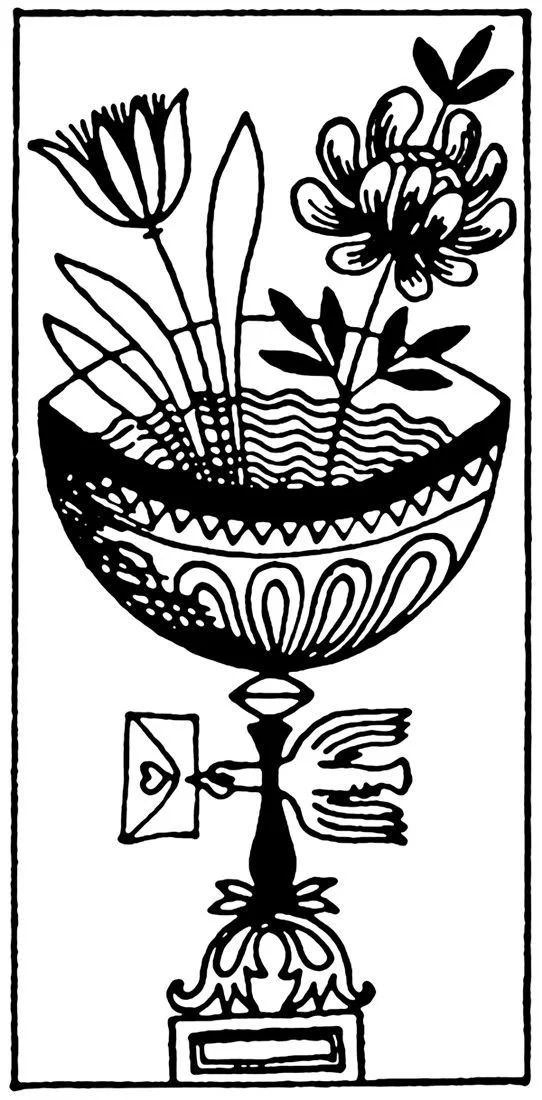
The Suit of Cups is traditionally associated with water, the element connected to emotion, intuition, relationship, imagination, and the inner world. In most Tarot systems, Cups represent the realm of feeling and experience rather than action or intellect.
Historically, the meaning of the suit developed through several different traditions: medieval card symbolism, Western occultism, the Hermetic Order of the Golden Dawn, the work of Aleister Crowley, and later psychological interpretations such as those inspired by Carl Jung.
Because Tarot evolved through many schools of thought, the suit of Cups is best understood as a symbolic language describing emotional life and the movement of the psyche.
Across most Tarot traditions, the suit of Cups symbolises:
Emotion and relationships
Intuition and empathy
Imagination and dreams
Spiritual receptivity
The unconscious or inner world
If the suit of Swords represents thought and Wands represent action, Cups describe how we feel, connect, and experience meaning.Water symbolism reinforces this idea. Like water, emotions can flow, stagnate, deepen, overwhelm, or nourish.
The Suit of Cups in Western Occult Traditions
Hermetic Order of the Golden Dawn
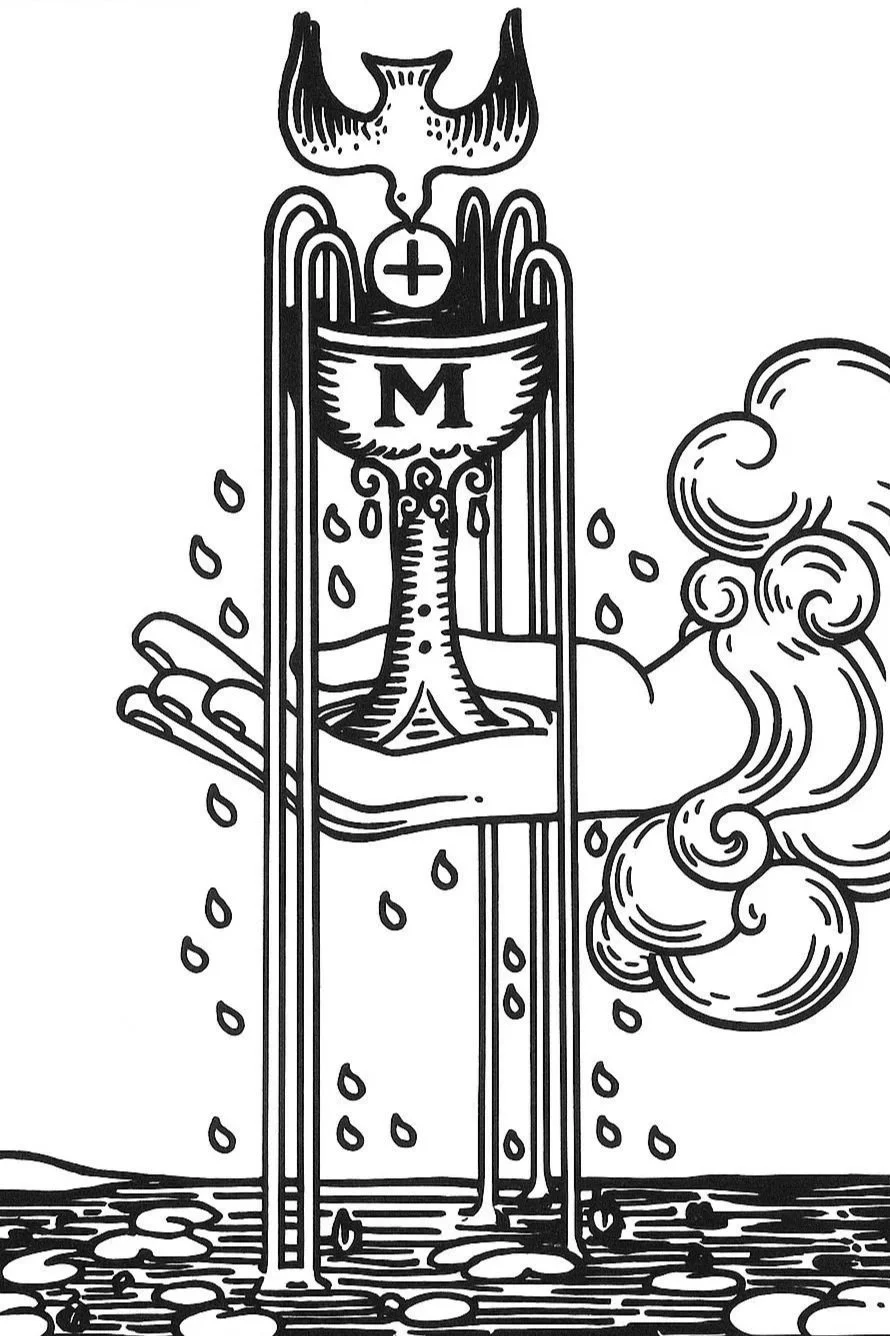
The Hermetic Order of the Golden Dawn, a 19th-century occult society, created one of the most influential systems for interpreting Tarot.
Within Golden Dawn symbolism:
Cups correspond to:
Element: Water
Direction: West
Season: Autumn
Astrological qualities: emotional, receptive, reflective
In their system, Cups represent the formative and receptive side of consciousness. Where fire (Wands) initiates, water receives and shapes experience internally.
The Golden Dawn also linked the Cups to the world of relationships and emotional development. In this model, the suit describes how emotional awareness unfolds, from the first emergence of feeling (Ace) to emotional maturity or difficulty (Ten).
Court cards in Cups were also tied to astrological water signs (Cancer, Scorpio, Pisces), reinforcing the connection with emotional depth and intuition.
The Suit of Cups, Aleister Crowley and the Thoth Tarot
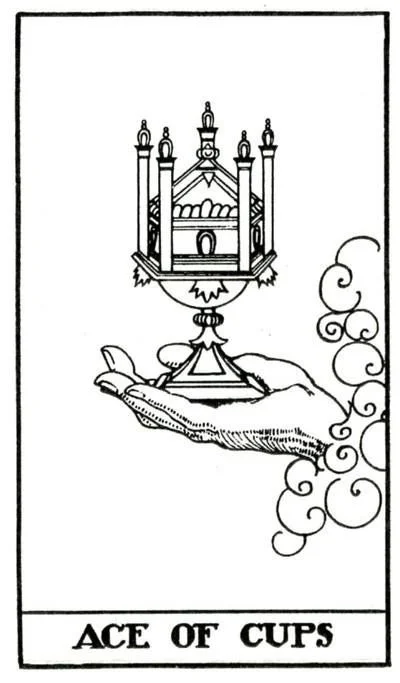
Aleister Crowley expanded the Golden Dawn system when he created the Thoth Tarot with artist Frieda Harris. Crowley saw the Cups as representing the dynamic movement of emotion and consciousness within the psyche.
In the Thoth system Cups symbolise:
Emotional energy
Psychic receptivity
The flow of imagination
The creative subconscious
Crowley described water as the matrix of consciousness. The field in which experience forms. Each numbered card reflects a state of emotional expression, for example:
Ace of Cups – pure emotional potential or spiritual love
Two of Cups – connection, attraction, emotional harmony
Five of Cups – emotional disruption or disappointment
Nine of Cups – satisfaction and emotional fulfilment
Crowley often framed Cups as the creative womb of the psyche, where images, feelings, and inner meanings emerge.
The Suit of Cups from a Jungian Perspective
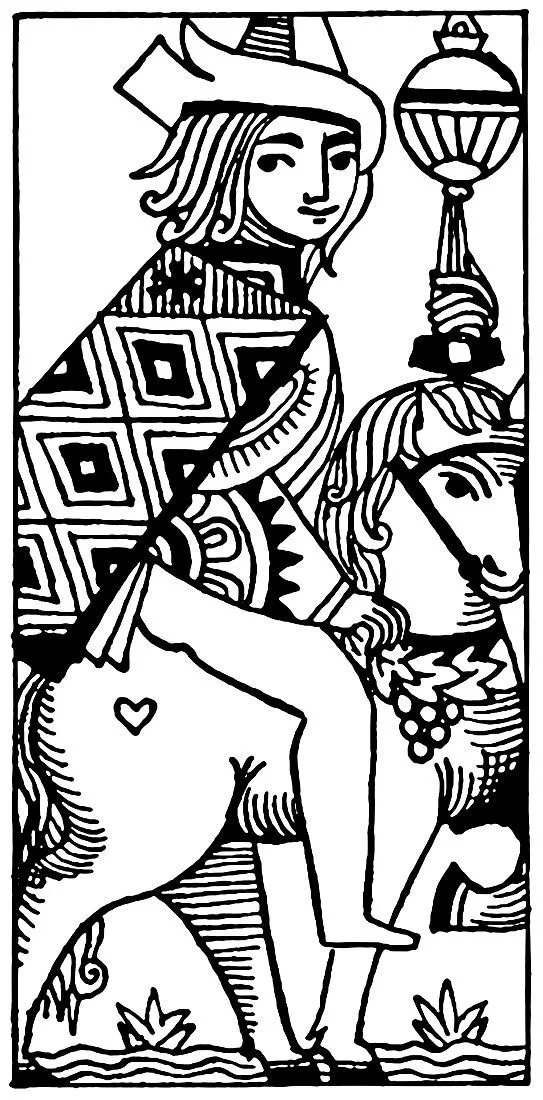
From a Jungian psychological perspective, Tarot cards can be viewed as archetypal images representing processes within the psyche.
Jungian analysts interpret the suits symbolically. In this framework, Cups represent the realm of feeling and the unconscious.
Water imagery frequently appears in Jung’s work as a symbol of:
The unconscious mind
Emotional depth
The collective unconscious
The symbolic world of dreams
The Cup itself can be seen as a container of psychic experience — a vessel holding feeling, meaning, and imagination.
From this perspective, the suit of Cups reflects how the psyche processes emotional experience.
Some cards represent emotional openness, while others symbolise repression, illusion, grief, or fulfilment. In psychological terms, the suit maps different states of emotional integration or fragmentation.
Historical Playing Card Origins of The Suit of Cups
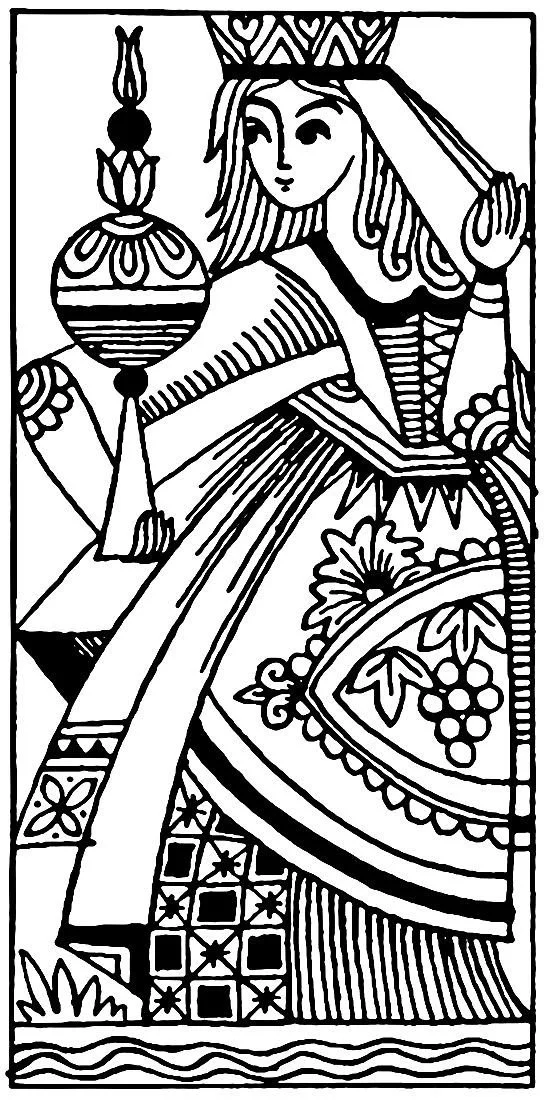
Before Tarot became associated with occult symbolism, it was simply a card game that emerged in Renaissance Italy.
The suits were similar to earlier playing cards used across Europe and the Middle East. The Cup suit likely developed from chalice imagery used in medieval card decks, symbolising feasting, hospitality, and celebration.
Over time, occultists layered additional symbolic meaning onto the cards. Thus, the modern interpretation of Cups as representing emotion and intuition is largely a later esoteric development, especially from the 19th century onward.
Today, many people interpret the suit of Cups less as a mystical system and more as a symbolic map of emotional life.
In modern terms, the suit describes themes such as:
emotional awareness
relationships and connection
empathy and compassion
imagination and creativity
vulnerability and intimacy
When Cups appear strongly in a Tarot reading, it often indicates that emotional processes or relationships are central to the situation.
This does not necessarily imply prediction or supernatural insight. Instead, the cards can function as reflective symbols, helping people explore how they feel and what emotional patterns might be present.