
The Suit of Pentacles in Tarot
Meaning, Symbolism & Psychological Interpretation
The Suit of Pentacles is traditionally associated with earth, the element connected to the material world, physical reality, work, and stability. In most Tarot systems, Pentacles represent the realm of practical life — including resources, the body, livelihood, and the structures that support everyday existence.
Because Tarot evolved through multiple traditions, the suit of Pentacles is best understood as a symbolic language describing how humans interact with the physical and material dimensions of life.
Across most Tarot traditions, the suit of Pentacles symbolises:
Material resources and financial matters
Work, skills, and craftsmanship
Stability and security
Physical health and the body
Long-term development and practical growth
If Wands represent action, Cups represent emotion, and Swords represent thought, Pentacles describe how ideas and efforts become tangible in the physical world.
The Suit of Pentacles in Western Occult Traditions
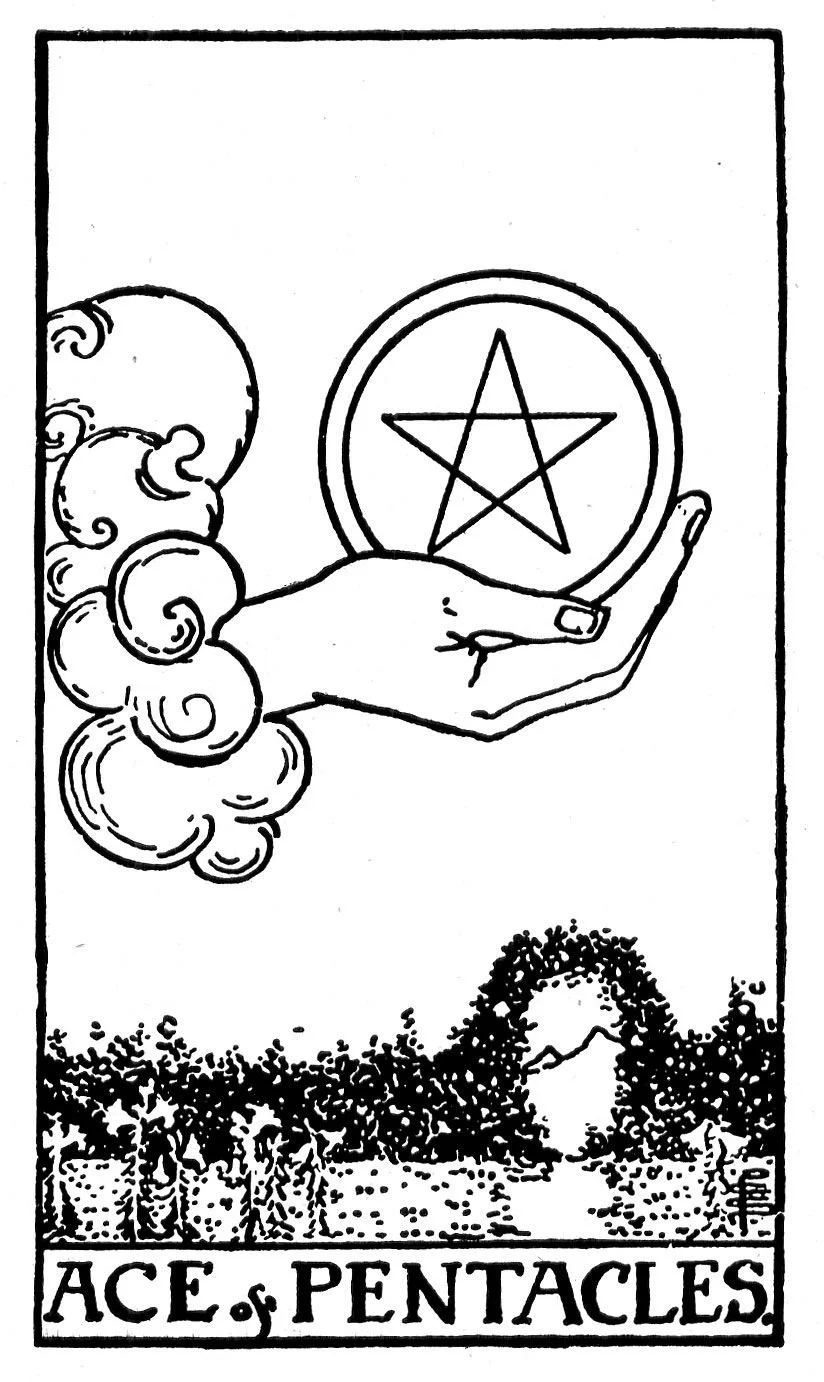
Hermetic Order of the Golden Dawn
Within the Golden Dawn framework, Pentacles correspond to:
Element: Earth
Direction: North
Season: Winter
Astrological qualities: practical, grounded, stable
In this system, Pentacles represent the manifestation of energy into physical form.
Where fire initiates, water shapes experience, and air conceptualises ideas, earth represents the final stage of expression — the material result.
The Golden Dawn associated Pentacles with practical achievement, discipline, work, and the structures that support life.
Court cards in this suit were linked to earth signs in astrology (Taurus, Virgo, Capricorn), reinforcing themes of stability, persistence, and material organisation.
The Suit of Pentacles, Aleister Crowley & The Thoth Tarot
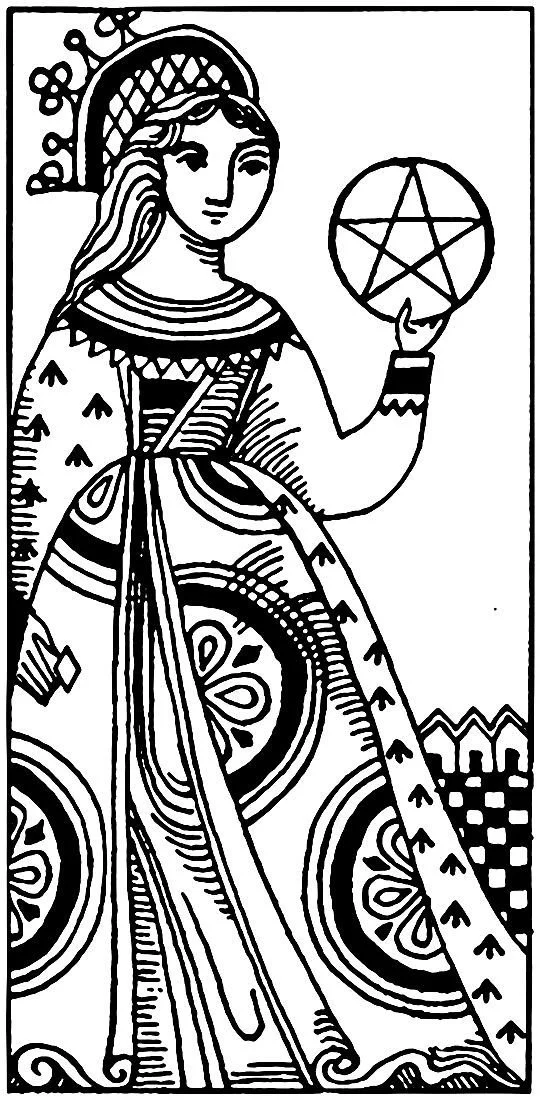
In the Thoth Tarot, the suit traditionally called Pentacles is renamed Disks, emphasising the idea of material manifestation and structure. It represents the crystallisation of energy into form — the tangible results of effort and time.
Crowley described earth as the final stage of energy becoming concrete reality.
The suit therefore symbolises:
physical manifestation
resources and material structures
stability and endurance
the processes that sustain life
Each numbered card reflects a condition of material development. Examples include:
Ace of Disks – potential for material growth
Three of Disks – skill, craftsmanship, and collaboration
Five of Disks – instability or material difficulty
Seven of Disks – patience and delayed reward
Ten of Disks – long-term stability and established structures
The Suit of Pentacles From a Jungian Perspective
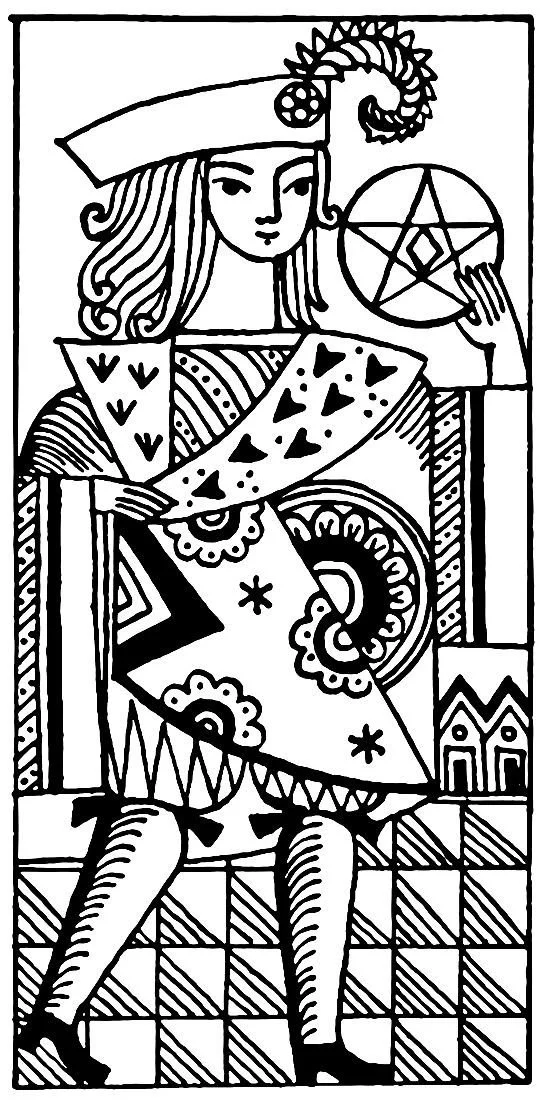
In this framework, Pentacles correspond closely to the sensation function, one of Jung’s four psychological functions.
The sensation function relates to direct engagement with the physical world, the body, environment, and concrete reality.
Earth imagery often appears in Jungian symbolism as representing:
grounding and embodiment
practical engagement with reality
stability and structure
integration of psychological insight into everyday life
From this perspective, the suit of Pentacles reflects how individuals build stability and integrate their inner development into the practical world.
Historical Playing Card Origins of The Suit of Pentacles
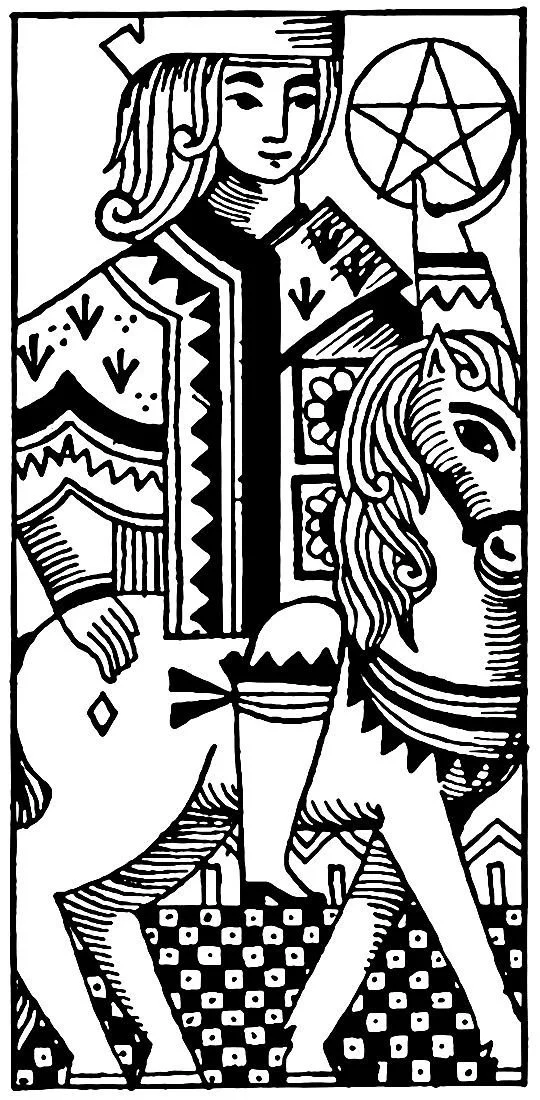
Tarot emerged in 15th-century Italy as a card game, not an occult system. The four suits reflected everyday medieval objects.
Coins represented wealth, trade, resources, and economic life.
Because medieval society was strongly shaped by agriculture, commerce, and land ownership, the coin suit symbolised the practical foundations that sustain life.
Later occult traditions reinterpreted the coins as pentacles, a symbolic form that incorporated the pentagram, linking the suit to earth and material manifestation.
In modern terms, the suit often represents themes such as:
work and career development
financial stability
long-term planning
personal discipline and skill
health and physical wellbeing
When Pentacles appear strongly in a Tarot reading, it often indicates that practical circumstances, resources, or material stability are central to the situation.