
The Suit Of Cups
The Suit of Water and Emotion
The Suit of Cups corresponds to the element of Water and represents the realm of emotions, relationships, and inner experience. In the Rider–Waite deck, created by A. E. Waite and illustrated by Pamela Colman Smith, these cards explore feeling, intuition, and human connection. They often point to matters of the heart, emotional reflection, and the subtle currents that shape relationships. Historically, Cups correspond to the suit of Hearts in a standard deck of playing cards.
This understanding is grounded in the esoteric system of the Hermetic Order of the Golden Dawn, from which the symbolism of the Rider–Waite deck largely derives. Within this framework, Cups correspond to the element of Water and the Kabbalistic world of Briah, the World of Creation. The suit therefore represents a receptive and formative principle associated with emotion, imagination, and the capacity to contain experience.
The Ace of Cups expresses the pure root of the element. The numbered cards from Two to Ten show how this elemental force unfolds through the ten Sephiroth of the Tree of Life, reflecting different stages of emotional development. The Court Cards represent distinct modes of engaging with this emotional realm. All Minor Arcana are mapped to the Tree of Life based on their number.
The Cups, being of the Element of Water, are all mapped to the World of Water, Briah, whose color system is known as the Queen Scale.
In readings, Cups often appear when attention turns inward toward emotional understanding. They highlight how feelings shape perception, relationships, and responses to life’s experiences. The Golden Dawn system further refines these meanings through astrological correspondences, adding additional layers of symbolic precision to each card.
The Ace of Cups
The Root of the Powers of Water
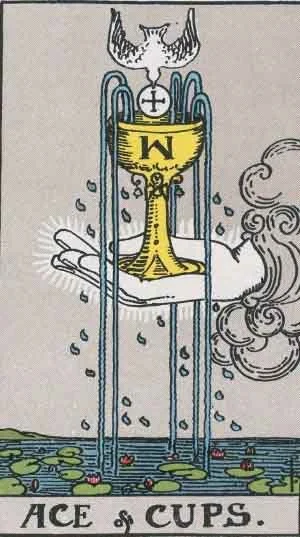
This card represents the source of the Water element in its most concentrated and undiluted form. Its Hermetic title is The Root of the Powers of the Waters. On the Kabbalistic Tree of Life it is placed in Kether of Briah, the Crown within the World of Creation, representing the highest and purest origin of emotional energy.
The card is traditionally depicted as a radiant white angelic hand issuing from clouds, supporting a cup resembling that of the Purifier, the Cup of Stolistes used in temple rituals. From the cup rises a fountain of clear water, with lotuses and water lilies growing below.
The Ace therefore symbolises pure potential for love, intuition, fertility, conception, beauty, pleasure, and happiness, containing the essence from which all the Cups that follow unfold.
Discover the deeper meaning of this card: The Ace of Cups: The Root of the Powers of Water
Two of Cups — Love (Chokmah)
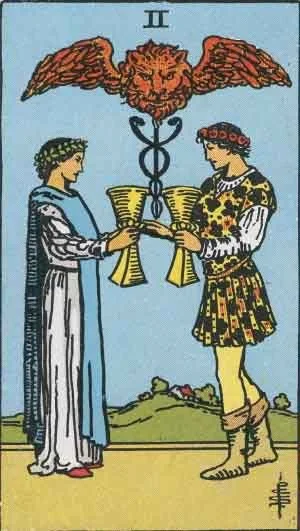
This card combines the element of Water with the expansive and authoritative force of Chokmah, the sphere of Wisdom, within the world of Briah. Its Hermetic title is Love. The astrological attribution is Venus in Cancer, bringing the harmonious and affectionate nature of Venus into the nurturing and emotional environment of Cancer.
This combination represents the beginning of relationship, mutual recognition, and emotional connection. The Golden Dawn described it as the “commencement of steady increase, gain and pleasure, but commencement only.”
The card therefore signifies the birth of affection, partnership, and emotional bonding.
Discover the deeper meaning of this card: The Two of Cups: Love (Chokmah)
Explore the astrological meaning behind: Venus in Cancer
Three of Cups — Abundance (Binah)
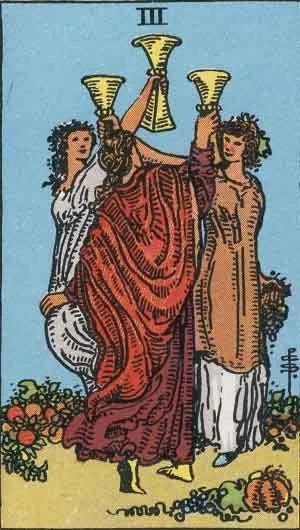
Water in Binah, the sphere of Understanding and the Supernal Mother, produces a card associated with fulfilment, pleasure, and fertility. Its Hermetic title is Abundance. The astrological attribution is Mercury in Cancer, introducing communication, sociability, and intellectual exchange into the emotional depth of the sign.
This card signifies joy, celebration, friendship, hospitality, and social harmony. It represents the completion of an emotional cycle in which pleasure is shared among others.
The Golden Dawn associated the goddess Persephone with this card, adding a sense of beauty and emotional richness that carries a quiet awareness of the temporary nature of joy.
Discover the deeper meaning of this card: The Three of Cups: Abundance (Binah)
Explore the astrological meaning behind: Mercury Cancer
Four of Cups — Blended Pleasure (Chesed)
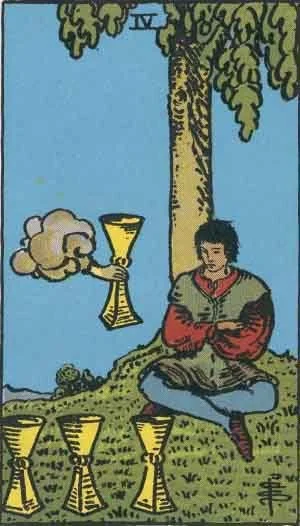
In this card the element of Water operates within Chesed, the sphere of Mercy, in the world of Briah. Its Hermetic title is Luxury or Blended Pleasure. The astrological attribution is the Moon in Cancer, where the Moon, ruler of emotion and receptivity, is placed in its own sign, intensifying emotional sensitivity and depth.
The Four of Cups represents emotional stability, comfort, and settled pleasure. However, because this stability can become fixed, it may also lead to boredom, apathy, stagnation, or a sense of emotional dissatisfaction when feeling no longer moves or develops.
Discover the deeper meaning of this card: Four of Cups — Blended Pleasure (Chesed)
Explore the astrological meaning behind: Moon in Cancer
Five of Cups — Loss in Pleasure (Geburah)
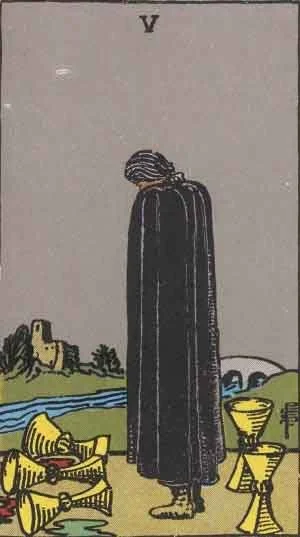
The forceful and disruptive influence of Geburah, the sphere of Severity, acts upon Water in this card. Its Hermetic titles are Disappointment and Loss in Pleasure. The astrological attribution is Mars in Scorpio, a powerful and intense combination in which the fiery aggression of Mars clashes with the deep emotional waters of Scorpio.
The emotional waters are symbolically evaporated by this fiery influence, leaving bitterness, regret, and sorrow. The cups appear empty, resembling the Cup of Stolistes used in temple purification rituals but without water, defeating their purpose and symbolising spiritual and emotional barrenness.
Discover the deeper meaning of this card: Five of Cups — Loss in Pleasure (Geburah)
Explore the astrological meaning behind: Mars in Scorpio
Six of Cups — Pleasure (Tiphereth)
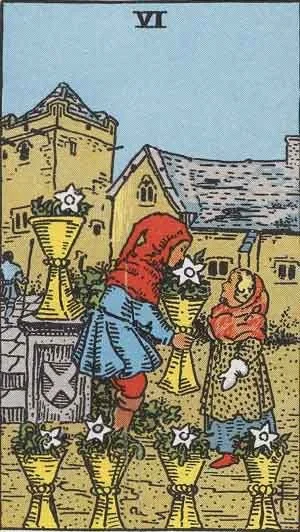
This card places Water within Tiphereth, the sphere of harmony and beauty. Its Hermetic title is Pleasure. The astrological attribution is the Sun in Scorpio, bringing the illuminating and vital force of the Sun into the hidden emotional depths of Scorpio.
The card signifies pleasure, kindness, nostalgia, gifts, and memories of childhood. It represents emotional warmth and the sharing of simple joys. However, it may also indicate dwelling too strongly on the past or idealising earlier experiences.
Discover the deeper meaning of this card: Six of Cups — Pleasure (Tiphereth)
Explore the astrological meaning behind: Sun in Scorpio
Seven of Cups — Illusionary Success (Netzach)

Water operating through Netzach, the sphere of instinct and desire ruled by Venus, creates a complex and unstable emotional state. Its Hermetic titles include Debauch and Illusionary Success. The astrological attribution is Venus in Scorpio, a position considered difficult, where the harmony of Venus struggles within the intense and passionate waters of Scorpio.
This card symbolises fantasy, temptation, deception, and confusion. The emotional imagination becomes powerful but unfocused, producing dreams and desires that may distort reality.
Discover the deeper meaning of this card: Seven of Cups — Illusionary Success (Netzach)
Explore the astrological meaning behind: Venus in Scorpio
Eight of Cups — Abandoned Success (Hod)
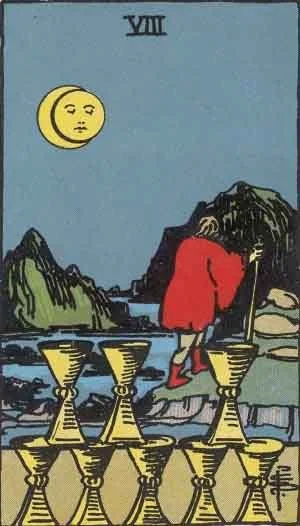
The analytical and intellectual force of Hod combines with Water in this card. Its Hermetic titles are Indolence and Abandoned Success. The astrological attribution is Saturn in Pisces, where the restrictive and structuring influence of Saturn interacts with the boundless emotional nature of Pisces.
This combination produces a sense of disinterest in the manifested world. The card symbolises turning away from established emotional satisfaction in search of deeper meaning. It reflects introspection, withdrawal, and the willingness to leave comfort behind in pursuit of something more authentic.
Discover the deeper meaning of this card: The Eight of Cups: Abandoned Success (Hod)
Explore the astrological meaning behind: Saturn in Pisces
Nine of Cups — Material Happiness (Yesod)
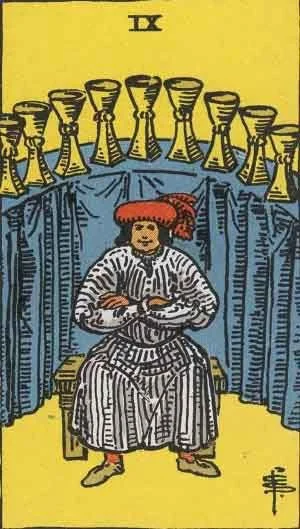
Water operating in Yesod, the lunar sphere of reflection and foundation, produces the well known card of fulfilled wishes. Its Hermetic title is Happiness or Material Happiness. The astrological attribution is Jupiter in Pisces, a placement of strength where the expansive nature of Jupiter flourishes in the compassionate waters of Pisces.
The card symbolises satisfaction, emotional security, fulfilled desires, and enjoyment of life's pleasures. However, because it exists within the reflective sphere of Yesod, this happiness may resemble a dreamlike state and can sometimes indicate indulgence or complacency.
Discover the deeper meaning of this card: Nine of Cups — Material Happiness (Yesod)
Explore the astrological meaning behind: Jupiter in Pisces
Ten of Cups — Perfect Success (Malkuth)
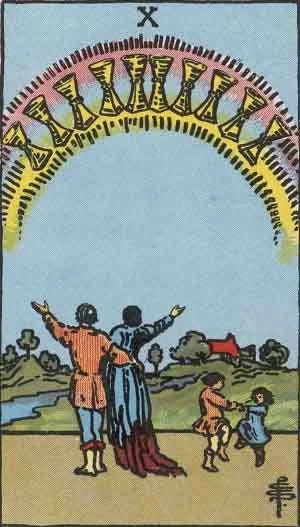
This card represents the final manifestation of the Water element within the material world, corresponding to Malkuth on the Tree of Life. Its Hermetic titles include Satiety, Perpetual Success, and Perfected Success. The astrological attribution is Mars in Pisces, which symbolises the spiritual warrior finding peace after struggle.
The Pythagorean interpretation associates the number ten with completeness, eternity, and the integration of all elements. The card represents realised emotional fulfilment, harmony within family and community, and the experience of lasting happiness within daily life.
Discover the deeper meaning of this card: Ten of Cups — Perfect Success (Malkuth)
Explore the astrological meaning behind: Mars in Pisces
Court Cards of Cups: Masters of Water
The Golden Dawn system assigns elemental dignities to the Court Cards. Each card combines the element of Water with one of the four elemental sub qualities, producing nuanced expressions of emotional authority and development.
Page of Cups — Earth of Water
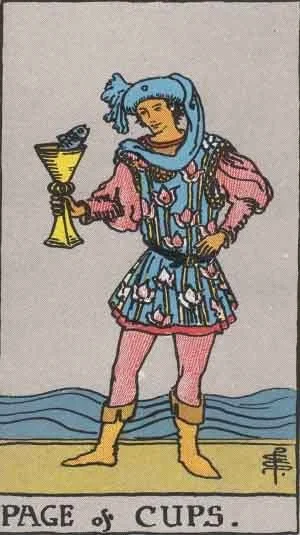
The Page of Cups (Princess) represents the Earth of Water. She symbolises emotional sensitivity, imagination, and artistic perception. She carries the potential for deep feeling but remains immature , impressionable needing direction and cultivation to grow. This card represents emotional potential grounded in the physical world and requiring guidance and cultivation to mature.
Discover the deeper meaning of this card: Page of Cups — Earth of Water
Knight of Cups — Air of Water
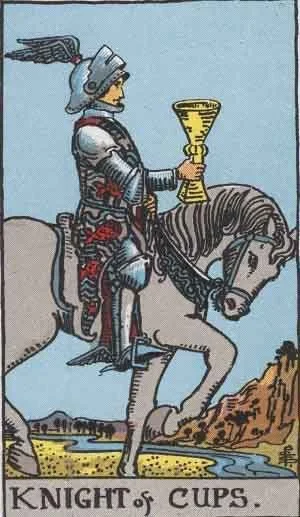
The Knight of Cups (Prince of Cups)represents the Air of Water. He is the persuasive romantic messenger of emotion, persuasive and expressive in the pursuit of beauty and love. He pursues his ideal with passion and eloquence, embodying the quest for love and beauty.
He is swift and unpredictable in his affections. His nature is passionate and imaginative, bringing movement and intellectual reflection to emotional experience.
Discover the deeper meaning of this card: Knight of Cups — Air of Water
Queen of Cups — Water of Water
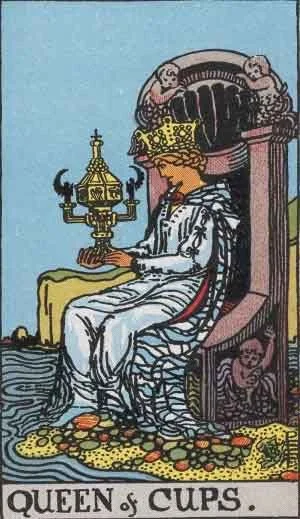
The Queen of Cups represents the Water of Water and embodies the pure receptive power of the suit.
She is the ultimate expression of the suit's receptive and intuitive power. Deeply empathetic, psychic, and nurturing, she embodies emotional mastery through pure feeling.
She has mastered her emotions and uses her intuition with grace and inner strength. She symbolises understanding and compassion. She represents the fullest development of emotional sensitivity and intuitive perception.
Discover the deeper meaning of this card: Queen of Cups — Water of Water
King of Cups — Fire of Water
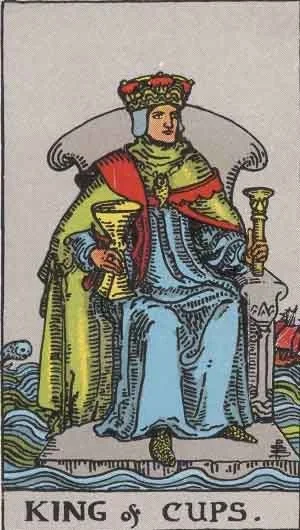
The King of Cups represents the Fire of Water. He symbolises mastery over emotion and the ability to direct feeling with wisdom and authority. Unlike the Queen, who experiences emotion deeply, the King governs it with balance and control, representing emotional intelligence and mature leadership.
He is the active, commanding, and authoritative master of the emotional realm. While the Queen feels everything, the King rules his emotions, directing his feeling nature with wisdom and power without being overwhelmed by it. He represents the full mastery and expression of love and emotional intelligence.
Discover the deeper meaning of this card: King of Cups — Fire of Water