
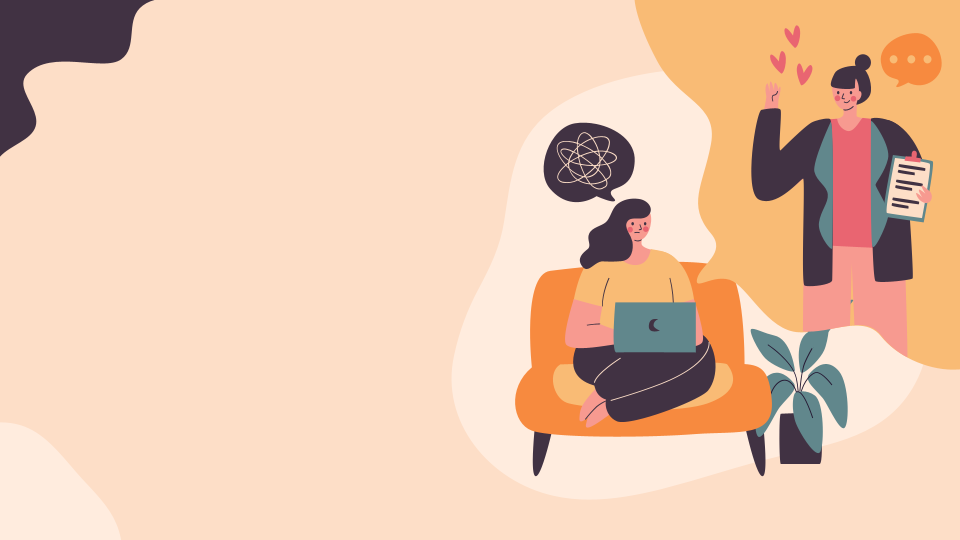
Do The Same Patterns Keep Repeating?
No Matter How…Much You Try To Change?
Relationship Patterns?
Maybe it’s the kind of relationships you fall into?
Do you chase love, even when it hurts?
Do you find yourself in relationships just to feel wanted?
Do you say yes when you mean no ?
Emotional Wobbles ?
The way you shut down or lash out without meaning to?
That feeling of emptiness and longing that never fully leaves?
Persistent low mood and anxiety — even when there’s no clear reason why?
You overthink everything — then shut down or hold on too tightly?
Low Self-Worth ?
You question your worth, your voice, your place in the world?
You feel that are too much or not enough?
Do you feel unlovable unless you’re useful?
You feel like an imposter and faking it ?
Poor Boundaries?
Is setting boundaries still laced with guilt or fear?
Do you feel unlovable unless you’re useful?
Do you put other people’s needs ahead of your own, even when it costs you?
Do you let people cross your lines, just to keep in your life?
Does it Sound Familiar ?
→ I am not enough.
→ If I set boundaries, I will lose people.
→ I have to earn love or approval.
→ My needs don't matter/asking for help is hard.
→ Something is wrong with me.
→ I don’t want to upset anyone, even if it costs me.
→ I am a failure. I am a fake.
→ Why am I so different? I don’t fit in!
→ I am a fake.
→ If I rest, I am lazy.
→ I can't trust anyone.
→ Their disappointment, means I am at fault.
→ No matter what I do, it’s never good enough.
→ I am too much.
→ If I rely on others, I will get hurt or let down.
→ If I show the real me, I will be rejected
→ I am shamed of who I am.
→ If I say no, they will think I am selfish or difficult.
Get Ready for an 'Aha!' Moment
It’s important to understand that most of what drives us doesn’t happen in the conscious mind. It happens in the subconscious. And the subconscious mind runs the body. It operates on deeply embedded beliefs— known as a schema, most of which we’re not fully aware of.
Let’s say we hold negative beliefs about ourselves, the world, or others, often without fully realising it. In turn, these beliefs tend to distort our sense of self and therefore result in a lack of a grounded sense of who we are. If that’s the case, it's only natural that we'll struggle. That’s why setting healthy boundaries feels like constant upheaval. This is because we don’t truly believe in our worth. Asserting ourselves becomes difficult. In life, we’re constantly negotiating with others—communicating what we believe our worth is. And if we don’t know our worth, how can we choose ourselves? How can we build fulfilling relationships—both with others and, more importantly, with ourselves? Life then becomes a constant battle
Why? Because we don't have the right 'software' to support it. And even when you try to change, try to choose differently, the change doesn’t stick. Because… your brain, body, and subconscious mind simply don't buy it. They don't believe it at a fundamental level. If that foundational 'software' were aligned and positive, those things would come naturally to us. When we start updating this “software”, setting healthy boundaries and navigating relationships—including being able to say no—become a matter of practice and skill set.
The Internal Map That Shapes the Story You Live
Every single minute, your body is building and updating a working model of reality. Picture it as a map based on a framework, working like software, built from sensory input, memory, emotion, and past experience. This isn't just psychological. It's physiological. Your brain and nervous system are constantly interpreting the world — not as it is, but through the lens of this internal framework. It is your brain's reality map.
This map of reality is how your system keeps you safe. It runs on subconscious beliefs — frameworks of what’s true — constantly operating in the background like silent software. They shape your sense of what’s real about yourself, others, and the world. Invisible rules, quietly guiding how you interpret and respond to everything around you. Formed early in life, they shape how you see the world—and how you see yourself. They inform how you move through life .
Let’s say that, as a child, you might have been criticised, dismissed, given too little autonomy—or perhaps too much. Maybe you learned that attention depended on your performance. Or perhaps your environment felt unpredictable. Your nervous system adapted—not to help you thrive, but to help you survive.
Those early experiences formed the framework of core beliefs you for most part unconsciously operating from. Over time, as they were reinforced, they eventually fused with your initial coping strategies. Together, they became your internal reference system—the lens your body uses to interpret the world around you, and also a story about who you are, what you deserve, who you can be, and what’s possible
The Spark That Reignites the Old Loop
Let’s look at what a trigger is — from the body’s perspective. It’s nothing more than a stimulus. From the conscious mind’s perspective, that might look like a person, a tone, a situation. And when one of your core beliefs gets activated — that’s the trigger — your body reacts automatically. It defaults to what it learned in the past. A way of coping shaped by natural survival responses: fight, flight, freeze, or fawn
The beliefs and responses to them are so tightly linked, it feels like a single fused mechanism. And this is why we tend not to see the mechanism — it gets clouded by a surge of emotion, racing thoughts, and before you know it, you’re back in the same loop. It happens so quickly that if you're not aware of it, you might miss it entirely.
If left unexamined, that mechanism runs on autopilot. That’s exactly why the same patterns keep repeating, pulling you in. It’s also why you react, rather than respond.
The good news? Because these unconscious beliefs tend to follow very clear patterns and cluster around recurring themes, they can be surprisingly easy to map—alongside your responses. Here are some examples of how those responses often manifest in daily life.
→ You people-please to avoid conflict ↔ Fawn
→ You dominate conversation or keep busy to stay in control ↔ Fight
→ You disconnect or numb out to escape ↔ Flight
→ You shut down when you feel shame or are scared ↔ Freeze
How the Body Calls Familiar ‘Safe’ — Even When It Hurts
Because … were are wired for what's feels familiar. Your body’s primary function is to keep you safe. Our coping strategies were not designed for a personal growth or self actualisation. They were built to help you manage pain, avoid rejection, and simply…make it through. When your system (body) encounters a stimulus (event), your body instantly assesses safety and if it detects threat or danger, attempts to protect you and then wants to self-regulate in the only way it knows how.
That’s exactly what it has been designed to do.
It’s important to recognise that around 95% of what happens in the body is driven by the subconscious. And because the subconscious is wired for familiarity, it will always steer us towards what feels known and predictable—even if it’s not good for us. We perceive it as safe not because it supports us, but because it’s familiar and we've survived it before. And here’s the paradox: what’s toxic, harmful, or misaligned can still get coded as safe—simply because it’s familiar and once felt manageable. That’s the glitch in the system.
That’s precisely why, even when we consciously know something isn’t right for us, we find ourselves back in the same dynamic—the same old response, the same familiar pain. At the heart of it lies habituated behaviour: learned, internalised, and embedded deep within the body’s structures. So the system automatically defaults to what it recognises—what fits its internal framework, feels coherent, and has been survived before.
Your subconscious would rather choose a familiar hell than an unfamiliar heaven, because the unfamiliar registers as danger, even if it’s everything we claim to want.
This means using self-betrayal as protection—sacrificing selfhood out of fear of being alone. It means repeatedly choosing partners who are distant, volatile, or emotionally needy. Feeling guilty for having needs or saying no. Keeping yourself constantly busy. Striving for perfection. Over-apologising for simply existing. Linking your worth to what you give. Fearing you'll be exposed as a fraud. And the list goes on.
And because your subconscious mind runs on deeply embedded beliefs, anything that doesn’t align with that framework gets rejected. If you try to introduce change—a new behaviour, a different outcome—and it clashes with what your system recognises as true, it won’t land. It feels off and flags it as an error.
This is what makes change difficult—not because we don’t want it, but because, at a deep structural level, it’s rejected. We haven’t spoken in the language the body and subconscious mind recognise.
And ...We Were Never Taught the Language of The Body
The body doesn’t work the way most people think—or the way popular culture presents it. There's an overemphasis on talking therapies, on processing through words. Yet research—and more importantly, the evidence itself—clearly indicates that genuine, lasting change occurs primarily at the level of the body. True transformation requires somatic engagement; it must be embodied, not simply processed cognitively or abstractly.
Returning to oneself doesn’t happen in the mind alone. It happens through the body. That means learning its language—understanding what it’s signalling, what it needs to feel safe, and how to respond. Because safety isn’t just an idea; it’s a felt experience.
Here's the crucial part most people entirely miss: Unless these unconscious structures are brought into awareness and replaced, no amount of insight or rationalisation can meaningfully change the outcome. You cannot reason your way out of this because these beliefs don’t reside only in your conscious thoughts. They're embedded in deeper structures—what we call the unconscious mind—and this is precisely why logic alone cannot reach or alter them. That’s why you can't think your way out of it.
Fighting these beliefs is futile—you’re never going to shift them with affirmations alone or borrowed ideas. The shift must resonate deeply, genuinely feel true, and align authentically with who you are. Only then does the internal system begin to change, because that change feels real—it carries weight, direction, meaning, and purpose. In short, you must offer your system something that connects on a deeper level, even if it doesn’t initially seem logical.
We are wired for meaning and purpose. If the change you're pursuing doesn’t feel meaningful —if it doesn’t ring true—it won’t stick. Not because you've failed, but because your system doesn’t recognise it as true. To recognise it, the system needs to feel and see it.
Because the internal system operates primarily through frames of reference, the key is to introduce a framework it naturally recognises—in other words, to speak its own language, one that resonates simultaneously on a somatic and symbolic level. This is precisely why the Hero’s Journey framework is so powerful.
The Hero’s Journey isn’t just storytelling. It's an archetypal structure our bodies and minds instinctively recognise. It aligns perfectly with our biological design. Humans are innately wired for pattern recognition and have communicated through stories for millennia, using narrative as a form of medicine and meaning-making.
Stories naturally organise chaos into coherent narratives, reframing struggles as challenges to be overcome. The Hero’s Journey activates this internal logic. It speaks directly to the deep networks responsible for self-reference and transformation. It mirrors what your system already knows.
That’s why it works. That’s why it lands—where cognitive logic can’t.
What is the The Hero Journey?
The structure of the Hero’s Journey arc is everywhere. It’s deeply embedded in our collective psyche, culture, and everyday life. Woven into everything — and yet, we barely notice it. You see it in the Sun’s movement through the 12 houses of the Zodiac. In the Northern Hemisphere, the Sun begins its ascent at the Spring Equinox, crossing the threshold into Aries — the first sign of the Zodiac. At the Summer Solstice, in Cancer, the Sun reaches its highest point. Peak light. Full power. On 21st December, in Capricorn, the Sun appears to stand still for three days. Then, on the 25th, it moves again. The Winter Solstice marks its lowest point — the death of the Sun. Its return is the rebirth. Resurrection. The triumph of light over darkness.
This motive repeats everywhere. Myths. Legends. Fairy tales. Religion. Films. Same structure, different faces. From ancient texts to Hollywood scripts.
The term itself comes from the work of Joseph Campbell, The Hero with a Thousand Faces. Campbell identified a universal pattern of transformation that appears in myths across every culture. This pattern, often called the monomyth, describes a hero's journey in 12 stages: involving departure, trials, and ultimately a return, often through symbolic death and rebirth. Think of the 12 Labours of Hercules. Or characters like Jon Snow in Game of Thrones, or Neo in The Matrix.
It is not only the story arcs, it also contains reoccurring motifs — archetypes of life stages, forces we face, and people we meet.
Stages: Crossing the Threshold, entering unknown territory and leaving the familiar behind. Or Revelation — a new understanding of self emerges when something shifts internally.
Forces and people we meet: the Mentor, who offers guidance, tools, wisdom, or preparation, such as Gandalf or Morpheus. The Shadow — such as Darth Vader or Voldemort. It can be personal: a rival. Or systemic: an empire or ideology. The Trickster, like Loki — can be friend or foe, disrupts, destabilises, changes the game. Or the Siren, the Seducer—the one who tempts Hero off your path. Not always a person. Sometimes it’s comfort, fantasy, false certainty.
It’s a roadmap. It helps you make sense of where you’ve been, where you’re going, and why the hard parts mattered. It gives direction. It helps us orient ourselves—find purpose and meaning that resonates. It’s a map of personal transformation—a process of returning to the Self.
Why The Hero Journey Arc ?
The Hero motive and archetype are both the engine and the foundational structure of this model and programme.
On one hand, the term "hero" is crucial here because it represents breaking free. In English, it derives from the Greek heros, which was used to describe Heracles — known to the Romans as Hercules — the earliest written record in Western mythology of one who broke his fate, despite the cruel fate bestowed upon him. This myth shows us something deeper. That we can carry the weight of what came before us — family patterns, inherited guilt, unspoken rules. Hercules isn’t just punished for what he did. He’s punished for what he was born into.
For centuries, people believed that Gods controlled everything (symbolically it can interpreted as our biological design and nature): fate, destiny, even suffering. You lived the story; it was handed to you. But Hercules changed that. He didn't escape the faith and embraced heritage ; he faced it, transformed it. He forged something entirely new through learning how to get better at his labours, how to ebrace channlages thig ways to be smarter , how to ask for help.
On the other hand, it’s rooted in our biology—in how our bodies are designed. The opposite of our reactive survival states—fight, flight, freeze, or fawn—is a regulated state of Self. That state will always drive integration. It’s what allows us to break free from limiting beliefs. It opens new ways of seeing ourselves and the world around us, allows us to shift paradigm—to change our perspective, our reality, our circumstances, and our life. To choose, to forge our own path. And that is what breaks the cycle.
That’s precisely why I’ve placed the Hero at the centre of my framework. It represents the part in each of us that can break patterns, challenge old stories, face the darkness, transform, and live with genuine intent. The Hero carries the spark that says: “You are not what happened to you. You are the one who chooses who to become.” This is where true psychological sovereignty begins.
Two Paths of The Hero
Herakles isn’t the only face of the Hero. Psyche, his feminine counterpart, represents the inner journey of the soul. Like Herakles, she’s bound by fate and given a series of difficult tasks by Aphrodite, including a descent into the Underworld — a symbolic journey into the depths of the psyche.
Psyche’s myth is also one of the most enduring love stories in Greek mythology. Through trials and suffering, she achieves divine union with Eros. Psyche symbolises the soul; Eros, love. Their union represents the soul’s path to self-realisation through love.
Her descent reflects the psychological process of facing fear, integrating shadow, and transforming through connection. The myth is a metaphor for inner growth, showing that love and wholeness are found not by avoiding struggle, but by moving through it.
That’s why I’ve divided the Hero Journey into two distinct but connected paths:
Hercules follows the right-hand path: outward, addressing hardship through action, trial, and conquest.
Psyche follows the left-hand path: inward, intuitive, addressing loss and betrayal through surrender, trust, and love.
Both share the same Hero’s Journey structure and can be used in tandem. Psyche’s path is more closely aligned with spiritual work and with Jung’s process of individuation, as it opens the doors to shadow work — and with it, access to a deeper archetypal structure inaccessible to most.That story arc is often called the Soul’s Journey, as "psyche" in Greek means "soul," and in the Jungian model, it represents wholeness and the integrated self.
Welcome to:The Hero Journey Programamme
A Framework for Whole-System Change & Integration
The Hero motive and archetype are both the engine and the foundational structure of this model and programme. For one, it's steeped in our biology, our physiology, and how our bodies are designed. The opposite state of the fight, flight, freeze, or fawn responses is regulated. That's what the hero is, because that's what this program is aiming to achieve: to activate that hero within us, that state of self-regulation, because we all have it within us. It's the gear that is there that we need to use
It offers deep, lasting, integrated change. It’s not therapy. But it reaches places talking therapy can’t touch, because it speaks the body’s language. It builds self-agency, self-regulation, psychological sovereignty. A practical framework designed to help you to embody change.
What makes it different? It brings together what’s essential for deep, structural change—sequential, integrated, rooted in the body, speaking its language, grounded in the Hero’s Journey: the path every human walks through struggle, rupture, the unknown.
This story lives in us. It reminds us: we are not what happened. We are who we choose to become. A road back to your Self by ecovery of the parts you left behind. Integration—the kind that only comes through the love and forgiveness you learn to give yourself. Not necessarily for others. For you. For the shame you carry. For the moments you couldn’t help it. Didn’t know how.
This work meets the parts that adapted to survive. It brings them home. Every layer aligns with how the nervous system, the subconscious, and the deeper psyche actually work. It weaves somatic intelligence, schema psychology, narrative, and archetypal tradition into one structured, sequential path of change.
Why Jung? Because the psyche has a structure. And Jung mapped it. He worked with what’s already wired into us—how we process meaning through symbol, image, archetype. These aren’t learned. They’re inherited. Neurobiological code. Species-level architecture. That’s why we recognise archetypes instantly. That’s why the Hero’s Journey cuts so deep. It mirrors how humans move through pain, through transformation, into becoming.
It’s our biological code for meaning. It hacks the stress–reward cycle. It gives struggle purpose. Direction. It’s biology speaking the language of the soul. Biology as the bridge between matter and spirit.
Why The Hero Journey Arc ?
The Hero motive and archetype are both the engine and the foundational structure of this model and programme.
On one hand, the word “hero” matters—because it means breaking free. Heracles, known to the Romans as Hercules, is where the word comes from. For centuries, people believed the gods controlled everything—fate, destiny, even suffering. You lived the story handed to you. But Hercules changed that. He didn’t escape his fate, or his call—he faced it. He transformed it. He forged his own way forward by learning how to do the work better. How to be smarter. How to ask for help.
On the other hand, it’s rooted in our biology—in how our bodies are designed. The opposite of our reactive survival states—fight, flight, freeze, or fawn—is a regulated state of Self. That state will always drive integration. It’s what allows us to break free from limiting beliefs. It opens new ways of seeing ourselves and the world around us, allows us to shift paradigm—to change our perspective, our reality, our circumstances, and our life. To choose, to forge our own path. And that is what breaks the cycle.
That’s precisely why I’ve placed the Hero at the centre of my framework. It represents the part in each of us that can break patterns, challenge old stories, face the darkness, transform, and live with genuine intent. The Hero carries the spark that says: “You are not what happened to you. You are the one who chooses who to become.” This is where true psychological sovereignty begins.
Our proto-hero, the masculine archetype of Hercules — his journey is mirrored by his heroine counterpart, a slightly later myth and story of Psyche, and her descent into the underworld. That story arc is often called the Soul’s Journey, as "psyche" in Greek means "soul," and in the Jungian model, it represents wholeness and the integrated self.
This program is based on two core hero journey arcs.
Hercules follows the right-hand path: outward, addressing hardship through action, trial, and conquest.
Psyche follows the left-hand path: inward, intuitive, addressing loss and betrayal through surrender, trust, and love.
Both share the same Hero’s Journey structure and can be used in tandem. Psyche’s path is more closely aligned with spiritual work and with Jung’s process of individuation, as it opens the doors to shadow work — and with it, access to a deeper archetypal structure inaccessible to most
This arc is as old as human kind, for millennia, stories were medicine. Carried deeper meanings, transmuted universal truths, and shaped the healing journey—especially in shamanic traditions. Modern therapy techniques still draws from those roots. Practices like visualisation, breathwork, and dreamwork or analises didn’t start in psychology.
The overlap matters. Because at their core, both therapy and ritual aim toward the same thing: psycho-spiritual change. And in all honesty, there is not much difference between the practices of ritual magic and some techniques used in therapy. As real, deep change is not rational. It does not happen on a logical, cognitive level. So, as much as we’d like to claim we are rational and logical — we’re not. Think of the Hero’s Journey not just as a roadmap, but also as medicine.
The Four Foundations of Embodied Change
This programme consists of four core elements.
The third is particularly crucial and potent: it's where all elements start to converge, underpinning and driving the change, helping you commit to your journey and fundamentally transform your relationship with yourself, becoming your own friend, guiding star, and the Hero of your own story. Also, include a separate body of work called the Hero's Soul Journey. It's essentially Jungian Shadow work, extending to working on attachment and via the Anima/Animus to build secure attachment styles. It's steeped in the framework of archetypes and spirituality, which allows for reaching deep subconscious content and reconnecting with intuition
What Your Body Says – 1. Autopilot Says Hi
What Your Autonomic Nerves Do – 2. Crack the Code
What Your Brain Says – 3. Own Your Story & Direct the Course
What Your Body Needs — 4.The Becoming
Why The Hero Journey Arc ?
The Hero motive and archetype are both the engine and the foundational structure of this model and programme. For one, it's steeped in our biology, our physiology, and how our bodies are designed. The opposite state of the fight, flight, freeze, or fawn responses is regulated Self. That's what the hero is, because that's what this programme is aiming to achieve: to activate that hero within us, that state of self-regulation, because we all have it within us. It's the gear that is there that we need to use.
the Hero Journey ack represents the entirety motive of our biophysiological design—the way we are designed for having narrative, to pursue meaning, purpose, and direction. That what the brain and reward system is there to do. Entirety of the system wants us to keep moving to keeps us safe and alive. That’s a biological blueprint for us. That biological reality driving us, as our life force within us is represented in the Hero Journey motive and archetype for human psychological and emotional experience. It’s biology, motive, archetype and essence of being human.
The term "hero" is crucial here because it means breaking free; Heracles, known to Romans as Hercules, the one that we own Hero word from. For centuries, people believed that God controlled everything (symbolically it can interpreted as our biological design and nature): fate, destiny, even suffering. You lived the story; it was handed to you. But Hercules changed that. He didn't escape the fight; he faced it, transformed it. He forged something entirely new through learning how to get better at his labors, how to be smarter, how to ask for help.
Later, Joseph Campbell mapped this as an archetype into the universal pattern. This is seen across time and culture, from ancient myths to modern history, like Harry Potter, Luke Skywalker, and Simba. Because this is fundamentally true of the human life existence story. This is a biological reality. So, the Hero Journey is everywhere, because it mirrors something designed into us. It's a fundamentally biological reality of how we change
12 labours of Hercules—mirrored by his heroine counterpart, Psyche, and her journey of descent into the underworld. That story arc is often called the Soul’s Journey, as "psyche" in Greek means "soul," and in the Jungian model, it represents wholeness and the integrated self.
This program is based on two core hero journey arcs.
Hercules follows the right-hand path: outward, addressing hardship through action, trial, and conquest.
Psyche follows the left-hand path: inward, intuitive, addressing loss and betrayal through surrender, trust, and love.
Both share the same Hero’s Journey structure and can be used in tandem. Psyche’s path is more closely aligned with deep spiritual work and with Jung’s process of individuation. It opens the gates to shadow work—and with it, an access to a deeper archetypical structure unaccsable to to the most . It speaks in the language of the soul, aligned with archetypal structure..
We might have forgotten, but for millennia, stories passed through generations across all cultures. They carried deeper meaning, transmuted universal truths, and also served as medicine. Especially in shamanic traditions, story was part of the healing journey. Much of what we now call therapy still draws from those roots. Practices like visualisation, breathwork, meditation, mindfulness, gratitude, and dreamwork did not begin with modern psychology—they were tools of ritual and magic long before.
The overlap matters. Because at their core, both therapy and ritual aim toward the same thing: psycho-spiritual change. And in all honesty, there is not much difference between the practices of ritual magic and some techniques used in therapy. As real, deep change is not rational. It does not happen on a logical, cognitive level.
So….think of the Hero’s Journey not only as a map but as a form of medicine, something that helps you face what feels too big. It turns change into a doorway, into something new and meaningful. The Hero’s Journey gives structure to chaos, direction to pain. It reminds us: you are not what happened. You are who you choose to become.
Does it Sound Familiar ?
You might’ve already tried talking therapies. Maybe you gained some self-awareness. You’ve got a better understanding of your relationship dynamics. You’ve started to notice what triggers you. Maybe you’ve learned how to challenge your thoughts, built new routines, worked on changing your responses.
Maybe you’ve gone down the self-help route. Or the spiritual one. Maybe you turned to plant medicine. You did the deep inner work. Things felt powerful. Something opened.
And yet — nothing really shifted. The cycle still found its way back?
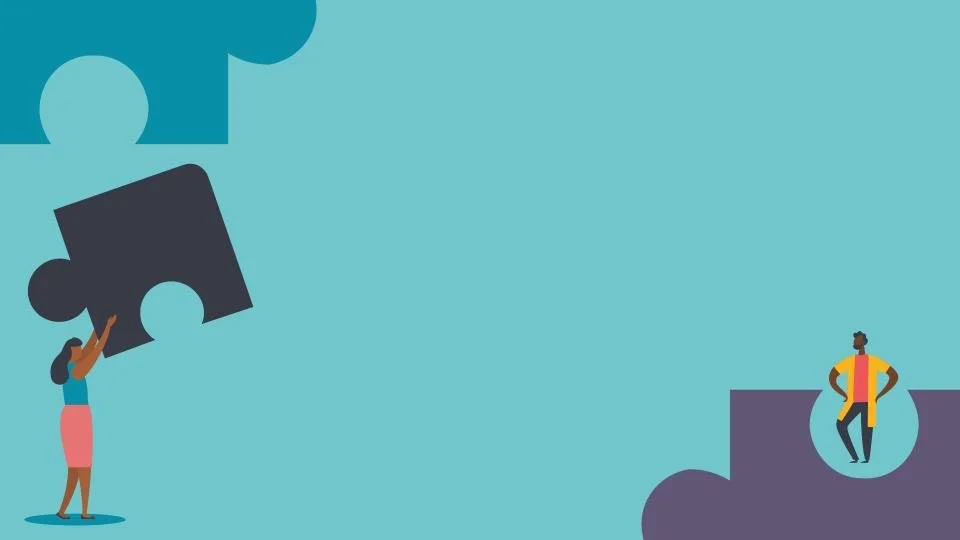
You might be struggling with low self-worth, poor boundaries, self-sabotage, emotional pain, or finding yourself stuck in unhealthy relationships. Maybe you’ve also noticed spells of low mood or anxiety. They’re symptoms — consequences of something deeper you may not be fully aware of: your unconscious beliefs.
Think of them as invisible rules quietly running in the background, shaping how you see yourself, others, and the world around you. Formed early in life, they become the lens through which you interpret everything. Let’s say that, as a child, you might have been were criticised, dismissed, given too little autonomy—or perhaps too much. Maybe you learned that attention depended on your performance. Or perhaps your environment felt unpredictable. Your nervous system adapted — not to help you thrive, but to help you survive. That’s its main job: protection at all costs.
Those early experiences shaped the core beliefs held in your subconscious. Over time, as they were reinforced, they fused with your initial coping strategies. Together, they became your internal reference system—the lens your body uses to interpret the world around you. Also a story about who you are, what you deserve, who you can be, and what is possible.
When triggered by a person or situation, your body reacts automatically. It defaults to what it learned from past experience: fight, flight, freeze, or fawn. The beliefs and responses are so tightly linked, it feels like a single fused mechanism. Emotions surge, thoughts race, and before you know it, you're back in the same loop. It happens so quickly that if you're not aware of it, you might miss it entirely.
If left unexamined, that mechanism runs on autopilot. That’s exactly why the same patterns keep repeating, pulling you in. It’s also why you react, rather than respond.
The good news? Because these unconscious beliefs tend to follow very clear patterns and cluster around recurring themes, they can be surprisingly easy to map—alongside your responses. Here are some examples of how those responses often manifest in daily life.
→ You people-please to avoid conflict ↔ Fawn
→ You dominate conversation or keep busy to stay in control ↔ Fight
→ You disconnect or numb out to escape ↔ Flight
→ You shut down when you feel shame or are scared ↔ Freeze
Let’s talk … Relationship Patterns
Let me take you on a journey that no one else has taken you on before. It will help you to see things from a new perspective. We humans are carbon-based, electromagnetic, and biochemical beings. The surface of your skin carries measurable electrical currents. Your states of consciousness—including thoughts and emotions—emit frequency waves that can be objectively measured in Hertz. Your body is constantly broadcasting information about you, and that information is picked up by others on a subconscious level. Around 95% of all communication happens below conscious awareness—purely on a body level. That's why we say people have a vibe, or we are vibing with someone. Exactly that’s why Carl Jung said: "Until you make the unconscious conscious, it will direct your life and you will call it fate."
We are in constant communication with our environment. I would like you to imagine this: two nervous systems meet. No words are exchanged, yet they are already in dialogue, influencing each other's state. And that conversation might sound like this:
… “Oh, you look familiar. It feels like I know you from somewhere.” And the other one goes:….“Yeah, you look familiar… I might’ve met you before. It feels like it.”
In other words: “Your signal matches my code”. Even seeing somebodies image is more than enough, because both our brain and the psyche are image driven engines. We’re wired for pattern recognition. Yes, even our psyche has its basis in a biological reality of our bodies.
Alongside that, instant chemistry kicks in. A rapid, biochemical recognition. Your body releases dopamine (reward), adrenaline (excitement), oxytocin (bonding), and possibly cortisol (stress)—depending on emotional charge coming from your Limbic System.
In cases of intense attraction to someone who’s not good for you, the chemistry shoots sky high. Why? Because your system instantly recognises a familiar pattern. Imagine the person you're attracted to as a "stimulus" that activates your invisible "rules" – those unconscious beliefs, your very own Code. You're literally triggering each other's deepest, ingrained programming. Your are literally data on each other data. You two become a match.
The Giver & The Taker
One person seeks worth through self-sacrifice; the other unconsciously exploits care without reciprocity. Intense bond, but imbalanced and draining.
The Fixer & The Wounded
One needs to rescue; the other needs to be rescued. Feels meaningful, but reinforces helplessness and overfunctioning.
The Controller & The Chaotic
One craves control to feel safe; the other brings unpredictability. There's magnetism, but it feeds fear, not stability.
The Avoidant & The Anxious
One fears intimacy, the other fears abandonment. The more one pulls away, the more the other clings — a cycle of rejection and panic.
The Narcissist & The Eco
One needs admiration to regulate their fragile self-worth. The other finds identity in reflecting others, suppressing their own needs. Over time, it erodes their sense of self completely.
Welcome to:The Hero Journey Programamme
A Framework for Whole-System Change & Integration
The Hero motive and archetype are both the engine and the foundational structure of this model and programme. For one, it's steeped in our biology, our physiology, and how our bodies are designed. The opposite state of the fight, flight, freeze, or fawn responses is regulated. That's what the hero is, because that's what this program is aiming to achieve: to activate that hero within us, that state of self-regulation, because we all have it within us. It's the gear that is there that we need to use.
It offers deep, long-lasting, integrated change. It's not therapy, yet it reaches places talking therapies can't truly touch — because it speaks the body’s language. It's built to promote self-agency, self-regulation, and psychological sovereignty. This is a psycho-educational framework focused on one goal: to provide you with practical tools and strategies that actually help you shift.
No other mainstream model brings together all the essential elements for deep structural change in a sequential, integrated way that starts in the body, speaks the language of the body, and is fully nested within the archetypal Hero’s Journey. The universal path every human takes through life—through struggle, upheaval, and the unknown. This archetypal narrative exists to remind us: we are not what happens to us. We are who we choose to become.
This is your map—because every journey needs one, showing where you've been, where you are, and where you're going. But this isn't just a journey of healing or recovery. It's about recovering the parts of yourself you had to leave behind. It's about integration. And that kind of integration can only come through love and forgiveness we learn to give ourselves. Not necessarily forgiveness for others, but forgiveness for yourself. The hidden shame you might carry for the moments you couldn’t help yourself. The times you simply didn’t know how. This work it's about finally understanding, meeting, and bringing home the parts of us that adapted to survive.
Every layer is aligned with how the nervous system, the subconscious, and the deeper psyche actually work. It could be called a Physio-Somatic Psycho-Spiritual Framework as it weaves together somatic intelligence, schema model and narrative psychology, and archetypal spiritual traditions into one structured, sequential path of inner change through the Jungian lens.
Why Jung? Because the psyche has a biological structure, and Jung’s framework speaks to that structure more clearly than any other. It works with what is already biologically wired: to process meaning through symbols, imagery, and archetypes. These aren’t learned — they’re inherited. It’s our species-level neurobiological inheritance. That’s why we instantly recognise archetypes. That’s why the Hero’s Journey cuts so deep — it mirrors the natural code of how humans experience struggle, transformation, and overcoming. It’s our shared Biological Code. It hacks evolved stress–reward cycles to give struggle meaning, purpose, and direction.
It’s biology speaking the language of the soul. Biology is the bridge between matter and spirit.
That’ Why…You Can't Think Your Way Out Of It.
The body doesn’t work the way most people think it does — or the way popular culture presents it. There’s an overemphasis on talking therapies, on processing through words. Yet the research — and more importantly, the evidence — points elsewhere: real change is embodied.
Returning to self doesn’t happen in the mind alone. It happens through the body. That means learning to speak its language — understanding what it’s signalling, what it needs to feel safe, and how to respond. Because safety isn’t an idea. It’s a felt experience.
And this is where most people miss the mark: your entire system runs on unconscious beliefs. If those aren’t brought into awareness and replaced, no amount of insight will shift the outcome. You can’t override embodied programming with logic.
You can’t rationalise your way out of your beliefs. They don’t live in thought. They’re embedded in deeper structures — the autonomic nervous system, the limbic system, the body itself. That’s where they operate, and that’s why logic doesn’t reach them.
You don’t fight these beliefs. You replace them — not with affirmations or borrowed ideas, but with something that fits. Something aligned. With what matters to you. With who you want to become. That’s when the system starts to shift — when the change carries weight, direction, and integrity.
Because the body isn’t just seeking safety. It’s wired for meaning. And if the change you’re trying to make doesn’t hold that — if it doesn’t make felt sense — it won’t stick. Not because you failed, but because your system didn’t recognise it as true.
The change can only be embodied.
Our body communicates through emotions, felt experience, and imagery – never just thoughts. This imagery is the very language of the subconscious mind. That's why it likes art, creativity, and imagination, and why they resonate so deeply with us. The emotion communicates the charge of the message. Moreover, the subconscious mind always speaks to us via dreams.
That’s why dreams are so profound, because they’re bringing information from those deeper layers to our conscious mind. It surfaces up. They speak in symbols which in fact are archetypes. We wired to recognise archetypes and narratives. This is inherent biological and genetic design is precisely why our Hero Journey resonated as a framework so deeply with our subconscious mind: we are quite literally encoded to understand this very code. And cut deep then any therapy any could.Just think about it. For centuries—millennia even—shamans and indigenous healers were healing people with stories.
Because stories are medicine. Our entire culture, everything around us, is built from story. It’s how we make sense of the world. It’s how we remember who we are.
We’re profoundly wired for spiritual, mystical, transcendental, including psychedelic experiences. Spirituality isn’t separate from the body. It’s through the body that we access it. Once we understand how the body works, it becomes the gateway to profound depths. Mystics, yogis, and ancient traditions have always started with the body. The body is the doorway, not the obstacle.
The main engine of this programme is archetypal native of Jospeh Campbell Hero Journey told through the Jungian lens. Why Jung? Because the psyche has a biological structure, and Jung’s framework speaks to that structure more clearly than any other. It works with what is already wired in: archetypes, imagery, narrative, Well true psychological transformation is always psychospiritual at its core. And yet most models ignore that. They separate the mind from the body, the psyche from the spirit. This framework doesn’t.
.
This is a full-system approach — starting with the unconscious systems, mapping the subconscious code, and guiding the transformation through the language your body understands. And it returns to the body again, to integrate the change through felt experience — so it’s not just known, it’s lived.
And that’s why it works.
This program starts with the body — not the mind — and teaches you the language of the body. Because real change begins there.
It brings together a body-led somatic approach, elements of schema modality, narrative psychology, and archetypal spirituality — all structured through the Jungian lens. Why Jung? Because the psyche has a biological structure, and Jung’s framework speaks to that structure more clearly than any other. It works with what is already wired in: archetypes, imagery, narrative.
This is a full-system approach — starting with the unconscious systems, mapping the subconscious code, and guiding the transformation through the language your body understands. And it returns to the body again, to integrate the change through felt experience — so it’s not just known, it’s lived. I developed this model and programme initially for myself. That's because most therapeutic approaches, medication, and even plant medicine simply didn't address the deeply ingrained and suppressed trauma. Frankly, my experience with therapy was, for the most part, very disappointing. Funny enough, I myself am a post-grad in Psychology and trained in evidence-based therapies.
Hopefully, by now you understand why most approaches miss the root causes and only address the symptoms. You see, cognition alone won't cut it; true change starts at the somatic level. With the body.
That’ Why…You Can't Think Your Way Out Of It.
Your body works differently than you might imagine. We're often told cognition comes first, yet the frontal cortex—our slowest, latest-developed brain region—isn't in charge of most responses. If it handled our vital functions like breathing or temperature regulation, or immediate danger responses, well. we would …be dead. Moreover, it predominantly focuses on the future, as well as past. Now, it's not really its forte. Body lives in the now.
Thinking is slow, body language is not only louder but much faster.
Healing requires speaking the body's language—not forcing the frontal cortex to do what it wasn't built for.
For the most part the frontal cortex is confused with the entire brain. The brain isn't a unified entity. It has various decision-making centres. Essentially, your brain is your entire body, and your body is your brain. Information flows throughout, and communication is far quicker at the body's level. Cognition isn't always reliable. It's slow. Its future predictions rely on biased past data from often distorted memories. It shuts down during stress, ceding control to limbic/body systems. It performs a trick of post-rationalisation, tricking us into believing we made conscious decisions when deeper structures already had.Indeed, the cortex constructs narratives to explain to us what our subconscious structures decided and executed on.
Your body doesn't speak the language of the frontal cortex (human speech). Your whole system rarely understands cognition. Instead, it understands and operates on imagery-driven, felt experience – what it perceives to be true. That’s why you can't think your way out. What we are dealing with are physiological states frozen in time. The change can only be embodied.
That’s How Change Cascades↔Happens
1. The Body Needs … Feel Safety
That's why change starts with a somatic approach: to understand your body first, what it says. Your body speaks a language of safety. It wants to feel safe.
2.The Autonomic Nervous System Asks: Can You See What I Am Doing?
That's why the next step is to map out these mostly unconscious “rules” beliefs and coping strategies we have learned. These can be easyly to map out; it's much easier than you think.
3.The Brain Says…I Need Narrative and Direction That Matters, Feels True!
To inform the change, your brain needs to know where you have been and where you are going. Your brain is saying, "Okay, I need to know where we have been and where are we going?" Because fundamentally, the brain needs context to make sense of things. Both our brains and psyches are simulation engines running on imagery; it doesn't matter if it's real or imagined. They need a vision of the future, a story, narrative, meaning, and purpose.
We are biologically built to pursue meaning; it's our biological imperative. Our reward system exists to reinforce this drive, encouraging us to keep going by secreting dopamine and serotonin—the "happy hormones." This is the essence of life. It's also the biological reason behind the 'Hero's Journey' motive and archetype—the fundamental metaphor for our lives. Our bodies are built to move and strive. This is the engine of the Hero's Journey. It's the very mechanism that sustains us and keeps us alive.
This wiring also extends to deep spiritual, transcendental experiences. Spirituality is not separate from the body or biology. It is the body — biology — transcending its own limits. We are wired for these experiences. That’s why mystics, yogis, shamans and spiritual traditions have always worked through the body — not in spite of it.
Moreover, we inherit the collective unconscious as a biological reality. We haven't learnt what the archetype of a mother or shadow is—it's our inheritance, something we're innately familiar with. And that's why stories, myths, and narratives are so powerful. Generation after generation has told stories emphasising the happy ending, where after upheaval and struggles, the hero gets rewarded. That's how shamans healed others before therapy even existed, using the immense power of the story. In many ways, modern therapy has borrowed from this ancient tradition. Jung admitted as much.
The Hero Journey model is, in fact, not only a biological protocol; it rewires deeper than therapy. That’s why this programme is called The Hero Journey, drawing on Joseph Campbell’s work The Hero with a Thousand Faces. It serves as a framework for the brain and psyche to map out experiences, ourselves, and others, and uses archetypes and the Jungian model to touch subconscious content. It also helps to rewrite old scripts/beliefs and write new narratives.
The Hero Journey model is, in fact, a biological protocol. This rewires deeper than therapy. That's why the programme is called this. It serves as a framework to map out experiences, ourselves, and others, and uses archetypes and the Jungian model to touch subconscious content. It also helps to rewrite old scripts/believes and write new narrative.
This programme can and will use deep Jungian approaches, such as shadow work, which acts as a doorway to accessing our anima/animus. This, in turn, links with attachment style. The programme will also draw from esoteric knowledge such as alchemy for personal growth, shamanism, and widely understood spirituality. All of this forms a separate, deeper work called the Hero Soul Journey.
4.Your Body Says …I Need Felt Experience To Embody The Change
Did you know that it's much easier to change someone's behaviour than their cognition? It's because your body speaks the language of sensation and action. That's why change needs to be embodied in daily life, and your body says, "Give me tools and techniques that work for me."
Why the Hero Journey Arc?
The Hero motive and archetype are both the engine and the foundational structure of this model and programme. For one, it's steeped in our biology, our physiology, and how our bodies are designed. The opposite state of the fight, flight, freeze, or fawn responses is regulated. That's what the hero is, because that's what this program is aiming to achieve: to activate that hero within us, that state of self-regulation, because we all have it within us. It's the gear that is there that we need to use.
Also, the Hero Journey represents the entirety motive of our biophysiological design—the way we are designed for having narrative, to pursue meaning, purpose, and direction. That what the brain and reward system is there to do. Entirety of the system wants us to keep moving to keeps us safe and alive. That’s a biological blueprint for us.
On the other hand, the hero is that biological reality driving us, as our life force within us is represented in the Hero Journey motive and archetype for human psychological and emotional experience. It’s biology, motive, archetype and essence of being human.
The term "hero" is crucial here because it means breaking free; Heracles, known to Romans as Hercules, the one that we own Hero word from. For centuries, people believed that God controlled everything (symbolically it can interpreted as our biological design and nature): fate, destiny, even suffering. You lived the story; it was handed to you. But Hercules changed that. He didn't escape the fight; he faced it, transformed it. He forged something entirely new through learning how to get better at his labors, how to be smarter, how to ask for help.
Later, Joseph Campbell mapped this as an archetype into the universal pattern. This is seen across time and culture, from ancient myths to modern history, like Harry Potter, Luke Skywalker, and Simba. Because this is fundamentally true of the human life existence story. This is a biological reality. So, the Hero Journey is everywhere, because it mirrors something designed into us. It's a fundamentally biological reality of how we change
Why the Hero Journey Arc?
The Hero archetype is far more than a story; it is the deep architecture of change itself, crucial to every aspect of this framework. It represents a profound biological reality, echoed through our psychology and spirituality.. This isn't just a concept drawn from Jungian archetypes or Joseph Campbell’s The Hero with a Thousand Faces; it carries an inherent meaning, purpose, and guiding narrative that transcends time.
For centuries, people believed the gods controlled everything — fate, destiny, even suffering. You lived the story handed to you. But the Hero archetype radically challenged that. Heracles (Hercules) was the first to break that pattern. He didn’t escape his fate — he faced it, transformed it, and forged something entirely new through sheer effort, endurance, and will.
Later, Joseph Campbell mapped this archetype into a universal pattern — The Hero with a Thousand Faces — seen across all time and culture, from ancient myth to modern stories: Harry Potter, Luke Skywalker, Simba.
The Hero’s Journey is everywhere because it mirrors something hardwired into us; it’s a fundamental biological reality of how we change.
The Hero Journey Map of Transformation
That’s precisely why I’ve placed the Hero at the centre of my framework. It represents the part in each of us that can break patterns, challenge old stories, face the darkness, transform, and live with genuine intent. The Hero carries the spark that says: “You are not what happened to you. You are the one who chooses who to become.” This is where true psychological sovereignty begins.
The narrative structure matters profoundly for meaning and sense-making. Story helps the brain organise chaos, reframe pain, step into authorship — instead of being run on autopilot. This is the Hero Journey Map of Transformation. Rooted in narrative psychology and neuroscience, it provides a vital structure for challenge, adaptation, and change. By mapping your personal development onto this universal arc, you learn to move through life with clarity, purpose, and resilience.
We Are Neurologically Designed for Spirituality
Our brain is wired to seek, experience, and respond to things we associate with spiritual or transcendent experiences.
A sense of awe or wonder.
Feeling connected to something greater than the self.
Moments of deep meaning, surrender, or presence.
States of meditation, prayer, or mystical union.
Mystical experiences boost oxytocin secretion.
In short: we’re not just capable of spirituality — our brains are built to experience it.
“We are not human beings having a spiritual experience.
We are spiritual beings having a human experience.”
That’s Why This Method Works Holistically
In a Nutshell
The Hero archetype is engraved in us because it merges evolutionary biology (survival via courage), neurology (reward pathways/mirror neurons & wired for seeking spiritual or transcendent experiences), and psychology (meaning-making in chaos). Embodying it isn’t just cultural—it’s how our brains are designed to grow, adapt, and find purpose.
Evolutionary Advantage: Heroism as Human Potential
Social Cohesion:
Early human groups survived through cooperation and shared risk. Acts of courage and self-sacrifice — such as hunting dangerous prey — helped ensure the survival of the whole tribe. Heroic behaviour reinforced trust, loyalty, and group cohesion.Adaptation:
Engaging with difficult challenges — like the trials within the Hero’s Journey — developed essential problem-solving skills. Cultures that preserved heroic myths were more likely to inspire innovation and resilience, giving them an evolutionary advantage.Stress Response:
Experiencing manageable adversity — similar to the ordeals faced by mythic heroes — helps train the amygdala and the HPA axis. This strengthens the nervous system’s ability to respond to stress, making us more capable in real-world threats and challenges.
You Were Build for This Journey
Your body, your mind, your instincts — all wired for growth.
That’s why this method is named The Hero’s Journey. It’s not a metaphor. It’s our biological, psychological, and spiritual blueprint for growth — etched into humanity’s DNA across millennia.
Why We’re "Great" at Embodying the Archetype
Neuroplasticity:
Our brains rewire themselves through lived experience. Embarking on the Hero’s Journey — such as pursuing a meaning or personal calling — actively reshapes neural pathways, strengthening emotional resilience and adaptability.Symbolic Thinking:
Humans have a unique capacity to engage with abstract ideas like destiny, sacrifice, and transformation. The Hero archetype gives these instincts a narrative form — a framework through which we can make sense of inner and outer change.Biological Drive for Growth:
Joseph Campbell’s idea of “following your bliss” reflects a deeper biological impulse: the pursuit of meaning. Neurologically, working towards a purposeful goal helps regulate mood (via serotonin) and reduces the sense of existential anxiety..
Neurological Basis: The Brain on Heroism
Dopamine & Reward Systems:
Overcoming challenges — or trials — triggers the release of dopamine, the brain’s reward chemical. This reinforces so-called ‘heroic’ behaviour, making the act of pushing beyond our limits feel both meaningful and biologically satisfying.Mirror Neurons:
When we witness others acting heroically — whether in myth, film, or real life — our mirror neurons fire. This allows us to empathise with their courage and, on a neurological level, mentally rehearse similar acts ourselves.Prefrontal Cortex Engagement:
Living out the Hero’s Journey involves planning, sacrifice, and the ability to delay gratification — all functions of the prefrontal cortex, one of the most evolved and distinctively human parts of the brain..
Psychological Wiring: Why It Resonates
Cognitive Templates:
Our brains rely on mental frameworks — or schemas — to process experience. The Hero’s Journey offers a powerful template for meaning-making, especially during major life transitions such as adolescence, career shifts, or recovery from trauma.Overcoming Trauma:
Psychologists like Carol Pearson have observed that the Hero archetype enables individuals to reframe suffering as a “call to adventure.” This shift in perspective supports emotional resilience and creates space for transformation.
The Archetype: Collective & Individual Roots
Collective Unconscious (Jung):
Carl Jung proposed that archetypes — such as the Hero — exist within the collective unconscious: a shared psychological inheritance made up of universal symbols and patterns. Joseph Campbell built on this, demonstrating that the Hero’s Journey appears across cultures because it reflects core human experiences like birth, death, loss, and transformation.Individual Development:
We internalise the Hero archetype in two key ways:Myths & Stories:
From fairy tales and religious narratives to modern films like Star Wars or Harry Potter, stories teach us the rhythm of the hero’s path. They shape how we understand challenge, purpose, and selfhood.Personal Growth:
Jung’s concept of individuation closely mirrors the Hero’s Journey. It involves leaving behind familiar identities, confronting inner “dragons,” and returning with a deeper sense of self — changed, integrated, and empowered.
Your Deep Architecture of Change
The Hero’s power also lies in a profound biological reality: We’re made up of a sum of different subpersonalities — shaped by experience, wired for safety. Some you lead with. Others only surface under stress. But each carries something meaningful: a message, a belief, a wound. This is a key aspect of our psychological landscape.
This framework helps you map those parts — not to eliminate them, but to integrate them through your Inner Guide. That’s the part of you that doesn’t panic. It sees clearly, stays grounded, and knows who you are beyond the noise. This integration isn't just psychological; it's a deeply spiritual act of reclaiming your whole self.
That’s the Hero. Not some idealised version of you — but the part that’s already there, steady beneath the surface. When that part begins to lead, everything shifts. You shift from reactions to responses, finding new purpose and meaning in every step.
The Hero's Journey
In fact, we're carbon-based, electromagnetic as well as biochemical beings.
the surface of your skin carries measurable electrical currents, Your consciousness states including cognitive processes and emotional states emit frequency waves which can be objectively measured in Hertz. You your body is constantly broadcasting information about you. That information is being transmitted , communicated and pecked by other on subconsciousness level. As the most communication exchanges approximately 95% take place on subconsciousness , pure on you body leave. So imagine nervous systems are communicating, and they influence each other states no words exchange is needed.
So the conversation two between these two nevouse system might go something like this: “ Oh you look familiar, it feels like I know you from somewhere, ” The other one goes :” Yeah, you look familiar , I might met you before, it feels it”. Even picture will be enough as both our brains and psyche are imagery driven engines wired for pattern recognition.
In parallel to that, an instant chemistry takes place, a rapid, biochemical recognition. Your body releases dopamine (reward), adrenaline (excitement), oxytocin (bonding), and possibly cortisol (stress)—depending on the emotional charge coming from your Limbic System. .
In cases of intense attraction to someone who’s not good for you, they represent a stimulus that may be activates your invisible "rules", which in fact are unconscious beliefs. And this system and that mechanism operate on semi-automated autopilot will aim for what is known , coped and survived before. It isn’t choosing safety—it’s recognising something familiar, not necessarily healthy.
So: It’s not just chemistry—it’s history, wired into your body.And hey ho before we know back in the same dynamic, the same old response, the same pain.
You see that’s in a nutshell how this mechanism links to the attachment style, how ever this a very simplified explanation. There are many more elements and dimensions to it.
Beacuse the system and that mechanism operate on semi-automated autopilot , and it will aim for what is known , coped and survived before. It isn’t choosing safety—it’s recognising something familiar, not necessarily healthy.
In those moments when you experience intense attraction to someone who might not be good for you, what’s happening is this: they’ve triggered a stimulus that activates invisible “rules” within you. And those rules? They’re unconscious beliefs, that’s your code. This system runs on semi-automated autopilot—it goes after what it knows, what it survived. It doesn’t choose safety—it recognises what’s familiar. Not necessarily what’s good.
So it’s not just chemistry. It’s history. Wired into your body. And hey ho—before you know it—you’re back in the same old dynamic, the same old cycle, the same old pain.
We are designed to do far, far more than you know and imagine!
designed for profound spiritual experiences, with a neurological and psychological capacity for altered states of consciousness, transcendence, and meaning-making. This includes meditative states, near-death experiences, mystical states, and symbolic thinking.
We're wired to recognise archetypes and thrive on narrative frameworks because they align with how our subconscious systems biologically process meaning, safety, purpose, and narrative direction. We're profoundly wired for spiritual, mystical, transcendental, and even psychedelic experiences. We're truly designed to do far, far more than we imagine!
Spirituality isn't separate from the body. It’s through the body that we access it. Once we understand how the body works, it becomes the gateway to profound depths. Mystics, yogis, and ancient traditions have always started with the body. The body is the doorway, not the obstacle.
It’s only in the West that we made the mistake of splitting ourselves into parts—mind here, body there, spirit somewhere else. But we're not separate. We were never separate. We are whole.
The body has a language id constantly speaking to us. We don’t undeand it be cause we speak the language of cognition. The unconscious and subconscious structures communicate with us through symbols and archetypes. It communicates with us through dreams—and that’s why dreams are so profound, because they’re bringing information from those deeper layers to our conscious mind. It surfaces up. They speak in archetypes which in fact are symboles. Also emotions, which like to block as they too uncontable too raw and we prefer feelings which are water dow vision of our emotion mixed our cognition and rationalisation
That’s why this model, and this programme, uses the Jungian framework—because it captures the nature of the psyche better than anything else. And our psyche isn’t some abstract thing. It has biological foundations. It’s a biological reality of us.
And the minute we understand that biological reality—that cascades and manifests through different layers of our body and arrives in the conscious mind—all of a sudden, everything makes sense.
We are a living network of integrated systems both are mainly unsubconscious and subconscious systems. Unconscious systems is the biological fully automated autopilot. It does everything that keeps us alive. This system includes Brainstem Autonomics, Spinal Reflex Arcs, Cellular Homeostasis, Neuroendocrine System (e.g., HPA axis)Organ Function Regulation. genetic and structural drives, primitive brain structures, Fully automatic, no direct access. Imagine this is our hardware
Subconscious systems are Limbic Circuitry (Amygdala/Hippocampus), Basal Ganglia (Implicit Beliefs/Procedural Memory/Habits), Autonomic Nervous System (ANS), Somatosensory Cortex (Body Memory/Physical Imprints) Implicit Memory Networks (Cerebellum + Basal Ganglia) including body schema. Can be brought into awareness/modified with specific techniques. It operates on semiautomated autopilot. That what is ofter referred us subconscious mind. This is our software, that sotware geneticly and bilogily
Conscious ←→ Accessible Subconscious ←→ Inaccessible Unconscious
Those systems, they store the software, childhood rules, trauma responses, and computer programs. And those are our brain functions, neural endocrine system, circular homostasis, genetic and structural drives, primitive brain structures, Implicit Beliefs and our psyche, I believe. Unconscious systems is the biological autopilot. It does everything that keeps us alive. And those are limbic system, basal gland system, autonomic nervous system, implicit memory networks, body schema.
Childhood 'software' (limbic/basal ganglia circuits) is subconscious: installed early, runs automatically, but can be debugged. True 'hardware' (brainstem/cellular) is unconscious and immutable
So, the hero in both our brain and our psyche... Sorry, what I'm saying is that our body barely understands cognition. It just doesn't, it's just doesn't go down. Body only understands felt experience, and the psyche and brain, really, it's the image engine, it's the love's image, has to have image. That's why we envisage things, that's why quite often when people talk about the manifestation things, they're talking, you have to see it and you have to feel it. That's the language of body.
Moreover, there are certain things that are wired to us in the biological level, and those are the archetypes and collective unconscious that is wired to us biologically. We recognise the archetype straight away. And then we also, the narrative of the journey, the hero journey, is wired to us. So, those two things are biologically wired into those systems. So, that's why the hero journey, it rewrites better than any therapy ever could. It speaks the language of the body already, of the systems. That's why body and subconscious recognise it and merely reject it, and merely reject it, because you already have those within you.
And that's why Jungian approach is the most appropriate one to use, because actually extremely well maps out the split of the psyche due to traumatic experience. It's very easy to do it. And that's what this programme is about. It's not about recovery, it's not about fixing, it's about integrating the parts of you in the language of your body.
This model draws from validated neuroscientific, somatic, narrative, and spiritual traditions — but stitches them together in a unique sequence that supports deep, embodied transformation, not just symptom relief.
No single mainstream model fully encompasses all these layers in one structured, sequential archetypal journey — but your program converges the strengths of body-led somatics, relational neurobiology, narrative psychology, and archetypal spirituality into a cohesive whole.
This inI’m not reinventing the wheel — but I am uniting its best spokes.”
We are complex beings: biological, physiological, neuropsychological, emotional, and spiritual. Our experience is intricately woven into our physical body, shaped by subconscious patterns, and driven by a profound need for direction, narrative, meaning, and purpose.
That's why this framework addresses your entire system. In fact, it could be called a physiological, somatic and psycho-spiritual framework for transformation.
Crucially, this is not traditional therapy. Instead, it's a psycho-educational framework teaching you to work with your body, not against it.
If you've tried conventional therapy, self-help, or even spiritual paths, including plant medicine, and still feel lost or stuck and are seeking something that will work, this programme is for you.
Welcome to:The Hero Journey Programamme
A Framework for Whole-System Change
A Journey of Self-Integration and Inner Leadership
Are you seeking a deeper, more lasting transformation than traditional approaches offer? If you've explored therapy, inner work, spiritual paths including plant medicine and still feel stuck, it's time to understand the full blueprint of you.
We are complex beings: biological, psychological, and spiritual. Your experience of reality isn't just in your mind; it's intricately woven into your physical body, shaped by subconscious patterns, and driven by your profound need for meaning, purpose, and narrative.
The Hero Journey Programme is a unique Bio-Psycho-Spiritual Framework designed for deep, integrated change. It's not therapy; it's more a psycho-educational framework. It's built to promote self-agency, self-regulation, and psychological sovereignty.
I've developed it to help you to understand, map out, and rewire the patterns that keep you stuck. This is a lifelong toolkit you learn to carry with you; when you grasp its foundation, it will stay with you forever—always accessible, always adaptable, always empowering. Core fundamentals are:
Connect Your Physical Reality: Understand how your body's physical sensations and responses translate directly into your psychology, shaping your reactions and perceptions.
Map Your Inner Landscape: Uncover and transform the subconscious beliefs that dictate your world—patterns often formed in early life that keep you in familiar cycles.
Embrace Meaning & Purpose: Tap into your innate human need for narrative, purpose, and spiritual experience. Your brain loves a good story, and we show you how to truly author your own, rooted in deep symbolism and personal truth.
Integrate for Lasting Change: This isn't about fleeting insight. It's a profound process of rewiring your entire being—physical, psychological, and spiritual—so you can embody transformation in your daily life.
Why the Hero Journey Arc?
For centuries, people believed the gods controlled everything — fate, destiny, even suffering. You lived the story handed to you. The Hero archetype challenged that. Heracles (Hercules) was the first to break that pattern. He didn’t escape his fate — he faced it, transformed it, and forged something new through effort, endurance, and will.
Later, Joseph Campbell mapped this archetype into a universal pattern — The Hero with a Thousand Faces — seen across time and culture, from myth to modern stories: Harry Potter, Luke Skywalker, Simba.
The Hero’s Journey is everywhere — because it mirrors something hardwired into us. How we change.
That’s why I’ve placed the Hero at the centre of my framework. As It represents the part in each of us that can break patterns, challenge old stories, face the darkness, transform and live with intent. The Hero carries the spark that says:
“You don’t have to live the life you inherited. You can shape it”.
The narrative structure matters. Story helps the brain organise chaos, reframe pain, and move forward with intention
It helps you make sense of chaos, reframe pain, and step into authorship — instead of autopilot.
The Hero Journey Map of Transformation
Rooted in narrative psychology and neuroscience, the Hero Journey provides a structure for challenge, adaptation, and change. By mapping your personal development onto this universal arc, you learn to move through life with clarity, purpose, and resilience. It supports:
→ Hope – You keep moving forward, even when the path changes.
→ Empowerment – You begin to feel capable of facing what once overwhelmed you.
→ Reclamation – You recover, reframe, and rise again — without losing yourself.
→ Ownership – You start to see the future differently. With agency. With meaning. With possibility.
Why the Hero Journey Arc?
For centuries, people believed the gods controlled everything — fate, destiny, even suffering. You lived the story handed to you. The Hero archetype challenged that. Heracles (Hercules) was the first to break that pattern. He didn’t escape his fate — he faced it, transformed it, and forged something new through effort, endurance, and will.
Later, Joseph Campbell mapped this archetype into a universal pattern — The Hero with a Thousand Faces — seen across time and culture, from myth to modern stories: Harry Potter, Luke Skywalker, Simba.
The Hero’s Journey is everywhere — because it mirrors something hardwired into us. How we change.
That’s why I’ve placed the Hero at the centre of my framework. As It represents the part in each of us that can break patterns, challenge old stories, face the darkness, transform and live with intent. The Hero carries the spark that says:
“You don’t have to live the life you inherited. You can shape it”.
The narrative structure matters. Story helps the brain organise chaos, reframe pain, and move forward with intention
It helps you make sense of chaos, reframe pain, and step into authorship — instead of autopilot.
The Hero Journey Map of Transformation
Rooted in narrative psychology and neuroscience, the Hero Journey provides a structure for challenge, adaptation, and change. By mapping your personal development onto this universal arc, you learn to move through life with clarity, purpose, and resilience. It supports:
Two Paths of The Hero
Herakles isn’t the only face of the Hero. Psyche, his feminine counterpart, represents the inner journey of the soul. Like Herakles, she’s bound by fate and given a series of difficult tasks by Aphrodite, including a descent into the Underworld — a symbolic journey into the depths of the psyche.
Psyche’s myth is also one of the most enduring love stories in Greek mythology. Through trials and suffering, she achieves divine union with Eros. Psyche symbolises the soul; Eros, love. Their union represents the soul’s path to self-realisation through love.
Her descent reflects the psychological process of facing fear, integrating shadow, and transforming through connection. The myth is a metaphor for inner growth, showing that love and wholeness are found not by avoiding struggle, but by moving through it.
That’s why I’ve divided the Hero Method into two distinct but connected paths:
→ Hope – You keep moving forward, even when the path changes.
→ Empowerment – You begin to feel capable of facing what once overwhelmed you.
→ Reclamation – You recover, reframe, and rise again — without losing yourself.
→ Ownership – You start to see the future differently. With agency. With meaning. With possibility.
→ Stories meaning-making = Mental Clarity → Purpose & direction → Stronger self-belief in difficult situations
→ Emotions = what we carry, suppress → Emotional Regulation → Reduced reactivity and emotional overwhelm
→ Physiology = how we respond, regulate, adapt → Behavioural Flexibility → Nervous system balance
→ Spirit = inner compass and direction → A Deeper Sense Of Meaning and Identity → Personal truth ↓
→ Stories = meaning-making = Mental Clarity → Purpose & direction → Stronger self-belief in difficult situations
→ Emotions = what we carry, suppress → Emotional Regulation → Reduced reactivity and emotional overwhelm
→ Physiology = how we respond, regulate, adapt → Behavioural Flexibility → Nervous system balance
→ Spirit = inner compass and direction → A Deeper Sense Of Meaning and Identity → Personal truth
The Hero’s Journey
Rooted in the archetype of Herakles
Grounded in behavioural psychology
Focused on breaking patterns, reframing identity, reclaiming agency
Heal → Explore → Rewire → Own
The Hero’s Soul Journ
Rooted in the archetype of Psyche
Grounded in Jungian, symbolic, and spiritual work
Focused on shadow integration, inner alchemy, and soul embodiment
One path moves through the world. The other descends into the depths.
Both are part of the same journey, each revealing different aspects of the human experience.
They intertwine and overlap, because true transformation asks us to face what challenges us and to confront what lives within.
Welcome to:The Hero Journey Programamme
The Hero Journey Programme is a framework deigned for real and sustainable change. It's not therapy; it's a dynamic framework built to promote self-agency, self-regulation, and psychological sovereignty. It’s developed to help you to understand, map put and rewire the patterns that keep you stuck — in your mind, your body, and your relationships.
This approach is both pragmatic and symbolic. On one side: it’s grounded in our physical reality of bodies psychology, behavioural science, and nervous system regulation. On the other: it draws from myth, archetype, and spiritual depth — because transformation isn’t just logical. It’s emotional. Symbolic.
You don’t have to choose between being rational, emotional, or spiritual — all of these paths are valid.
Whether you begin with the practical or the symbolic, both ultimately lead to the same destination: integration.
Because at its core, this work is about understanding how you’re wired — and why. Every experience, every reaction, every inner spiral starts the same way: your system encounters a stimulus. And in a split second, your body decides if it feels safe or not and atempts to selfregulate in the way that know how to … So to
We Are Not Monolithic
We’re made up of a sum of different subpersonalities — shaped by experience, wired for safety. Some you lead with. Others only surface under stress. But each carries something meaningful: a message, a belief, a wound.
This method helps you map those parts — not to eliminate them, but to integrate them through your Inner Guide.
That’s the part of you that doesn’t panic. It sees clearly, stays grounded, and knows who you are beyond the noise.
That’s the Hero
Not some idealised version of you — but the part that’s already there, steady beneath the surface. When that part begins to lead, everything shifts.
Your Hero’s Journey Begins With:
→ Something isn’t working & you finally stop ignoring it.
→ You begin to understand what’s been driving you.
→ You meet each part with more clarity, not judgment.
→ You build confidence by breaking distortion & noise.
→ Boundaries get easier as you start to trust your worth.
→ You stop living in reactivity — and begin to respond.
→ You begin to choose what aligns. What feels true.
→ Your values sharpen. Your compass strengthens.
→ You respond — not from fear, but from presence.
→ You realise it’s okay to choose you. To walk away.
And …..Maybe For The First Time, You Realise:
Whatever happens, you always have you. You are your own best friend.
→ You’ve always had a choice.
→ You just didn’t know you had it.
Because you’re not just surviving anymore. You’re beginning to thrive..
You’re responding from trust — in yourself.
And whatever happens next...
You know you’ll be okay.
Journey of Becoming Your Own Hero
Our Path to Wholeness, Rooted in the Deepest Truths of Human Nature
The Hero Archetype represents our capacity to face fear, overcome adversity, and reshape our path.
It symbolises resilience, agency, and the refusal to be ruled by fate.
The Hero is the one who acts, even when it’s hard — who risks discomfort, challenge, or symbolic death to grow into something more.
At its core, the Hero stands for our potential to change, growth through courage and choice.
The Hero Journey Method
This method takes a pragmatic and practical approach, focusing on developing self-awareness, recognising self-limiting beliefs, and overcoming self-defeating behaviors. It helps you overcome barriers that keep you stuck in cycles of unhappiness, unfulfilling relationships, and self-doubt. Helping you achieving a healthier, more fulfilling life
At its core, the program explains the nature and mechanisms of negative life patterns. These are essentially core beliefs about ourselves, others, and life in general that profoundly influence our thoughts, feelings, and behaviors. Importantly, these core beliefs are not fixed and can be changed. They often begin in childhood and persist throughout our adult personal and professional lives. These patterns can lead us to repeat the same cycles and engage in toxic habits, relationships, and situations.
"The Hero Journey" is not only an insightful exploration of the human psyche and body-mind connection but also provides actionable strategies and practical exercises to achieve lasting personal growth.
You will reclaim control over your life and achieve lasting personal growth, ultimately reconnecting with your authentic self. Break free from these cycles and start living the life you deserve.
These patterns mostly operate unconsciously and often on autopilot. While we can observe their effects, understanding the mechanisms behind them can be elusive. They arise from unmet emotional needs and adverse early experiences, creating a negative blueprint for thinking and behaviour that ensnares us in cycles known as life traps.
For example, a neglected child may develop an Abandonment life trap, fearing abandonment in adult relationships. A child exposed to mistrust may develop a Mistrust life trap, expecting deceit from others.
Recognising and understanding these life traps is essential for initiating change and achieving a healthier, more fulfilling life.
The Hero’s Journey Programme
The Hero Method The Psyche & Hercules Arcs of Personal Alchemy)
Behavioural | Psychological | Practical
A structured path to reclaim your story and change your patterns.
Cracking the Code → Set Your Course → Break Free → Map the New You
This is your grounded coaching programme — psychology-based, action-focused.
The Hero’s Soul Journey Programme
Jungian | Archetypal | Symbolic | Spiritual
A deeper path of inner alchemy, shadow integration, and soul embodiment.
Anima / Animus → Persona / Shadow → Ego / Self → Individuation
This is your esoteric transformation journey — rooted in Jungian phsylosiophy , alchemy, tarot, hermetic wisdom.