
The Hero's Soul Journey
"The Body Keeps The Score, The Psyche Tells The Story, and Love Heals The Divide."
— Synthesis of van der Kolk (Biopsychology), Jung, and Bowlby
Science tells us that trauma splits the mind from the body. The nervous system dysregulates. We enter survival. The myth of Psyche tells us this: the soul fragments, falls into shadow, and forgets its wholeness — yet is reawakened by love. In both, love is the alchemist — safety, connection, presence — the force that brings us back.
The stories we carry — and the ones we choose to tell — shape the path ahead. The Hero’s narrative reminds us: we are not what happened to us. We are who we choose to become. The body keeps the score. The psyche tells the story. And love heals the divide.
The Hero Soul Journey is a psycho-spiritual transformation framework that goes beyond traditional therapy. It brings together body-based healing, psychological depth, and spiritual perspective — aligning the body, psyche, and soul. At its heart, it’s about healing the split between who you think you are and who you truly are
It’s about remembering who you are beneath the roles, the coping, the noise — the survival patterns. And then slowly, gently, reclaiming the parts of you that got scattered along the way. Exacly in the
This framework combines elements of biopsychology so you can understand how certain beliefs about ourselves and workd aound us and our role in it aling with certain I’m not good enough,” “I have to earn love,” or “It’s not safe to trust.” directly correspond with with cerain responses and bahavours I call them core woundings — mental frameworks rooted in early experience. beliefs like “I’m not good enough,” “I have to earn love,” or “It’s not safe to trust.”When left unexamined, they can drive cycles of unhappiness, unfulfilling relationships, self-sabotage, and limiting beliefs. Which can be mapped out and addressed by
This work is about understanding your inner the architecture and world: you body and somatic responses the beliefs, emotions, survival responses that live beneath the surface of your thoughts and behaviours — and learning how to work with and your body them consciously. They lead us to repeat the same cycles and fall into toxic habits and relationships, commonly resulting in recurring spells of low mood and anxiety. They lead us to repeat the same cycles and fall into toxic habits and relationships, commonly resulting in recurring spells of low mood and anxiety. While their effects are visible, the mechanisms behind them often remain elusive.
The Hero Soul Journey is a transformational framework I created to help you explore and shift deep patterns that shape your life . The model you helps to map out inner transformation that connect your body, mind and soul. It combines understanding of our human biopsychology that body keep the score and hold memory that of of then manifest in psychosomatic pains or autoimmune system difficulties or firobomalagia . Also that our bodies primary function is to make us safe and protects us harm real or imagined that’s why it might kick into survival mode and body does what designed to do. That our belives creatt natrives
through the archetype of Psyche — who, in pursuit of love and wholeness, willingly descended into the underworld and returned transformed. In Jungian psychology, Psyche represents the totality of the Self. Her story — marked by betrayal, abandonment, and a series of trials — culminates in a descent to the underworld and a death-like state, from which she is rescued by the beloved and brought back to life. Her myth serves as a symbolic map of the fragmented Self: split into ego, persona, shadow, anima, and animus.
This work is about understanding your inner the architecture and world: you body and somatic resopnces the beliefs, emotions, survival responses that live beneath the surface of your thoughts and behaviours — and learning how to work with and your body them consciously.
This framework combines where our core beliefs (known in psychology as schemas) take shape. Schemas are mental frameworks formed through past experience. In my model, I call them core woundings — mental frameworks rooted in early experience. beliefs like “I’m not good enough,” “I have to earn love,” or “It’s not safe to trust.”When left unexamined, they can drive cycles of unhappiness, unfulfilling relationships, self-sabotage, and limiting beliefs.
Rooted in early experience, when negative drive cycles of unhappiness, unfulfilling relationships, self-sabotage, and limiting beliefs. They lead us to repeat the same cycles and fall into toxic habits and relationships, commonly resulting in recurring spells of low mood and anxiety. They lead us to repeat the same cycles and fall into toxic habits and relationships, commonly resulting in recurring spells of low mood and anxiety. While their effects are visible, the mechanisms behind them often remain elusive.
Unlike the traditional “Hero’s Journey,” which often centres on conquest or mastery, the Hero Soul Journey is a Psyche journey — named after the myth of Psyche and Eros.
This is a symbolic descent into the underworld of the self: facing inner trials, confronting fear, reclaiming trust, and choosing love — again and again.
This path honours integrating. Returning to wholeness, not escaping yourself.
Who is it for ?
As you probably know, modern Western Tarot — which began with the Tarot de Marseille, born in France — was developed into a symbolic and esoteric system by Éliphas Lévi.
Its original purpose wasn’t fortune-telling. The structured system of predictive meanings — including upright and reversed interpretations — came later, shaped by figures like Etteilla. He created a kind of Tarot dictionary, based on the cartomantic tradition, which had developed from using regular playing cards for divination.
This predictive approach was far more accessible to those not initiated into the esoteric or occult traditions — people who needed surface-level systems rather than occult fluency. That’s why most people end up learning or memorising the meanings associated with each card.
Traditionally, in the Western esoteric and occult traditions, Tarot was never meant to be read that way. It doesn’t use reversed cards or fixed meanings. Instead, the cards are studied through the esoteric systems they’re built upon — primarily Kabbalah, Hermetism, and Alchemy.
These traditions treat the Tarot as a tool of ceremonial magic, a map of consciousness, and a means of working with archetypes, inner transformation, and the deeper layers of the psyche. Moreover, Tarot is a living, breathing system — it works in a particular way and is never static.
So you could say there are two paths to learning Tarot:
→ One is cartomancy — more fortune-telling based, often used by those outside the esoteric schools.
→ The other is initiatory — rooted in the symbolic language of the Western Esoteric and Occult Tradition.
Depending on what you want to learn, I can guide you through both.
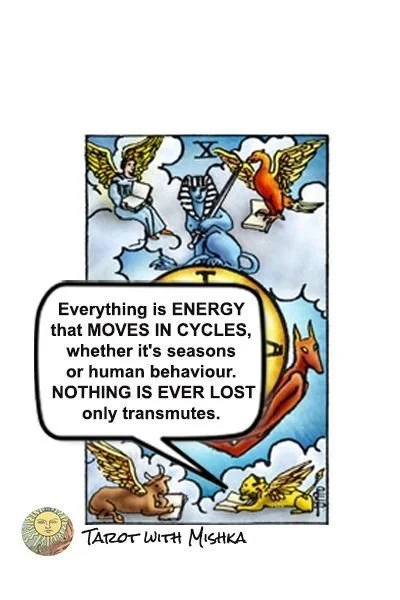
Who is it for ?
As you probably know, modern Western Tarot — which began with the Tarot de Marseille, born in France — was developed into a symbolic and esoteric system by Éliphas Lévi.
Its original purpose wasn’t fortune-telling. The structured system of predictive meanings — including upright and reversed interpretations — came later, shaped by figures like Etteilla. He created a kind of Tarot dictionary, based on the cartomantic tradition, which had developed from using regular playing cards for divination.
This predictive approach was far more accessible to those not initiated into the esoteric or occult traditions — people who needed surface-level systems rather than occult fluency. That’s why most people end up learning or memorising the meanings associated with each card.
Traditionally, in the Western esoteric and occult traditions, Tarot was never meant to be read that way. It doesn’t use reversed cards or fixed meanings. Instead, the cards are studied through the esoteric systems they’re built upon — primarily Kabbalah, Hermetism, and Alchemy.
These traditions treat the Tarot as a tool of ceremonial magic, a map of consciousness, and a means of working with archetypes, inner transformation, and the deeper layers of the psyche. Moreover, Tarot is a living, breathing system — it works in a particular way and is never static.
So you could say there are two paths to learning Tarot:
→ One is cartomancy — more fortune-telling based, often used by those outside the esoteric schools.
→ The other is initiatory — rooted in the symbolic language of the Western Esoteric and Occult Tradition.
Depending on what you want to learn, I can guide you through both.