
The Way How This Framework Came Together
The Part of Me That Has Degrees
This framework was originally something I developed for myself. I arrived at it out of necessity, because none of the conventional models or established advice I encountered could adequately address the challenges I was facing at the time. So I put together practical structure for understanding and navigating the kinds of difficulties that “conventional wisdom” often struggles to account for. What has helped me in my journey is the fact that I have a postgraduate degree in psychology, as well as cultural and religious studies, and a background in research. Moreover, I worked within a behavioural change team in a mental health service.
I have also worked in the technology sector, creating mental models and designing user journeys and user personas for digital applications. In other words, I was creating digital eco-systems that needed to be both intuitive and effective for users. This required a practical understanding of cognitive and behavioural psychology. How people take on information, how they make decisions, how they experience emotions, and how they follow familiar patterns and conventions when interacting with user journeys.
Studying civilisations, culture,and religious traditions has always been a personal passion of mine. It aligns with my natural inclination towards esoteric knowledge, including the occult. The symbolic layers through which human beings have always made sense of life. It tights up with my love for Jung's analytical psychology which gives language to the archetypal and symbolic patterns I have always been drawn to.
Connecting What Seems Separate
Patterns Others Miss
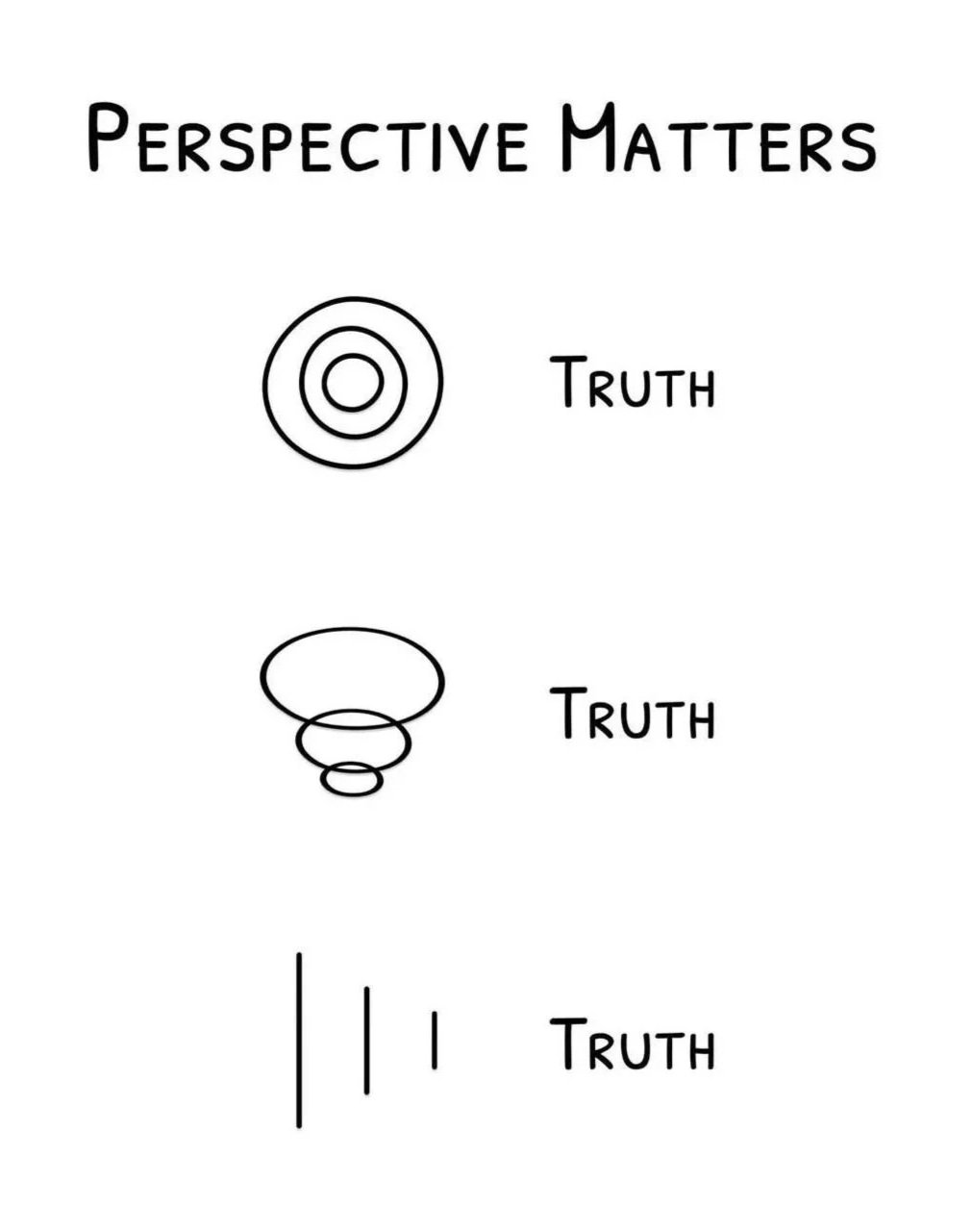
There is something else that shaped the way how I put together this framework. My personality type. It does not define who I am, still it does shape how I perceive and process the world around me. It informs the way I take in information, the patterns I notice, and the perspectives I naturally gravitate towards. In that sense, it functions as a kind of default setting — the lens through which I tend to interpret experience.
In The Myers-Briggs Type Indicator (MBTI) which is based on Jung’s analytical psychology, I fall into the INFJ type. Thus I perceive and filter information through my intuition. Introverted intuition, to be precise. As a result, I tend to look at the bigger picture: what something is in principle, what the mechanism is underneath the noise. Moreover, I see and test how things actually work in practice, not only in theory.
One of the central features of intuition is its capacity to synthesise information, quickly seeing connections among disparate pieces of data through pattern recognition. I am able to see seemingly separate elements and visualise how those pieces connect, converge, intersect and interrelate.
Connecting the Dots
Where Science Meets Spirit
This ability allowed me to connect the dots. I could see how our inherited biological reality and the wiring of our nervous system are connected. The way the brain, body, and chemistry constantly interact, shaping how we think, feel and behave. But I could also see that spirituality is rooted in our biology too. By extension, so is our need for connection to something greater than ourselves and our search for deeper meaning.
Thus, we are wired to see and understand the world through the lens of stories, themes, and pattern recognition, including archetypes. All of this is biologically rooted in us. We are literally wired for it.
Ancient Roots of Modern Therapy
What Freud and Jung Knew
When we look at the origins of psychology as a science, specifically the history of analytical psychology. It becomes clear that many early therapeutic ideas have roots in much older traditions. Practices concerned with the human psyche existed long before modern psychology and were often found within shamanic, spiritual, and occult traditions. These traditions worked with symbols, myth, ritual, and altered states of consciousness as ways of engaging with the inner world. In this sense, some of the foundations of modern psychology can be traced back to these earlier symbolic and esoteric approaches to understanding the human mind.
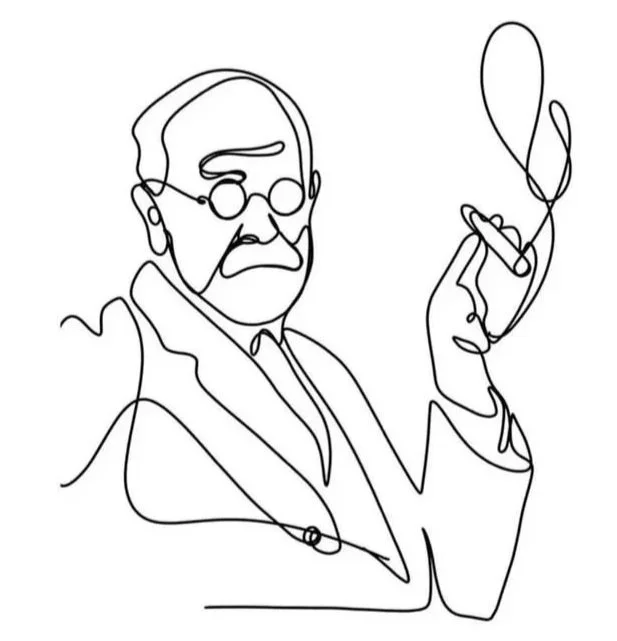
Both Sigmund Freud and Carl Jung drew from these traditions. Freud used a scientific framing, but his work structurally mirrored esoteric ideas. Jung, more openly, studied and integrated alchemy, mysticism, and symbolic traditions into his thinking.
A number of elements found in therapy today echo earlier shamanic practices, where stories, symbols, and myth functioned as forms of medicine for the psyche. Dream interpretation and active imagination, for instance, are just two examples of this enduring legacy.
Tarot as a Psychological Tool
A Bridge Most People Misunderstand
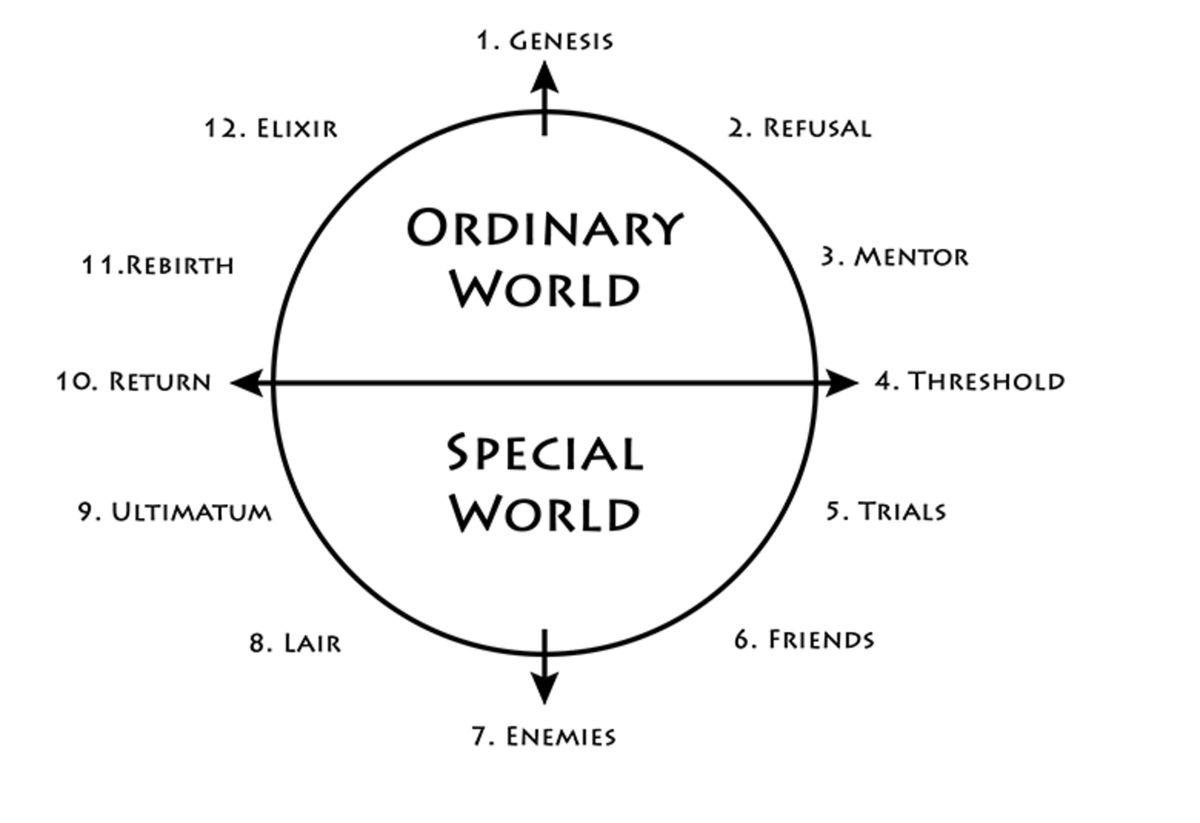
And here come Tarot in to the play. It can be understood as a symbolic map of psychological processes and human experience. Its imagery presents archetypal figures and a sequential narrative that mirrors the structure of the hero's journey, depicting a movement through challenge, transformation, and integration. These archetypes can be compared to Kabbalistic forces or emanations—structurally similar to the Sephirot—as they represent fundamental patterns through which experience is organised.
Furthermore, the practice of interpreting Tarot imagery closely resembles the Jungian technique of active imagination. In both, symbolic images are used to allow unconscious material to emerge and be reflected upon. The progression through the cards can therefore be understood as mirroring the individuation process: a psychological movement toward integration and wholeness. This journey is comparable to the mystical ascent described in various esoteric traditions.
The symbols on the cards evoke spontaneous interpretations, drawing material from both conscious thought and deeper unconscious content. In this way, the cards act as a bridge between the analytical mind and the deeper layers of the psyche, facilitating access to both the individual and the collective unconscious.
Two Paths, One Journey
Hercules and Psyche
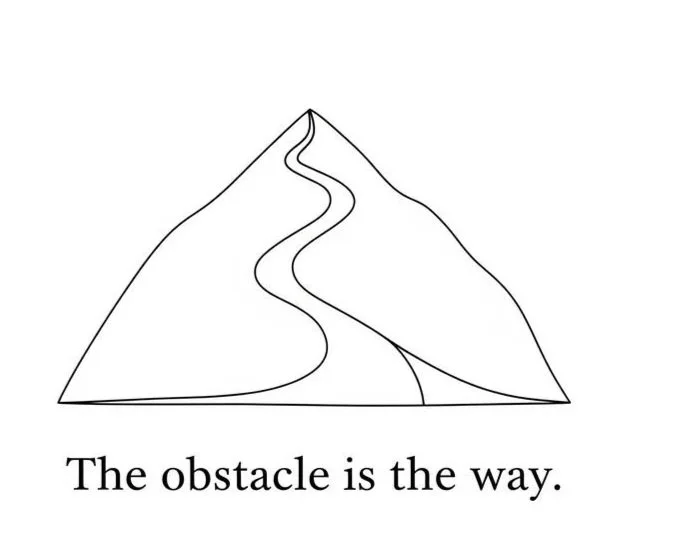
Over time, I came to understand that this journey can be approached in two distinct ways. The right-hand path follows a structured, evidence-based method, symbolised by Hercules and his twelve labours: disciplined action, external challenges, and measurable progress. The left-hand path is more symbolic and introspective, associated with Psyche's descent into the underworld: shadow work, engagement with the unconscious, and inner transformation. Both describe the same developmental arc, approached through different methods.
From my perspective, both paths are necessary and work best in combination rather than in isolation. They are not separate routes but complementary modes that can be used interchangeably within the same process.
Where All of This Lands
The Hero Journey
All of this guided me and helped me put together this framework. It is where evidence-based findings converge with our personal journey—focused on finding meaning, purpose, and connection to something greater than oneself. Self-awareness, relationships with others, connection to the world, and the search for deeper meaning are all woven together here.